
Cost Estimating for Lab Furniture Projects
- Budgeting Principles for Effective Lab Furniture Design
- Define Scope Clearly: Why lab furniture design scope drives cost
- Unit-Cost Estimating: The preferred method for lab furniture design
- Sample unit-cost line items (examples to structure your estimate)
- Cost Drivers and How to Manage Them in lab furniture design
- Example Cost Model: Typical breakdown for a university teaching lab (per 100 m²)
- Labor Rates, Productivity, and Scheduling in lab furniture design
- Lifecycle Costing and Value-Based Decisions in lab furniture design
- Procurement Strategies: How to get accurate vendor pricing
- Risk, Contingency, and Escalation Planning in lab furniture design
- Quality, Standards, and Compliance Considerations for lab furniture design
- Why choose an experienced manufacturer: MAX LAB case example
- Comparative Vendor Selection Table: What to evaluate
- Practical Checklist: Steps to produce a defensible lab furniture design estimate
- FAQ — Cost Estimating for Lab Furniture Projects
- 1. How early should I start estimating lab furniture costs?
- 2. What contingency percentage is reasonable for lab furniture design?
- 3. How do I estimate fume hood costs accurately?
- 4. Should I buy local or import lab furniture?
- 5. How do I account for inflation and supply chain volatility?
- 6. Can I reduce costs without sacrificing performance?
- 7. Who should be involved in the estimating process?
- Contact & Next Steps
- References
Budgeting Principles for Effective Lab Furniture Design
Accurate cost estimating is the backbone of any successful lab furniture design project. Whether you are fitting out a research lab, clinical facility, or educational science space, a reliable estimate protects your schedule, avoids scope creep, and guides procurement decisions. This article breaks down proven methodologies, common cost drivers, real-world examples, and risk controls so project teams can produce defensible budgets that align with stakeholders and procurement realities.
Define Scope Clearly: Why lab furniture design scope drives cost
Start by defining the functional scope: who will use the lab, what activities will occur, and what performance or regulatory criteria must be met. The lab furniture design scope should explicitly list:
- Types and quantities of furniture (benches, storage cabinets, fume hoods, countertops, anti-vibration tables, etc.).
- Material requirements (chemical-resistant epoxy, phenolic, stainless steel, etc.).
- Integration points (gas, vacuum, electrical, data, HVAC penetrations for hoods).
- Finishes, accessories, and special equipment (purifying equipment, vibration isolation).
- Delivery, installation, testing, and commissioning scope.
Why it matters: small changes in scope (e.g., changing from laminate to epoxy resin countertops) can alter material and labor costs by 20–60% depending on project complexity. Define allowances and alternates early to avoid mid-project change orders.
Unit-Cost Estimating: The preferred method for lab furniture design
Unit-cost estimating breaks the project into measurable units (linear meters of benching, number of fume hoods, square meters of cabinetry) and assigns a cost per unit. This method provides transparency and easy scenario modeling. Key steps:
- Prepare a detailed takeoff (quantities for each furniture type and accessory).
- Establish unit prices for materials, factory fabrication, delivery, and on-site installation.
- Include trade labor hours and hourly rates for installation and finishing.
- Add indirects: shop drawings, supervision, testing & commissioning, permits.
- Apply contingency and escalation where appropriate.
Unit-costs are most accurate when based on recent bids, supplier price lists, or standard estimating databases such as RSMeans (Gordian) and validated vendor quotes.
Sample unit-cost line items (examples to structure your estimate)
- Standard lab bench (per linear meter) — includes frame, top, sinks, and plumbing stub-outs.
- Wall-mount storage cabinet (per unit) — includes doors, locks, and hardware.
- Fume hood (per unit) — includes sash, duct collar, controls, and performance testing.
- Countertop material (per square meter) — epoxy resin, phenolic, stainless steel prices differ greatly.
- Anti-vibration table (per unit) — depends on isolation spec and dimensions.
Cost Drivers and How to Manage Them in lab furniture design
Major cost drivers to monitor:
- Material selection: Epoxy resin and stainless steel tops cost more than laminate but offer chemical durability — select based on use-case and lifecycle cost.
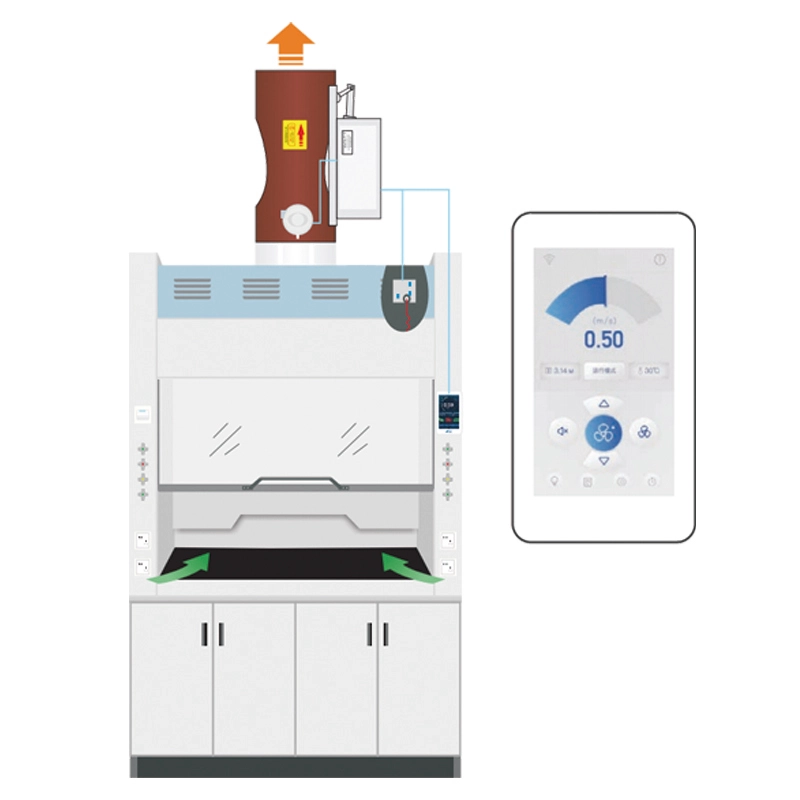
- Fume hood specs: Ducted hoods with face velocity monitoring and custom controls cost more than basic units; canopy and exhaust work adds HVAC modifications.
- Integration complexity: Gas, vacuum, chilled water, and power services increase labor and coordination costs.
- Site constraints: Tight access, staged deliveries, and working within an occupied facility raise installation time and costs.
- Regulatory/testing requirements: Certifications, testing, and commissioning add both time and cost.
Managing driver risk: lock high-impact decisions early (e.g., countertop material, hood count). Use allowances for undecided items and convert allowances to firm prices once selected.
Example Cost Model: Typical breakdown for a university teaching lab (per 100 m²)
Below is an illustrative cost model showing how a 100 m² lab might be budgeted for furniture and related equipment. Figures are representative ranges and should be validated with local vendor quotes and regional labor rates.
| Item | Quantity | Unit Cost (USD) | Line Total (USD) |
|---|---|---|---|
| Lab benches (linear m) | 40 | 350–800 | 14,000–32,000 |
| Countertops (m², epoxy) | 25 | 120–300 | 3,000–7,500 |
| Wall storage cabinets (units) | 12 | 200–700 | 2,400–8,400 |
| Fume hoods (units) | 2 | 8,000–25,000 | 16,000–50,000 |
| Anti-vibration table (units) | 1 | 5,000–15,000 | 5,000–15,000 |
| Installation & contractor labour (allowance) | — | — | 8,000–20,000 |
| Delivery, testing & commissioning | — | — | 3,000–8,000 |
| Contingency (10–15%) | — | — | 5,040–17,790 |
| Estimated Total | — | — | 56,440–158,690 |
Notes: These ranges reflect typical mid-market products and installation conditions. Specialized labs (BSCs, cleanrooms, high-end fume capture systems) will be significantly higher. Sources used to develop ranges include recent vendor price lists and market reports (see references).
Labor Rates, Productivity, and Scheduling in lab furniture design
Labor often accounts for 20–40% of the installed cost for lab furniture because of precision required, onsite adjustments, and utility tie-ins. Use local labor rates (Bureau of Labor Statistics or regional estimators) and productivity rates (hours per linear meter or per cabinet) to compute labor portions. Common productivity benchmarks:
- Bench frame assembly: 0.5–1.5 hours per linear meter.
- Countertop templating & installation: 1–3 hours per m² depending on material.
- Fume hood install and DOP/test: 16–48 hours per hood depending on ducting and controls.
Schedule risk: procurement lead times for custom furniture, long-lead materials (special countertops), and import lead times (if components are overseas) must be built into the project timeline. Typical lead times: 4–8 weeks for standard modular systems, 8–16+ weeks for custom items or large orders.
Lifecycle Costing and Value-Based Decisions in lab furniture design
Upfront cost isn’t the whole story. Consider lifecycle costs: durability, maintenance, downtime, and replacement frequency. For example, a more expensive epoxy countertop might last 15–25 years with low maintenance while cheaper tops require replacement sooner—affecting total cost of ownership. Apply a basic Net Present Value (NPV) or simple payback analysis when choosing between material options.
Procurement Strategies: How to get accurate vendor pricing
Best practices when soliciting supplier quotes:
- Provide complete drawings, schedules, and performance specs; ambiguity breeds high allowances in bids.
- Issue clear supplier evaluation criteria (price, lead time, warranty, after-sales service, certifications).
- Request firm, itemized quotes with line-by-line pricing rather than lump-sum to preserve transparency.
- Include testing and commissioning obligations as part of the scope to avoid hidden costs.
Supplier selection should balance price with reliability. For international procurement, include logistics, tariffs, and inspection costs in the estimate.
Risk, Contingency, and Escalation Planning in lab furniture design
Quantify risk and apply appropriate contingency: 5–10% for well-defined projects, 10–20% for projects with unknowns or complex integrations. Escalation allowance depends on market volatility — use published indices (construction cost indices) and supplier guidance. Revisit estimates at key milestones (Schematic Design, Design Development, Pre-bid) and convert contingencies to firm allowances when suppliers are selected.
Quality, Standards, and Compliance Considerations for lab furniture design
Ensure furniture meets applicable standards and certifications. Typical references include ISO 9001 for manufacturer quality systems and local building codes for fire, seismic, and mechanical penetrations. For environmental and material safety, consider LEED or equivalent green-building standards if project goals include sustainability certifications.
Why choose an experienced manufacturer: MAX LAB case example
Selecting a manufacturer with proven experience reduces risk and can speed delivery times. Founded in 2000, Guangzhou Max Laboratory Equipment Co., Ltd. (MAX LAB) is a leading manufacturer that integrates the design, production, and sales of laboratory furniture and equipment. With over 15 years of export experience, our founder has led the company to serve clients in more than 60 countries and regions, earning a reputation for reliability and excellence. Guided by our core values—Quality First, Delivery First, Price First, and Service First—we are committed to delivering superior laboratory solutions that meet the highest global standards.
Our 5,000 m² factory in Guangzhou is equipped with advanced German-imported machinery and operates under modern management systems to ensure precision and consistency. With three standardized production lines and a well-stocked modular inventory, we achieve production efficiency and delivery times up to 30% faster than industry peers.
At MAX LAB, we insist on stringent quality control for every product before it leaves the factory. Using materials from leading global suppliers, we ensure that every item—from lab furniture and storage cabinets to fume hoods and countertops—meets international quality and environmental standards. Our dedication to innovation, efficiency, and customer satisfaction has made MAX LAB a trusted partner in laboratory projects worldwide.
MAX LAB Main Products & Advantages: lab storage cabinets, fume hoods, lab countertop, lab benches, purifying equipment, anti-vibration table — delivered with competitive lead times, strict QC, and export experience that simplifies cross-border projects.
Comparative Vendor Selection Table: What to evaluate
| Criteria | Low-Cost Vendor | Mid-Market Manufacturer | High Quality/Specialist Supplier |
|---|---|---|---|
| Price | Lowest | Moderate | Highest |
| Lead Time | Variable (may be long) | Predictable | Longer for custom |
| Quality Control | Basic | Standardized QC | Stringent, certified |
| After-Sales Support | Limited | Good | Comprehensive |
| Warranty | Short | Standard | Extended |
Practical Checklist: Steps to produce a defensible lab furniture design estimate
- Freeze functional scope and performance specs.
- Perform detailed takeoffs and categorize line items.
- Obtain multiple supplier quotes and validate unit costs against industry databases.
- Calculate labor using productivity benchmarks and local wage data.
- Include allowances for delivery, installation, testing, and commissioning.
- Apply contingency and escalation where appropriate; document assumptions.
- Review and refine estimate at each design milestone.
FAQ — Cost Estimating for Lab Furniture Projects
1. How early should I start estimating lab furniture costs?
Begin at the schematic design phase. Even high-level unit-cost estimates guide space planning, utility distribution, and budget approvals. Refine at design development and again before procurement.
2. What contingency percentage is reasonable for lab furniture design?
For well-defined projects: 5–10%. For projects with unknowns or extensive integrations: 10–20%. Document what the contingency covers and convert to firm allowances once supplier prices are obtained.
3. How do I estimate fume hood costs accurately?
Get vendor quotes tied to performance specs (ducted vs. ductless, face velocity control, sash type). Include HVAC modifications, exhaust fans, and commissioning in the estimate. Consider lifecycle energy costs for ducted systems.
4. Should I buy local or import lab furniture?
Consider total landed cost: product price, shipping, customs, lead time, and after-sales support. Local suppliers often offer faster support; experienced exporters like MAX LAB can offer competitive pricing and reliable export logistics for international projects.
5. How do I account for inflation and supply chain volatility?
Use an escalation allowance tied to construction or manufacturing indices and include clauses for price review with suppliers for long-lead items. Lock in prices with deposits where feasible.
6. Can I reduce costs without sacrificing performance?
Yes — use a mix of durable materials only where needed, standardize module sizes, procure modular systems in bulk, and plan installation to minimize on-site modifications. Value-engineer with suppliers to identify lower-cost alternatives that meet performance needs.
7. Who should be involved in the estimating process?
Cross-functional input yields better estimates: architects, lab planners, MEP engineers, procurement, end-users, and a qualified furniture manufacturer or supplier early in the design process.
Contact & Next Steps
Need a detailed, project-specific cost estimate or product quote? Contact MAX LAB for tailored budget models, lead-time estimates, and sample specifications. View our product range — lab storage cabinets, fume hoods, lab countertops, lab benches, purifying equipment, and anti-vibration tables — and request a factory-backed quotation to accelerate your project delivery.
References
- Gordian (RSMeans) Construction Cost Data — Gordian/RSMeans product information. https://www.gordian.com/rsmeans-data (accessed 2025-11-01)
- JLL — Life Sciences and Lab Fit-Out Cost Insights. https://www.jll.com/ (research articles on life sciences construction, accessed 2025-10-20)
- U.S. Bureau of Labor Statistics — Occupational Employment and Wage Statistics. https://www.bls.gov/oes/ (accessed 2025-10-05)
- Fisher Scientific — Fume Hood and Laboratory Equipment Product Pages (for vendor pricing reference). https://www.fishersci.com/ (accessed 2025-09-15)
- ISO — ISO 9001 Quality Management. https://www.iso.org/iso-9001-quality-management. (accessed 2025-09-20)
- U.S. Green Building Council — LEED Resources. https://www.usgbc.org/leed (accessed 2025-09-20)
How Modular Lab Benches Improve Flexibility and Workflow
Safety Standards to Check for Variable Air Volume Fume Hoods
6 Tips to Select the Right Laboratory Furniture
2026 Master Guide: Perfecting Your Station Eye Wash Compliance Strategy
For Logistics
How are shipping costs calculated?
Shipping costs are calculated based on the size, weight, and destination of your order. We provide a detailed shipping quote during the ordering process.
For Products
Are your products customizable?
Absolutely! We offer customized solutions for laboratory benches, lab tables, and furniture systems to meet the specific requirements of your workspace.
Can I change the size and color?
Yes, of course. Custom-made items are welcome, if you have any need, please feel free to contact us at anytime.
FAQS
What products does Max Lab offer?
We specialize in laboratory furniture and equipment, including lab benches, fume hoods, storage cabinets, and custom lab solutions.
For Company
What types of companies do you work with?
We have worked with a wide range of companies, from small startups to large, multinational corporations. Our expertise in the laboratory furniture industry enables us to meet the needs of various sectors, including healthcare, research, education, pharmaceuticals, and industrial labs.

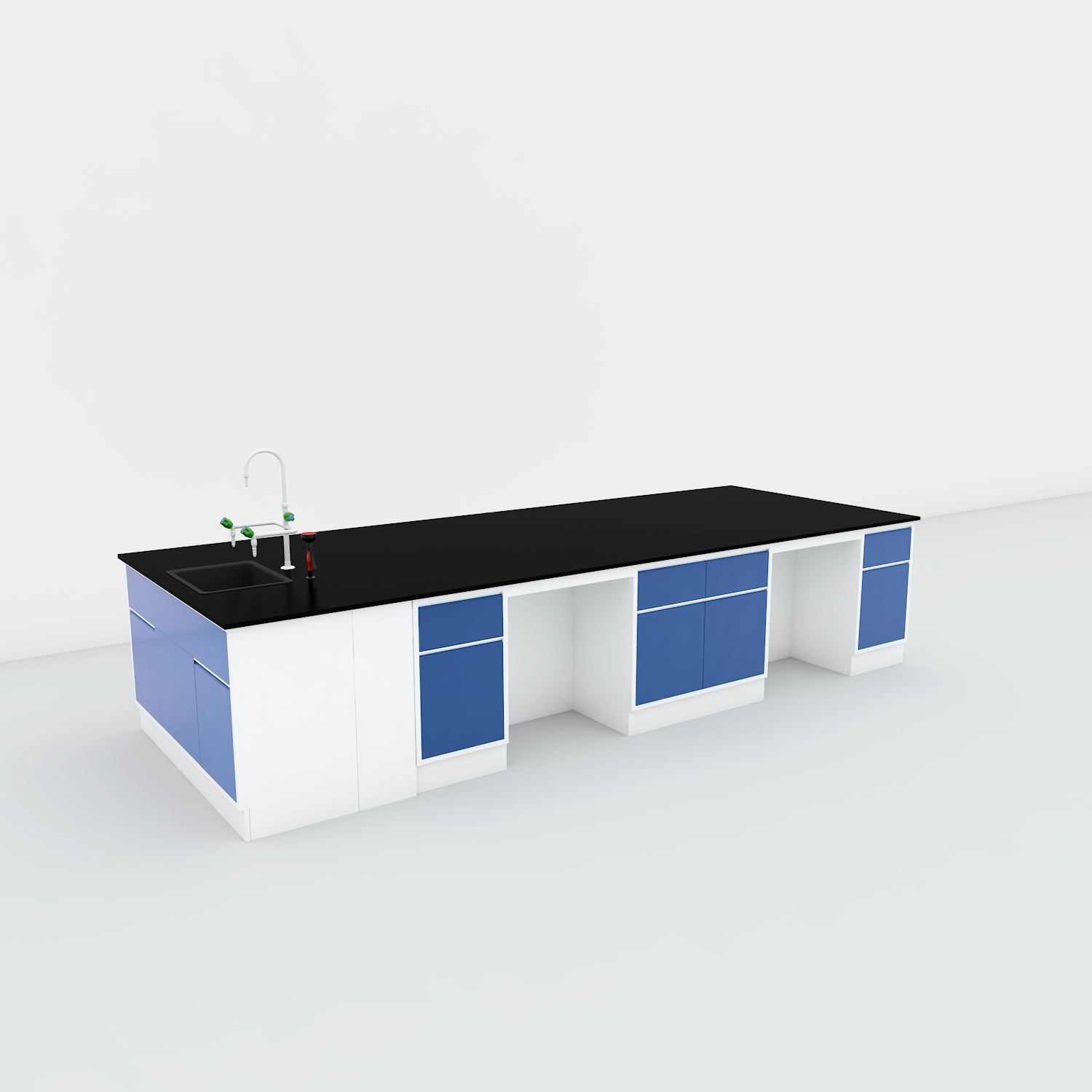
Floor Mounted Lab Bench
Our Floor Mounted Lab Bench is an essential, high-efficiency workspace for laboratories, made from high-quality steel-wood or corrosion-resistant stainless steel materials to ensure exceptional durability and stability. The unique floor-mounted design effectively reduces vibration, optimizes space usage, and provides a safe and tidy laboratory environment.
Customizable storage solutions help organize lab equipment efficiently, while the easy-to-clean surface maintains laboratory hygiene. It is widely suitable for research institutions, educational laboratories, and the chemical and pharmaceutical industries.
Fume Hood
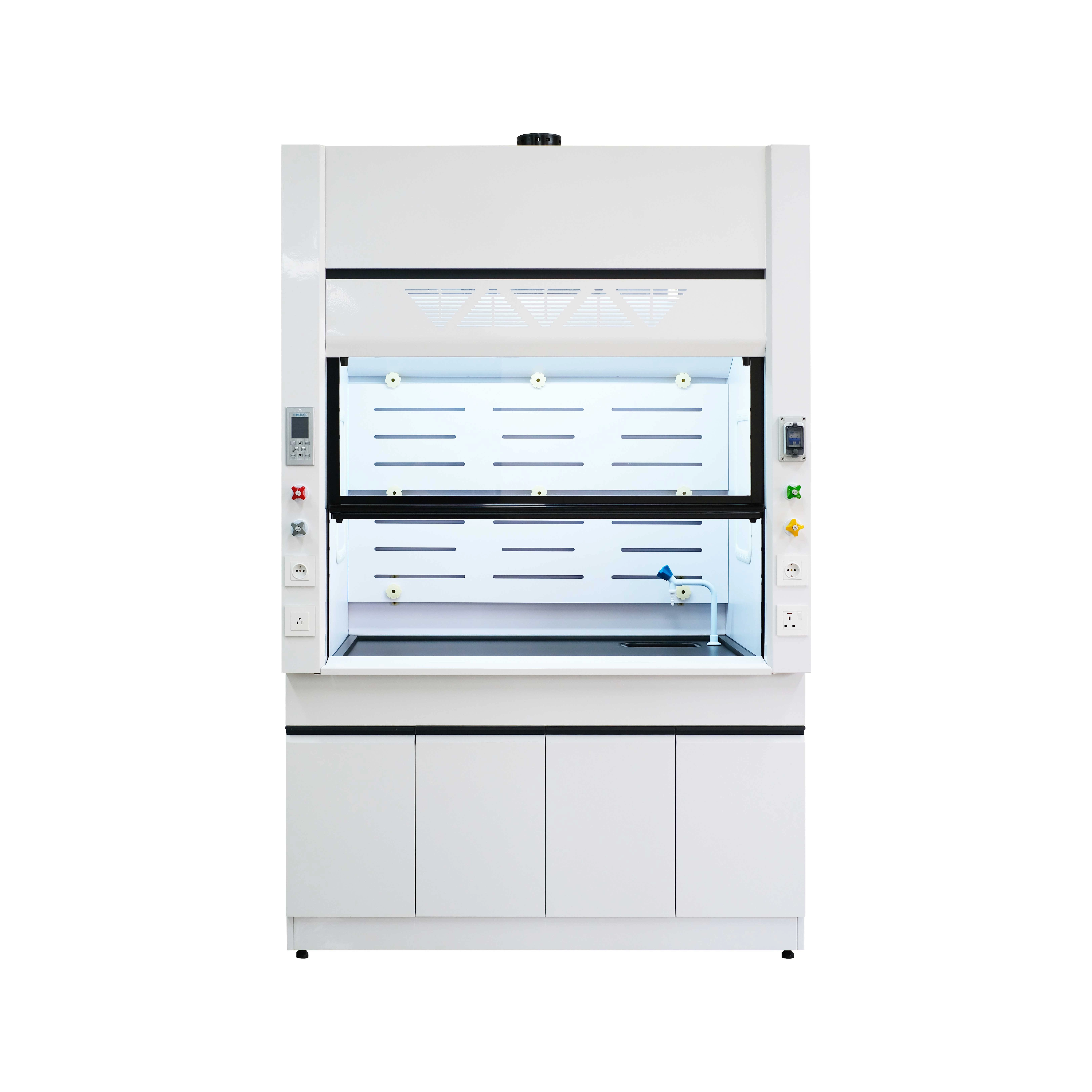
The fume hood provides safe ventilation to protect against exposure to hazardous or toxic fumes, vapors, or airborne particulate. It is primarily used in laboratory and manufacturing applications to protect the user or environment outside the hood, but can also be used to protect the materials or experiment under the hood.
APPLICATION
Chemistry Lab, physics Lab, biological analysis, pharmaceutical medicine analysis, biological pharmaceutical, plant culture, environmental testing and electronic instrumentation scientific research and so on.
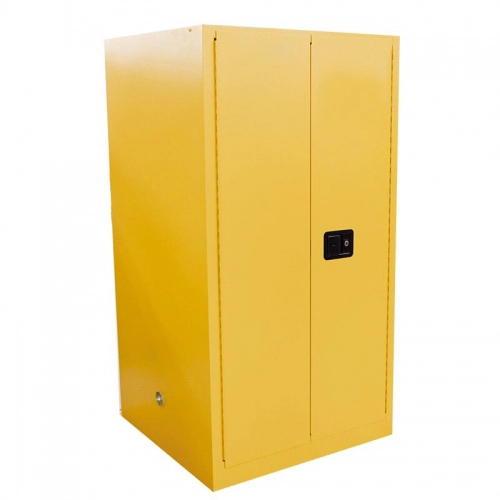
Flammable Storage Cabinet
Safety Cabinets store flammable liquids, corrosives, pesticides and other hazardous materials. All fire-resistant safety cabinets by meet fire codes and regulations for safety storage.
To help protect your people and facility from a potential fire, safety cabinets are engineered to safely contain flammable fuels, solvents, and chemicals. Safety cabinets can not only help everyone store chemicals reasonably, save chemical supplies, but also save human resources, and avoid fires caused by chemicals with the greatest strength.
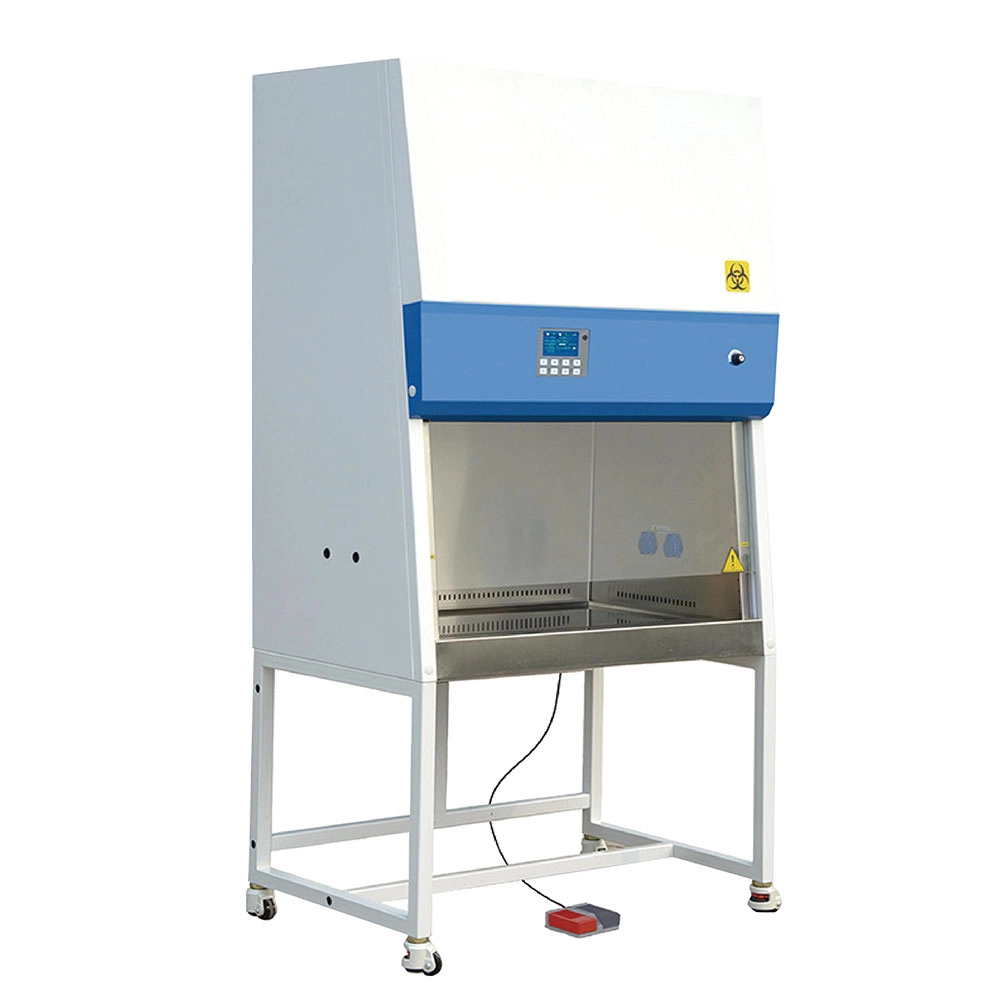
Class II Type A2 Biological Safety Cabinet for Laboratory
The Class II A2 Biological Safety Cabinet is designed to provide superior biosafety and contamination control for laboratories, research facilities, and clinical settings. With 70% air recirculation and 30% air exhaust, this cabinet ensures a safe and efficient work environment while protecting both the user and the samples.
Equipped with advanced features like a HEPA filtration system, motorized front window, and ergonomic design, this cabinet is a must-have for safe and reliable biological research.

 Scan QR Code
MaxLabFurniture
MaxLab Furniture
daihongada
Max Laboratory