
Resource
- What Is a Walk-in Fume Hood?
- Key Features of Walk-in Fume Hoods
- Spacious Design:
- Enhanced Safety:
- Customizable Configurations:
- Energy Efficiency:
- Flooring Options:
- Monitoring Systems:
- Applications of Walk-in Fume Hoods:
- What is walk in fume hood dimensions?
- Walk-in fume hoods vs. Standard Fume Hoods
- Size And Capacity
- Access Method
- Ventilation Requirements
- Installation Complexity
- Energy Consumption
- Why Choose a Walk-in Fume Hood?
Walk-in Fume Hood vs Standard Fume Hood: Which One Do You Need?
A walk-in fume hood is designed for laboratories and industrial environments that handle oversized equipment, large-scale experiments, or high-volume hazardous materials. In this article, we explain what a walk-in fume hood is, explore its key features, dimensions, and applications, and compare it with standard fume hoods to help you choose the right solution for your laboratory.
What Is a Walk-in Fume Hood?
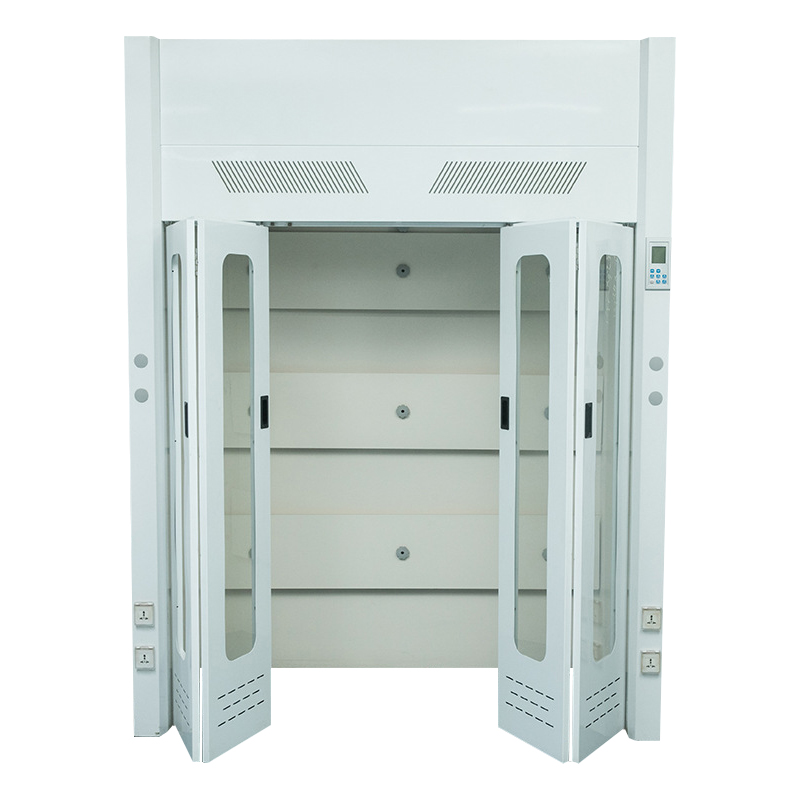
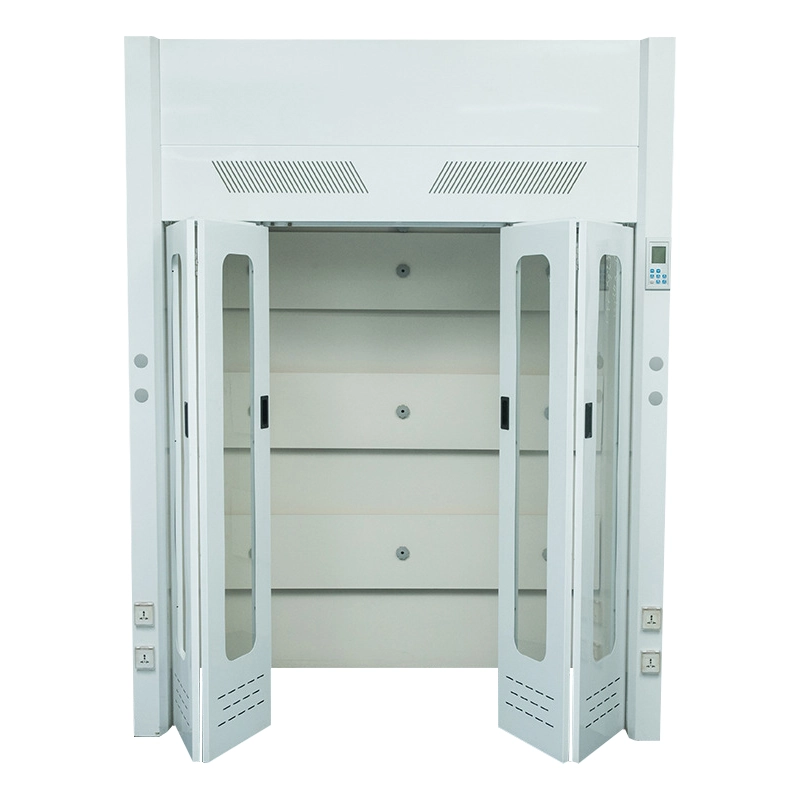
A walk-in fume hood is a large, ventilated enclosure designed to protect laboratory personnel from hazardous fumes, vapors, and dust while handling oversized or bulky equipment. Unlike standard fume hoods, walk-in models provide ample space for technicians to enter and work comfortably, making them ideal for large-scale experiments, industrial applications, and specialized research environments.
Key Features of Walk-in Fume Hoods
Spacious Design:
Accommodates large apparatus, multiple users, or tall equipment that wouldn’t fit in conventional hoods.
Features an open-front or sliding-door access for easy movement.
Enhanced Safety:
Maintains consistent airflow to contain and exhaust hazardous substances.
Constructed from chemical-resistant materials like epoxy-coated steel or stainless steel.
Customizable Configurations:
Available in permanent or modular designs to suit lab layouts.
Can include additional features such as built-in sinks, utility fixtures, or specialized exhaust systems.
Energy Efficiency:
Some models incorporate variable air volume (VAV) controls to reduce energy consumption.
Flooring Options:
Special chemical-resistant flooring materials with containment lips or recessed pans help prevent spill migration and facilitate cleanup.
Monitoring Systems:
Advanced airflow monitors and alarm systems provide real-time feedback on hood performance, alerting users to potential ventilation failures.
Applications of Walk-in Fume Hoods:
Walk-in fume hoods are commonly used in:
Pharmaceutical labs for large-scale drug synthesis.
Chemical manufacturing to handle volatile processes.
University research labs for complex or group experiments.
Industrial facilities requiring safe handling of bulk materials.
What is walk in fume hood dimensions?
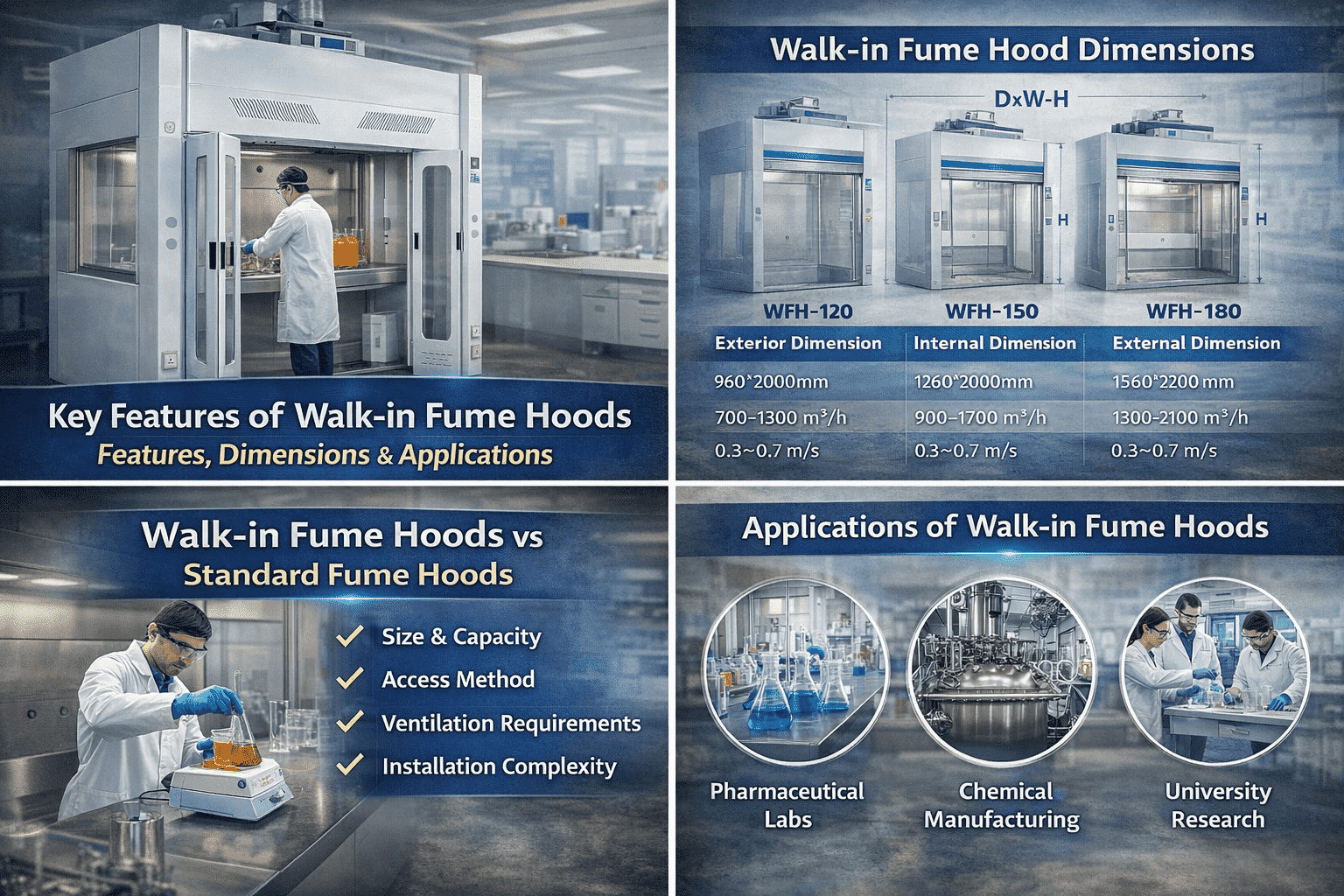
The following are the walk-in fume hood series of MAX LAB
|
Model |
WFH-120 |
WFH-150 |
WFH-180 |
|
External Dimension (W*D*H)(mm) |
1200*850*2350 |
1500*850*2350 |
1800*850*2350 |
|
Internal Dimension (W*D*H)(mm) |
960*680*2000 |
1260*680*2000 |
1560*680*2000 |
|
Exhaust air volume |
700-1300m³/h |
900-1700m³/h |
1300-2100m³/h |
|
Air Velocity |
0.3~0.7 m/s |
||
These dimensions allow for ample space for lab personnel to work comfortably and safely inside the hood, while still offering effective containment of harmful substances.
Walk-in fume hoods vs. Standard Fume Hoods
Size And Capacity
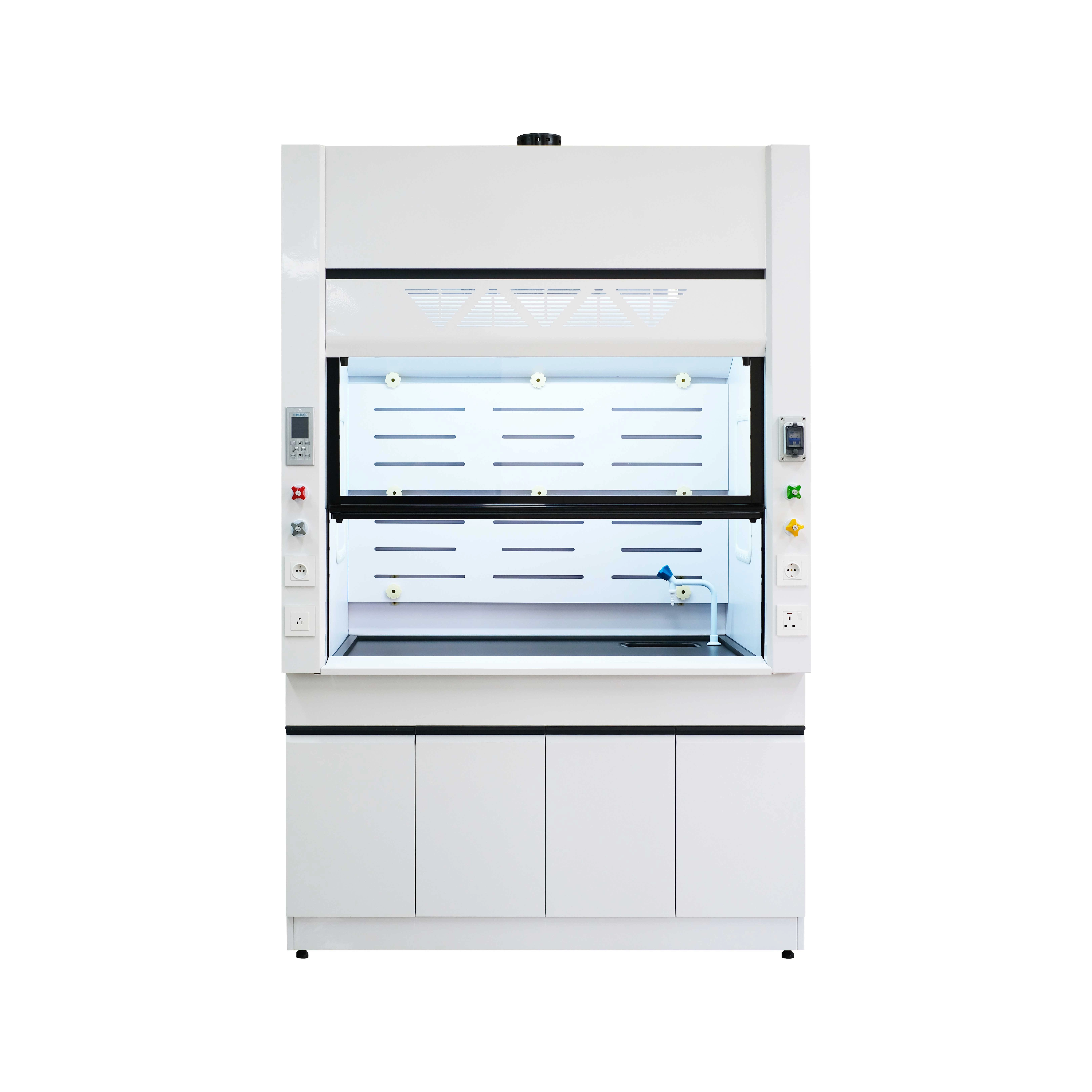
Walk in fume hoods offer significantly larger working volumes, accommodating bulky equipment, tall apparatus setups, and multiple simultaneous processes that wouldn't fit in conventional fume hoods.
Access Method
The defining characteristic of walk in models is the ability for researchers to physically enter the working area, as opposed to reaching in from outside in standard designs.
Ventilation Requirements
Due to their larger volume, walk in fume hoods require more powerful exhaust systems and greater air handling capacity, often necessitating dedicated ventilation infrastructure.
Installation Complexity
Walk in units typically require more extensive planning, structural considerations, and often custom integration with building systems compared to standard bench-top models.
Energy Consumption
The larger air volume that must be continuously exhausted results in higher operational costs and energy usage compared to smaller hood designs.
Why Choose a Walk-in Fume Hood?
For labs dealing with large equipment or high-volume hazardous materials, a walk-in fume hood offers unmatched safety and flexibility. At MAX LAB, we provide high-performance, customizable solutions tailored to your lab’s needs.
Interested in integrating a walk-in fume hood into your workspace? Contact MAX LAB for expert guidance and premium lab equipment solutions.
Why We Choose to Be Your Lab Furniture Solution Provider, Not Just a Manufacturer

Max Lab Introduction
Electronics Lab Bench vs Chemistry Lab Bench: What You Need to Know

What Is an Air Shower for Cleanroom?
For After-Sales Support
How about your after sale service?
We will reply you within 24 hours by email or phone.
If we have local agent,we will arrange him to your site within 24 hours to assist you to shoot the problem.
Can you help with product troubleshooting?
Yes, our customer support team is available to help with any issues or troubleshooting you may need for your laboratory equipment.
What happens if my product is damaged during delivery?
If your product is damaged during shipping, please contact our customer service team immediately. We will arrange for a replacement or repair at no additional cost.
FAQS
What quality standards do your products meet?
We conduct strict quality inspections before products leave the factory to ensure they meet international standards and customer expectations.
For Products
Do you offer ergonomic solutions for lab furniture?
Yes, our laboratory furniture includes ergonomic designs such as height-adjustable lab benches and chairs that reduce strain during long hours of work.

Get in touch with us
If you have any comments or good suggestions, please leave us a message; later our professional staff will contact you as soon as possible.

 Scan QR Code
MaxLabFurniture
MaxLab Furniture
daihongada
Max Laboratory