
Resource
- 1. Chemistry Laboratory Furniture Configuration
- Key Functional Requirements
- Recommended Furniture
- Professional Insight
- 2. Biology Laboratory Furniture Configuration
- Key Functional Requirements
- Recommended Furniture
- Professional Insight
- 3. Physics Laboratory Furniture Configuration
- Key Functional Requirements
- Recommended Furniture
- Professional Insight
- 4. School Laboratory Furniture Configuration
- Key Functional Requirements
- Recommended Furniture
- Professional Insight
- 5. University Laboratory Furniture Configuration
- Key Functional Requirements
- Recommended Furniture
- Professional Insight
- How to Choose the Right Laboratory Furniture for Your Project
- Comparison of Laboratory Furniture for Different Lab Types
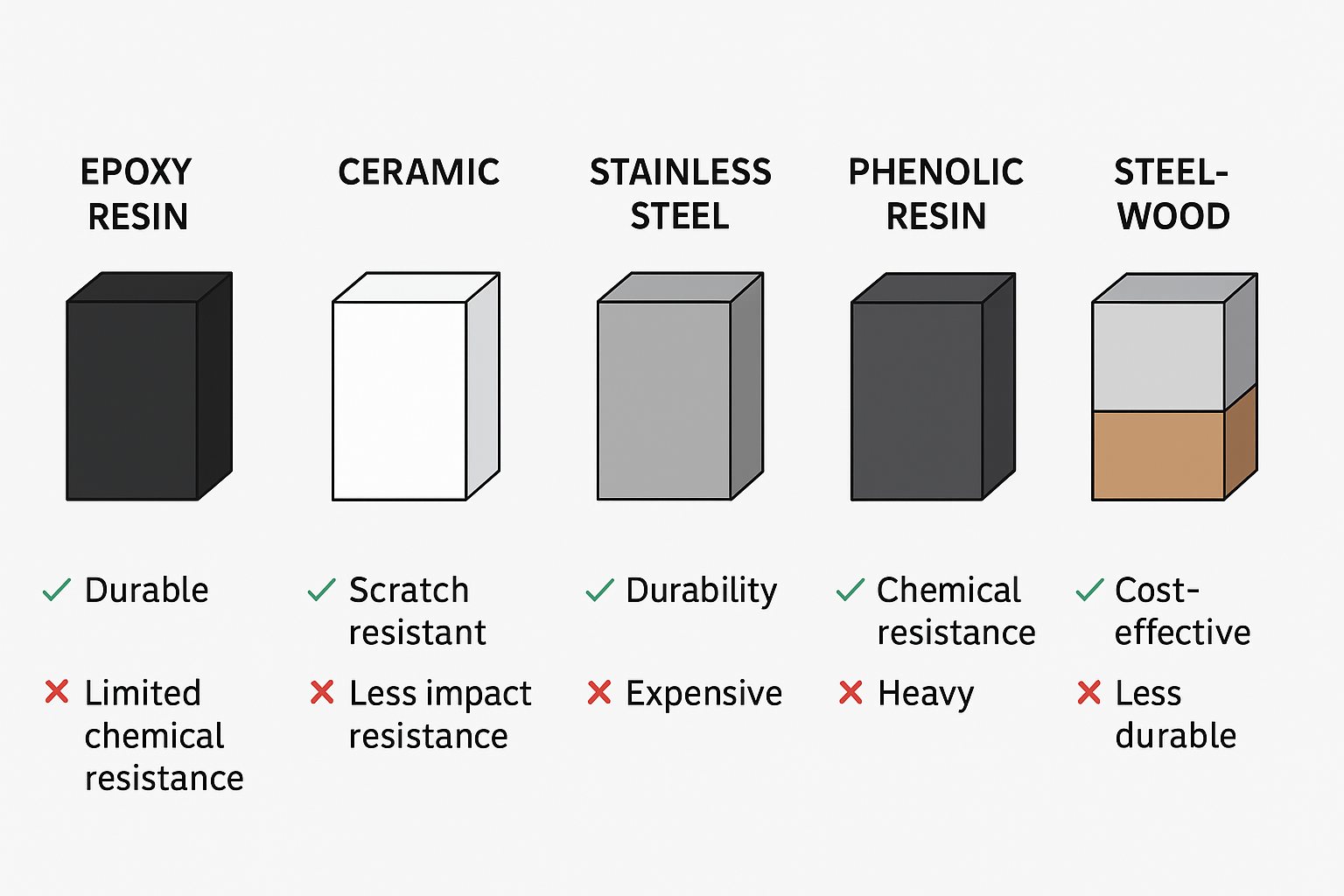
- Comparison of Laboratory Countertop Materials
- Final Thoughts
Recommended Furniture Configurations for Different Types of Laboratories
Designing or upgrading a laboratory is not simply about purchasing workbenches or storage cabinets—it is about creating a functional, safe, and efficient working environment that supports specific experimental activities. Different laboratory types—chemistry, biology, physics, school teaching labs, and university research facilities—have unique requirements for safety standards, material durability, storage, ventilation, and ergonomics.
In this article, we provide a comprehensive guide to laboratory furniture configurations, analyzing the rationale behind each choice, industry best practices, and material recommendations.
1. Chemistry Laboratory Furniture Configuration
Key Functional Requirements
Frequent use of acids, bases, solvents, and corrosive chemicals.
High need for ventilation and fume extraction.
Fire safety and chemical storage compliance.
Recommended Furniture
Material: Epoxy resin or ceramic countertops (acid/alkali-resistant, high thermal stability).
Structure: All-steel cabinets with powder coating for anti-corrosion.
Features: Integrated sinks, reagent racks, and electrical outlets.
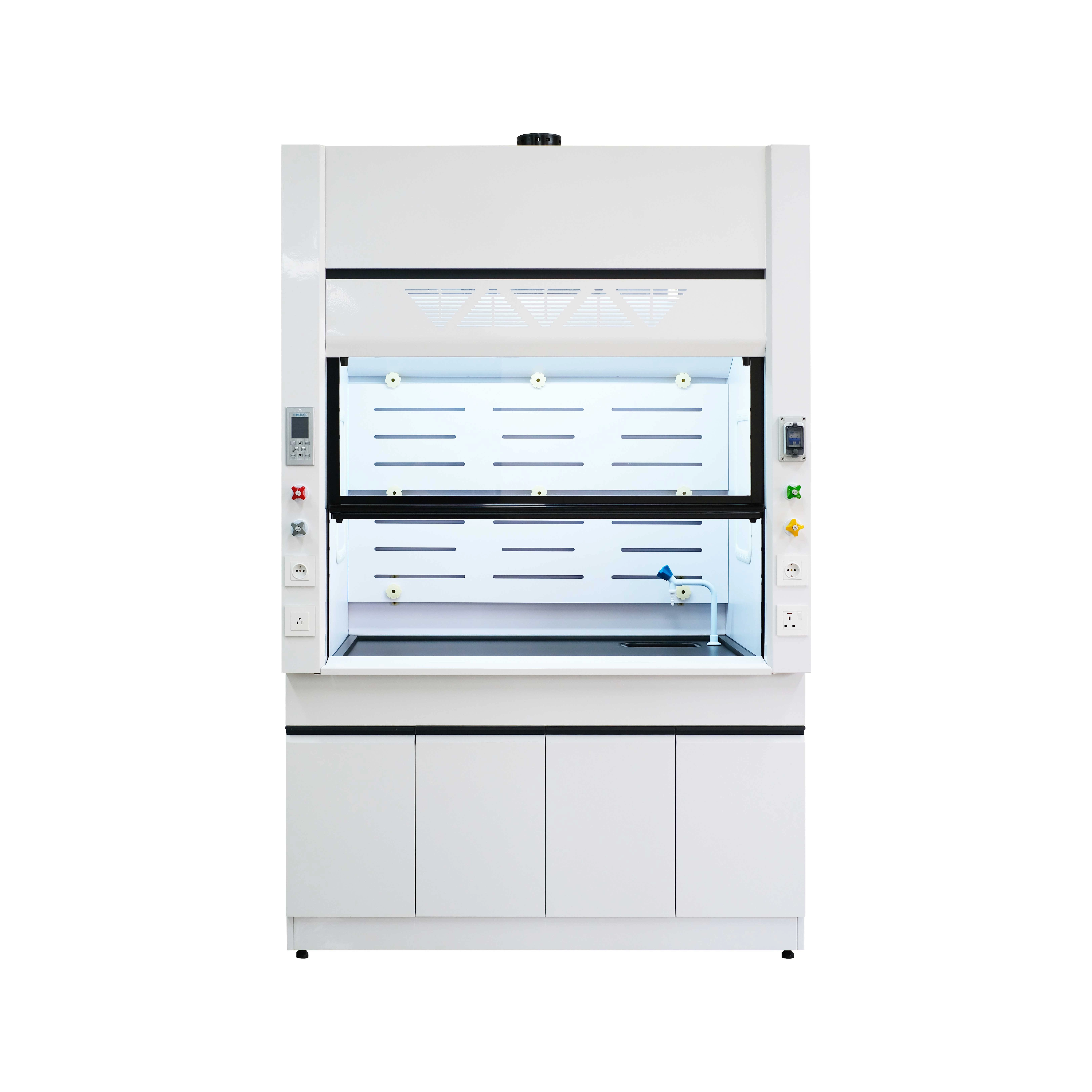
Vertical sash with tempered glass for visibility and safety.
Equipped with exhaust ducts and fans for hazardous gas removal.
Optional: Ductless fume hoods with carbon filters for flexible installations.
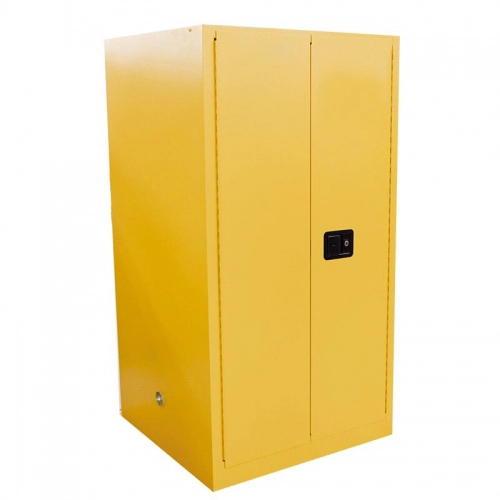
Chemical & Gas Cylinder Cabinets
Ventilated, explosion-proof, with locking systems.
Separate storage for acids, flammables, and compressed gases.
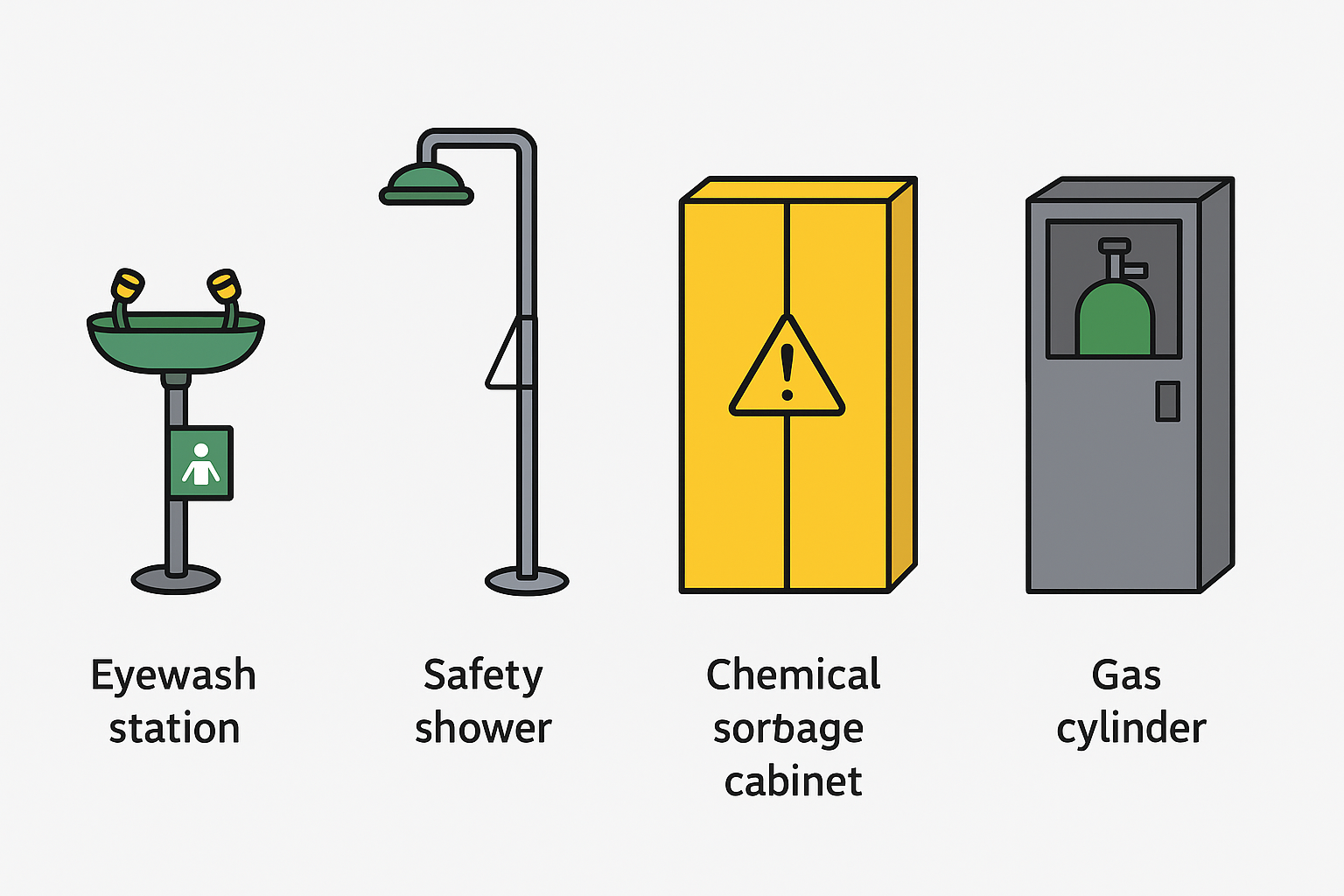
Eyewash stations, safety showers, and spill containment trays.
Professional Insight
For long-term durability, epoxy resin countertops outperform stainless steel in chemical resistance. However, for labs with frequent high-temperature processes, ceramic worktops may provide superior heat resistance.
2. Biology Laboratory Furniture Configuration
Key Functional Requirements
Sterile environment, contamination control, and biosafety.
Sample preservation and specialized safety cabinets.
Recommended Furniture
Seamless welding to minimize bacterial accumulation.
Resistant to disinfectants, hydrogen peroxide, and alcohol.
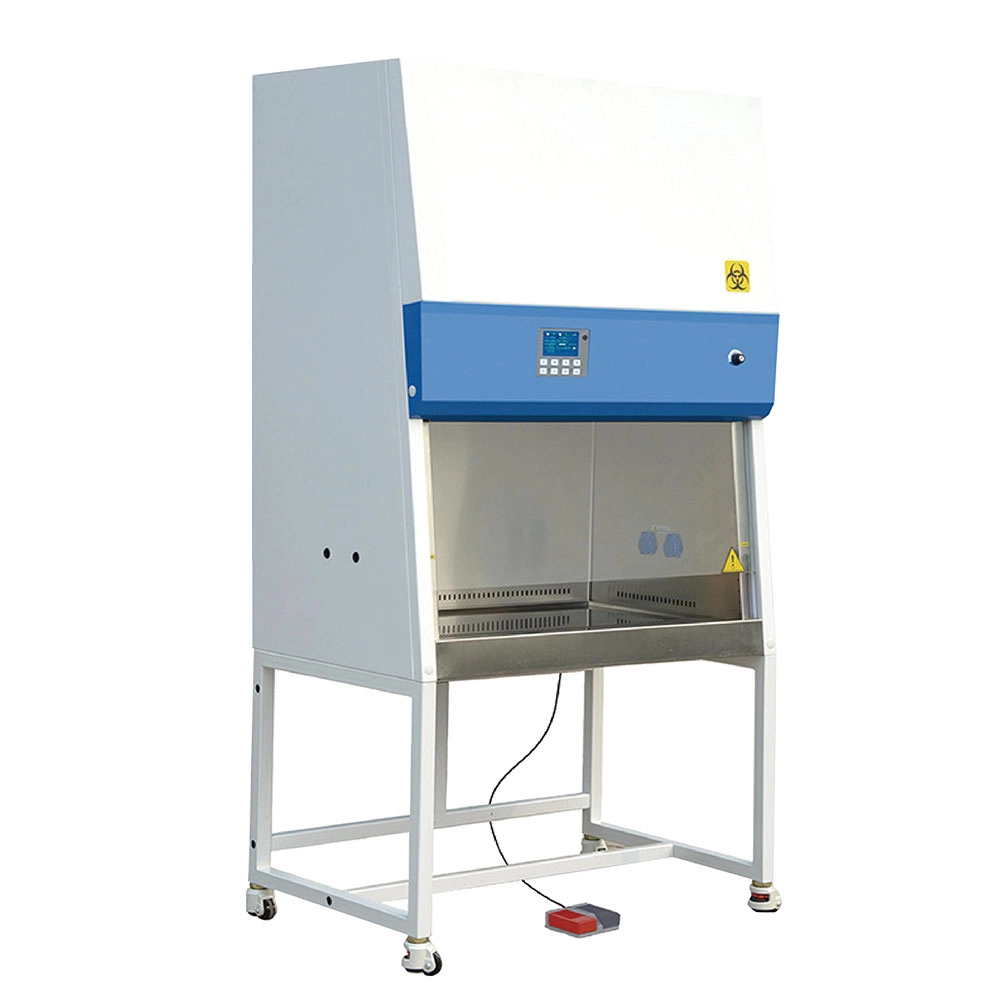
Class II or Class III, depending on biosafety level.
HEPA filters for sample and operator protection.
Positive-pressure airflow for sterile manipulations.
Suitable for tissue culture and molecular biology experiments.
Cold Storage & Sample Cabinets
-80°C freezers, cryogenic storage tanks, and lockable cabinets.
Handwashing & Decontamination Stations
Placed near entry and exit points to prevent cross-contamination.
Professional Insight
For high-containment labs (BSL-3 and above), air-tight laboratory furniture and controlled airflow systems must be integrated with the furniture design to ensure compliance with WHO and CDC biosafety standards.
3. Physics Laboratory Furniture Configuration
Key Functional Requirements
Heavy instruments, electrical safety, and vibration isolation.
Lower emphasis on ventilation, higher emphasis on stability.
Recommended Furniture
Load-bearing capacity of >500kg.
Integrated power outlets, grounding systems, and anti-static surfaces.
Optical Tables & Vibration-Isolated Benches
Honeycomb core structures for laser and optics experiments.
Adjustable damping systems for precision measurements.
Storage Cabinets for Instruments
Shock-absorbing shelves, temperature-stable enclosures.
Specialized Fixtures
Darkrooms, blackout curtains, optical rails for controlled experiments.
Professional Insight
Physics labs require ergonomic and modular bench systems that allow reconfiguration as new instruments are introduced, supporting long-term adaptability.
4. School Laboratory Furniture Configuration
Key Functional Requirements
Cost-effective, durable, and safe for beginners.
Designed for large groups and frequent use.
Recommended Furniture
Resistant to moderate chemicals.
Integrated sinks and shared utilities (gas, water, electricity).
Equipped with multimedia support, gas outlets, and overhead mirrors or cameras for teaching.
Locked storage for reagents and fragile instruments.
Fire extinguishers, first aid kits, and fume extraction where required.
Professional Insight
School laboratories prioritize safety over advanced functionality. Furniture should be rounded-edged, ergonomic, and resistant to student misuse.
5. University Laboratory Furniture Configuration
Key Functional Requirements
Hybrid use: education + advanced research.
Modular, flexible setups to accommodate multiple disciplines.
Recommended Furniture
Reconfigurable units for chemistry, biology, and engineering labs.
Options for integrating utilities under-bench or overhead service carriers.
Fume Hoods & Biosafety Cabinets
Advanced safety systems for multi-disciplinary research.
Designed for mass spectrometers, chromatography equipment, and imaging systems.
Collaborative Furniture
Discussion tables, seminar areas, whiteboards for team-based research.
Archival & Sample Storage
Secure, climate-controlled cabinets for samples and documentation.
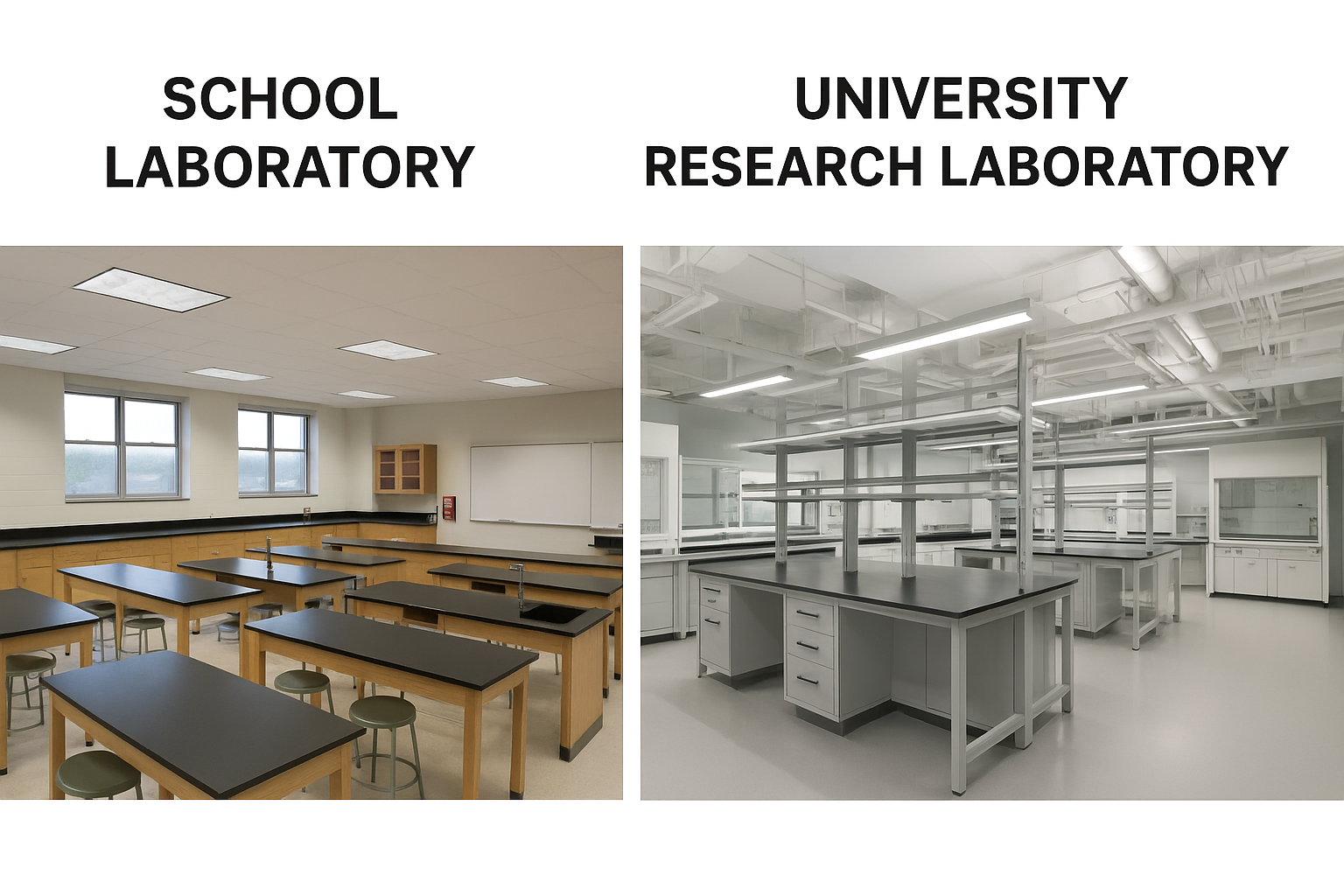
School vs University Laboratory Comparison
Budget-Friendly Lab vs Premium Lab
Professional Insight
Universities often adopt future-proof modular systems, which reduce long-term renovation costs by allowing the furniture to evolve with research needs.
How to Choose the Right Laboratory Furniture for Your Project
Comparison of Laboratory Furniture for Different Lab Types
|
Laboratory Type |
Core Focus |
Recommended Workbench |
Ventilation |
Storage Solutions |
Special Furniture |
|
Chemistry |
Corrosion resistance & safety |
All-steel benches with epoxy/ceramic countertops |
Multiple fume hoods, duct systems |
Ventilated chemical cabinets, gas cylinder cabinets |
Eyewash station, safety shower |
|
Biology |
Sterility & biosafety |
Stainless steel benches (seamless) |
Biosafety cabinets (Class II/III) |
Sample freezers, refrigerated cabinets |
Laminar flow benches |
|
Physics |
Stability & precision |
Heavy-duty benches with power outlets |
Low ventilation need |
Shock-absorbing storage cabinets |
Optical tables, vibration-isolated benches |
|
School |
Safety & affordability |
Student benches (with utilities) |
Basic fume extraction (if needed) |
Lockable reagent & instrument cabinets |
Teacher demonstration desk |
|
University |
Flexibility & research |
Modular, reconfigurable benches |
Fume hoods + biosafety cabinets |
Climate-controlled storage |
Collaboration furniture (discussion tables) |
Comparison of Laboratory Countertop Materials
|
Material |
Chemical Resistance |
Heat Resistance |
Durability |
Recommended For |
|
Excellent (acid/alkali) |
High (up to 600°C) |
Very durable |
Chemistry labs |
|
|
Phenolic Resin |
Good (moderate chemicals) |
Moderate |
Lightweight, durable |
School & teaching labs |
|
Ceramic |
Excellent |
Excellent |
Fragile under impact |
High-temperature chemistry labs |
|
Stainless Steel (304/316) |
Good (not ideal for strong acids) |
High |
Seamless, hygienic |
Biology & medical labs |
|
Laminate/Steel-Wood |
Limited |
Low |
Cost-effective |
School labs (budget) |
Final Thoughts
Laboratory furniture is not one-size-fits-all. Each lab type requires specialized design, materials, and safety considerations. When planning your lab, it is essential to partner with experienced designers who understand international standards (ISO, ANSI, OSHA, EN) and can provide customized solutions that ensure both safety and efficiency.
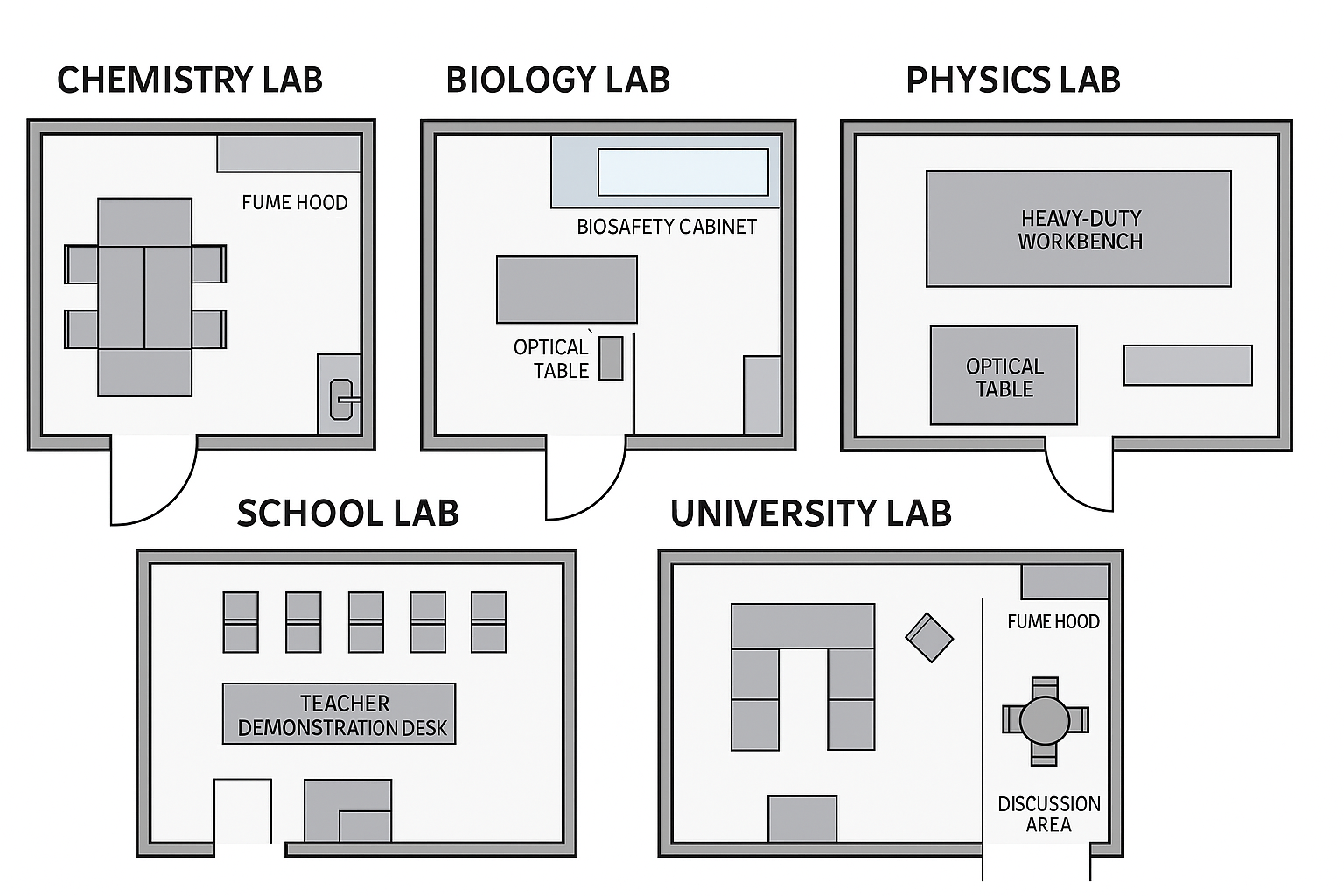
Layout diagrams of different types of laboratories
Contact our team today for a tailored laboratory furniture configuration plan that fits your scientific and educational goals.
Why We Choose to Be Your Lab Furniture Solution Provider, Not Just a Manufacturer
Max Lab Introduction
Electronics Lab Bench vs Chemistry Lab Bench: What You Need to Know

What Is an Air Shower for Cleanroom?
For Logistics
Do you offer international shipping?
Yes, we offer international shipping to most regions worldwide. Our logistics team ensures that all items are carefully packaged and delivered on time.
How can I track my shipment?
Once your order has been shipped, we will provide tracking information so you can monitor the status of your delivery.
Do you handle customs clearance for international shipments?
Of course, if you need it, we will handle the customs clearance of international shipments for our customers to ensure that your laboratory furniture arrives on time.
About Solution
Do you have certifications for your products?
Yes, We have CE CERTIFICATIONS, Quality Management Systems Certificate ISO9001:2008 and Environmental Management Systems Certificate ISO14000:2004, etc.
What is the corrosion resistance of the laboratory furniture?
Our products are made of high quality corrosion-resistant materials, such as epoxy resin, PP board and stainless steel, which can resist the erosion of various chemicals and prolong the service life of the products.

Get in touch with us
If you have any comments or good suggestions, please leave us a message; later our professional staff will contact you as soon as possible.

 Scan QR Code
MaxLabFurniture
MaxLab Furniture
daihongada
Max Laboratory