
Resource
- Introduction: The High Stakes of Laboratory Design
- What are Custom Laboratory Tables and Why Do They Matter?
- Key Takeaways: Quick Summary for Lab Managers
- Mistake 1: Prioritizing Cost Over Surface Material Compatibility
- Material Breakdown:
- Mistake 2: Ignoring Ergonomics and Height Adjustability
- Mistake 3: Underestimating Load Capacity and Vibration Control
- Mistake 4: Overlooking ESD (Electrostatic Discharge) Requirements
- Mistake 5: Neglecting Future Flexibility and Modularity
- Mistake 6: Failing to Plan for Utility Integration (Power & Data)
- Best Practices:
- Mistake 7: Disregarding Regulatory Compliance (SEFA & ADA)
- Expert Gap Analysis: Budgeting for Total Cost of Ownership (2026 Outlook)
- Conclusion
- FAQ
- What is the difference between Epoxy Resin and Phenolic Resin lab tables?
- How do I determine the correct weight capacity for my lab table?
- Are height-adjustable lab tables worth the investment?
- What defines an ADA compliant laboratory table?
- Do I need ESD tables for a biology lab?
- How long does it take to manufacture custom lab tables?
- Can custom lab tables be moved easily?
- Why is SEFA certification important for lab furniture?
7 Costly Mistakes to Avoid When Investing in Custom Laboratory Tables
Introduction: The High Stakes of Laboratory Design
Building or renovating a laboratory is a massive capital undertaking where every square inch represents a significant financial investment. For facility managers and lab directors, the pressure to deliver a state-of-the-art research environment is immense, but the operational risks of poor furniture selection are often underestimated. A lab table is not just a flat surface; it is the foundation of scientific accuracy, safety, and operational uptime.
Choosing the wrong infrastructure can lead to catastrophic downtime, safety hazards, and ballooning replacement costs. Why do 68% of research facilities report surface degradation as a primary maintenance concern? Often, it stems from avoidable errors during the specification phase. By avoiding these 7 costly mistakes, you can ensure a high Return on Investment (ROI) and future-proof your facility against the evolving demands of modern science.
With over 15 years of export experience serving clients in more than 60 countries, Guangzhou Max Laboratory Equipment Co., Ltd. (MAXLAB) has seen firsthand how strategic planning prevents these pitfalls. Our 5,000 m² factory in Guangzhou utilizes German-imported machinery to deliver precision-engineered solutions that meet global standards.
What are Custom Laboratory Tables and Why Do They Matter?
Custom laboratory tables are specialized, made-to-order workstations designed to meet specific scientific requirements, including chemical resistance, vibration control, and electrostatic discharge (ESD) protection, unlike standard off-the-shelf office furniture.
In a modern research environment, a "one size fits all" approach is a recipe for failure. Standard office desks cannot withstand the harsh reagents, heavy instrumentation, or sterility requirements of a science lab table. Customization ensures that your furniture supports, rather than hinders, your specific workflow.
- Research Accuracy: Vibration-dampening frames are essential for sensitive microscopy.
- Safety: Chemical-resistant surfaces prevent dangerous reactions and contamination.
- Durability: Industrial-grade materials extend the lifecycle of the lab.
Key Takeaways: Quick Summary for Lab Managers
- Material Selection: The #1 cause of premature failure is pairing the wrong surface with your chemicals.
- Ergonomics: Height adjustability is critical for reducing liability and retaining talent.
- Future-Proofing: Modular designs prevent obsolescence as research grants change.
- Compliance: Adhering to SEFA and ADA standards is non-negotiable for legal safety.
Mistake 1: Prioritizing Cost Over Surface Material Compatibility
Choosing a laminate surface based on price alone when your workflow requires Epoxy or Phenolic Resin is the most frequent and expensive error in lab design.
Lab managers often look at the initial price tag of a chemical lab table without considering the chemical load it must endure. If you are working with concentrated acids, a standard laminate top will degrade within months, leading to contamination risks and the need for a total replacement.
Material Breakdown:
- Epoxy Resin: The gold standard for harsh environments. It is a solid, uniform material that offers the highest resistance to heat (up to 450°F) and corrosive acids.
- Phenolic Resin: A cost-effective alternative made from layered paper and resin. Phenolic resin is highly resistant to chemicals but is lighter and easier to modify than Epoxy.
- Stainless Steel: Essential for sterile biological environments and easy cleaning.
Solution: Conduct a rigorous chemical usage audit. At MAXLAB, we guide clients through this process to ensure their lab benches match their specific reagent inventory.
Mistake 2: Ignoring Ergonomics and Height Adjustability
Failing to implement height-adjustable tables in shared workstations significantly increases the risk of Repetitive Strain Injuries (RSIs) and reduces researcher productivity.
Modern labs often operate in shifts with researchers of varying physical statures. A fixed lab table height of 30 inches might be perfect for one user but back-breaking for another. In 2026, the trend is shifting heavily toward dynamic work environments.
- The Cost of Injury: RSIs can lead to increased health insurance claims and lost workdays.
- The Solution: Implement hydraulic or electric height-adjustable tables. These allow users to switch between sitting and standing, accommodating different tasks from microscopy to data entry.
- MAXLAB Insight: Our lab tables are designed with human-centric engineering to support productivity during long shifts.
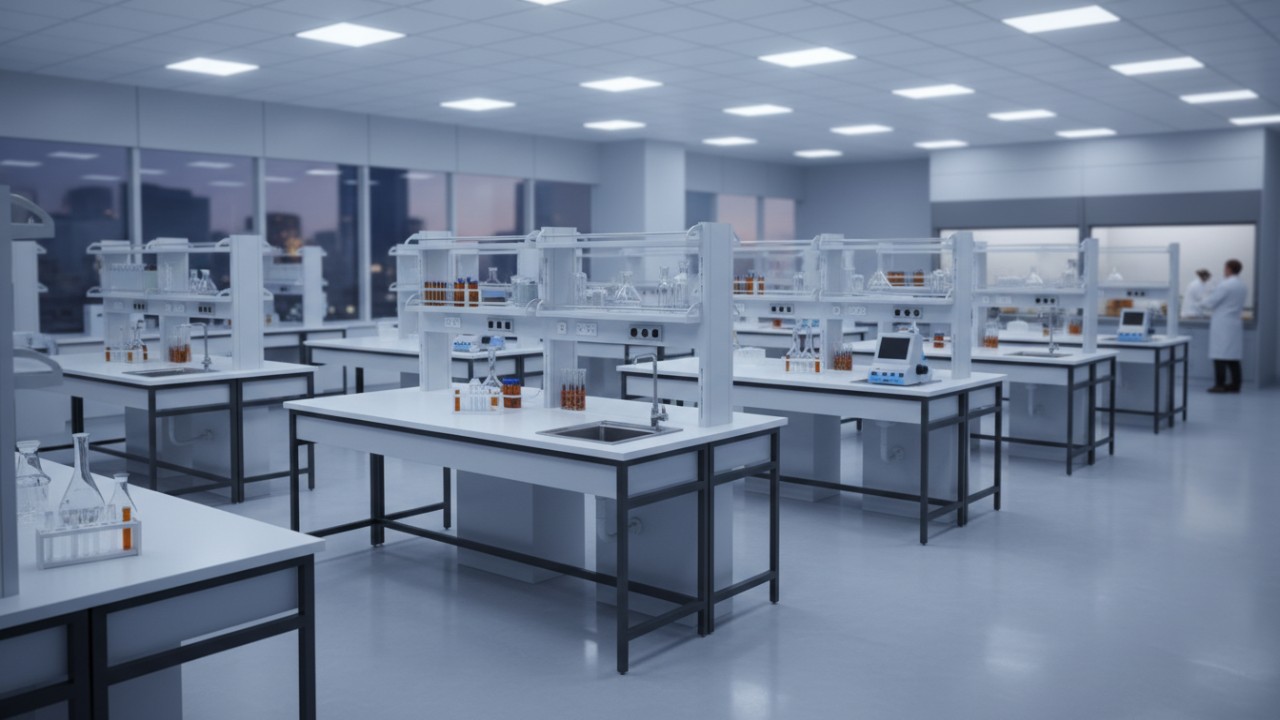
Mistake 3: Underestimating Load Capacity and Vibration Control
Standard lab tables often fail under the weight of heavy instrumentation like mass spectrometers and centrifuges because buyers confuse static load ratings with dynamic stability.
Buying a generic table for heavy equipment is dangerous. If a table typically holds 500 lbs but starts to wobble when a centrifuge spins up, your results are compromised. This is especially critical for science lab tables used in physics or engineering departments.
Critical Considerations:
- Static vs. Dynamic Load: Ensure the table handles the equipment's weight plus the vibration forces.
- Vibration Isolation: For sensitive sensitive equipment like SEMs (Scanning Electron Microscopes), you need specialized anti-vibration tables.
- Safety Margin: Always calculate your required weight capacity and add 20-30%.
MAXLAB’s C-frame and H-frame systems are engineered to support heavy loads while maintaining structural rigidity, ensuring your equipment stays safe.
Mistake 4: Overlooking ESD (Electrostatic Discharge) Requirements
Neglecting ESD protection in electronics or semiconductor labs can result in invisible damage to sensitive components, costing thousands in ruined experiments.
Standard static-dissipative mats are often insufficient. A true ESD lab table uses a grounded laminate surface that connects through the frame to the floor, creating a complete path to ground.
- The Risk: Static electricity can fry circuit boards or corrupt data on magnetic media.
- The Fix: Ensure the entire grounding chain is intact: table, floor, chair, and person.
- Application: Critical for physics labs, semiconductor manufacturing, and server repair stations.
Mistake 5: Neglecting Future Flexibility and Modularity
Installing fixed "built-in" casework is becoming obsolete as it locks labs into a single layout that is expensive and difficult to renovate.
Research needs change rapidly. A grant you receive in 2026 might require a completely different layout by 2028. Fixed furniture traps you in the past. The industry is moving toward modular lab tables that can be reconfigured overnight.
- The "Flex Lab" Trend: Mobile tables with heavy-duty locking casters allow you to create open floor plans.
- Cost Savings: Reconfiguring modular furniture costs a fraction of a full renovation.
- MAXLAB Advantage: Our standardized production lines and modular inventory allow for rapid scaling and reconfiguration, helping you adapt to new projects faster.
For more on selecting the best system for your facility, read our Ultimate Guide to Laboratory Table 2026.
Mistake 6: Failing to Plan for Utility Integration (Power & Data)
Treating power and data as an afterthought leads to a dangerous mess of daisy-chained power strips and tripping hazards across the lab floor.
Modern science lab tables for schools and professional facilities alike require integrated utility management. Equipment density is increasing, and so is the demand for power outlets and data ports.
Best Practices:
- Raceways: Specify tables with integrated electrical raceways to keep cords organized.
- Service Carriers: Consider overhead service carriers vs. table-mounted valves for gas and air.
- Future Capacity: Plan for equipment that may require higher voltage or specialized gases in the future.
Mistake 7: Disregarding Regulatory Compliance (SEFA & ADA)
Ignoring SEFA testing standards and ADA accessibility requirements exposes your facility to legal liability and safety audit failures.
Compliance is not optional.
- SEFA Standards: The Scientific Equipment and Furniture Association (SEFA) sets the benchmark for durability. Specifically, SEFA 8 standards govern the structural integrity of metal casework. Ensuring your furniture is SEFA compliant guarantees it can withstand the rigors of a professional lab.
- ADA Compliance: The Americans with Disabilities Act (ADA) mandates that work surfaces be accessible. According to the U.S. Access Board, an ADA-compliant table must have a height between 28 and 34 inches and provide knee clearance of at least 27 inches high, 30 inches wide, and 19 inches deep. Failing to provide accessible lab tables for schools or workplaces is a violation of federal law.
MAXLAB ensures all our designs, from stainless steel lab tables to fume hoods, meet these rigorous international standards.
Expert Gap Analysis: Budgeting for Total Cost of Ownership (2026 Outlook)
Most buyers focus solely on the initial purchase price, failing to account for the Total Cost of Ownership (TCO) which includes installation, maintenance, and early replacement.
While a cheap table might save you money today, the hidden costs of installation modifications or replacing a corroded surface in three years will destroy your budget.
- Inflation Strategy: With material costs rising, investing in high-quality lab tables now locks in value.
- Efficiency: MAXLAB’s efficient production lines allow us to deliver up to 30% faster than industry peers, saving you valuable time during the construction phase.
- The Rule of Thumb: Investing 15-20% more upfront for the correct materials and modularity can save 50% of your budget over a 10-year span.
To dive deeper into selecting specific benches, check out our article on Choosing the Right Lab Bench for Your Research Needs.
Conclusion
Investing in custom laboratory infrastructure is about more than just buying furniture; it's about building a foundation for discovery. By avoiding these 7 costly mistakes—ranging from poor material selection and ergonomic oversight to neglecting SEFA and ADA compliance—you protect your investment and your researchers. Whether you are equipping classroom lab tables or a high-tech pharmaceutical facility, the details matter.
Custom lab tables are an asset that should evolve with your research. Don't let a simple oversight compromise your lab's future.
Contact our design specialists today for a free consultation to ensure your lab is built for the future.
FAQ
What is the difference between Epoxy Resin and Phenolic Resin lab tables?
Epoxy Resin is a solid, uniform material cured by heat, offering the highest resistance to heat and harsh chemicals, making it ideal for heavy-duty industrial use. Phenolic Resin is layered paper treated with resin; it is highly chemical resistant but lighter, easier to modify, and typically more affordable than Epoxy, making it a great choice for science lab tables in educational settings.
How do I determine the correct weight capacity for my lab table?
To determine capacity, calculate the total weight of your heaviest equipment (e.g., centrifuges, analyzers) and add a 20-30% safety margin to account for accessories and vibration forces. You must then choose a frame (such as a C-frame or H-frame) that is rated for that specific static and dynamic load.
Are height-adjustable lab tables worth the investment?
Yes, they significantly reduce workplace injuries and accommodate staff of varying physical needs. They allow for a seamless transition between sitting and standing tasks, which boosts productivity and helps prevent Repetitive Strain Injuries (RSIs).
What defines an ADA compliant laboratory table?
According to federal guidelines, an ADA compliant table must have a height between 28 and 34 inches. Crucially, it requires knee clearance of at least 27 inches high, 30 inches wide, and 19 inches deep to ensure the work surface is accessible to users in wheelchairs.
Do I need ESD tables for a biology lab?
Typically, no, unless you are working with sensitive electronic microscopy or robotics. ESD (Electrostatic Discharge) tables are critical for electronics, semiconductor, and physics labs where static electricity can damage sensitive circuit boards or components.
How long does it take to manufacture custom lab tables?
Standard lead times range from 4 to 8 weeks depending on complexity. However, custom dimensions or specialized materials (like custom epoxy pours) can extend this to 10-12 weeks. MAXLAB's efficient production lines often achieve delivery times up to 30% faster than these industry averages.
Can custom lab tables be moved easily?
Yes, if they are specified with heavy-duty locking casters. Mobile tables offer greater flexibility for "flex labs" compared to fixed casework, allowing you to reconfigure your space as research needs change.
Why is SEFA certification important for lab furniture?
SEFA certification ensures the furniture has passed rigorous testing for load-bearing, chemical resistance, and durability. It guarantees the product meets industry safety and quality standards, ensuring your lab tables will last for years under professional use.
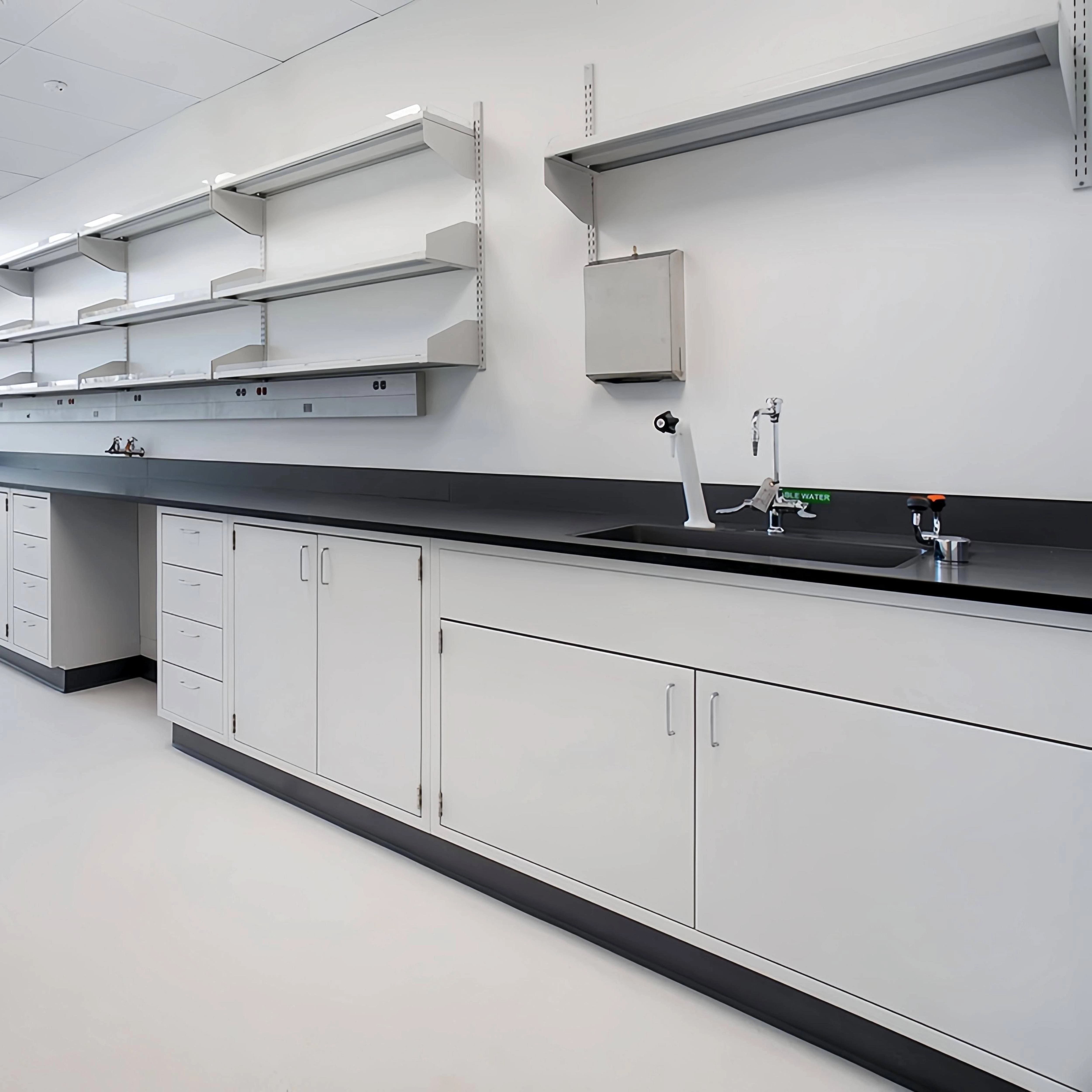
Why We Choose to Be Your Lab Furniture Solution Provider, Not Just a Manufacturer
Max Lab Introduction
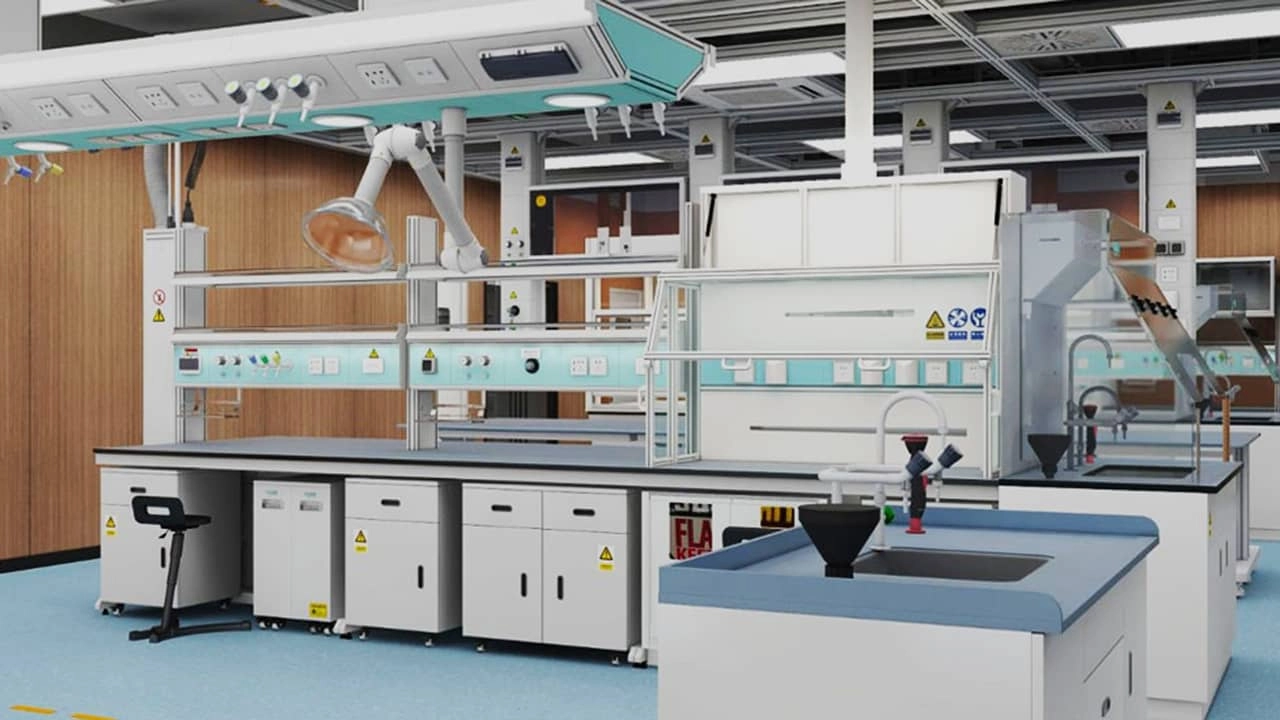
Electronics Lab Bench vs Chemistry Lab Bench: What You Need to Know
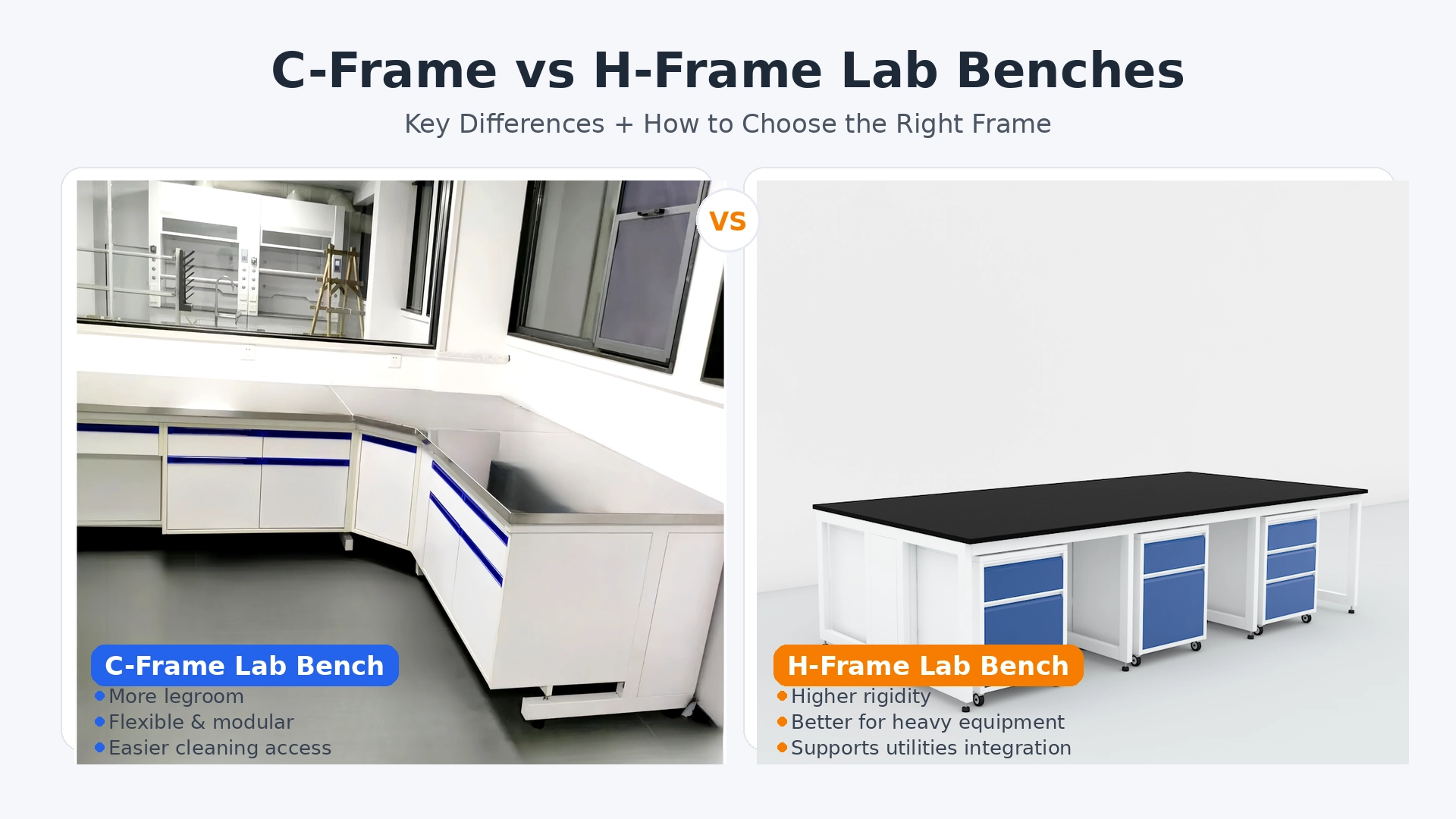
C-Frame vs H-Frame Lab Benches: How to Choose the Right Support Structure
FAQS
Do you export internationally?
Yes, we have over 15 years of export experience and have served clients in more than 60 countries and regions.
Do you offer custom design services?
Yes, we provide full design support tailored to your lab’s specific needs, including layout planning and furniture customization.
For Company
How do I get in touch with your sales team?
You can reach our sales team via email at ada@maxlabfurniture.com, by phone at +86 132 4232 3168, WhatsApp:+86 132 4232 3168, or through the contact form on our Facebook: https://www.facebook.com/MaxLabFurniture
About Solution
What is the warranty policy of the product?
We provide 1-3 years warranty service, depending on the product type. Meanwhile, comprehensive after-sales support is provided, including repair and replacement services.
For Logistics
Do you offer express shipping options?
Yes, we offer express shipping for urgent orders. Please contact our sales team to inquire about availability and additional costs.

Get in touch with us
If you have any comments or good suggestions, please leave us a message; later our professional staff will contact you as soon as possible.

 Scan QR Code
MaxLabFurniture
MaxLab Furniture
daihongada
Max Laboratory