
Variable Air Volume Fume Hood Filter Options Explained

- Choosing the right filter media for VAV fume hoods
- HEPA and ULPA: particulate capture for infectious and fine-particle hazards
- Activated carbon and sorbent media: gas-phase hazards and odor control
- How VAV control affects filter performance and selection
- Face velocity, face area, and containment across sash positions
- Benefits of the Venturi Valve Air Velocity Control System in filter integration
- Maintenance, monitoring, and compliance
- Monitoring filter condition and differential pressure
- Standards, testing, and certification to support compliance
- Energy, cost, and safety trade-offs
- Lifecycle cost and energy impacts
- Table: Comparative snapshot of common filter options for VAV fume hoods
- Best practices for specification and installation
- Specifying filters for new builds and retrofits
- Installation tips and safety considerations
- FAQ
- Q: What is the difference between a VAV fume hood and a constant volume fume hood when it comes to filters?
- Q: Can I use activated carbon filters on a VAV fume hood that sometimes operates at very low exhaust rates?
- Q: How often should I replace HEPA or carbon filters in a VAV system?
- Q: Does the Venturi Valve system require special filters?
- Q: What standards should I reference when testing containment and filter performance?
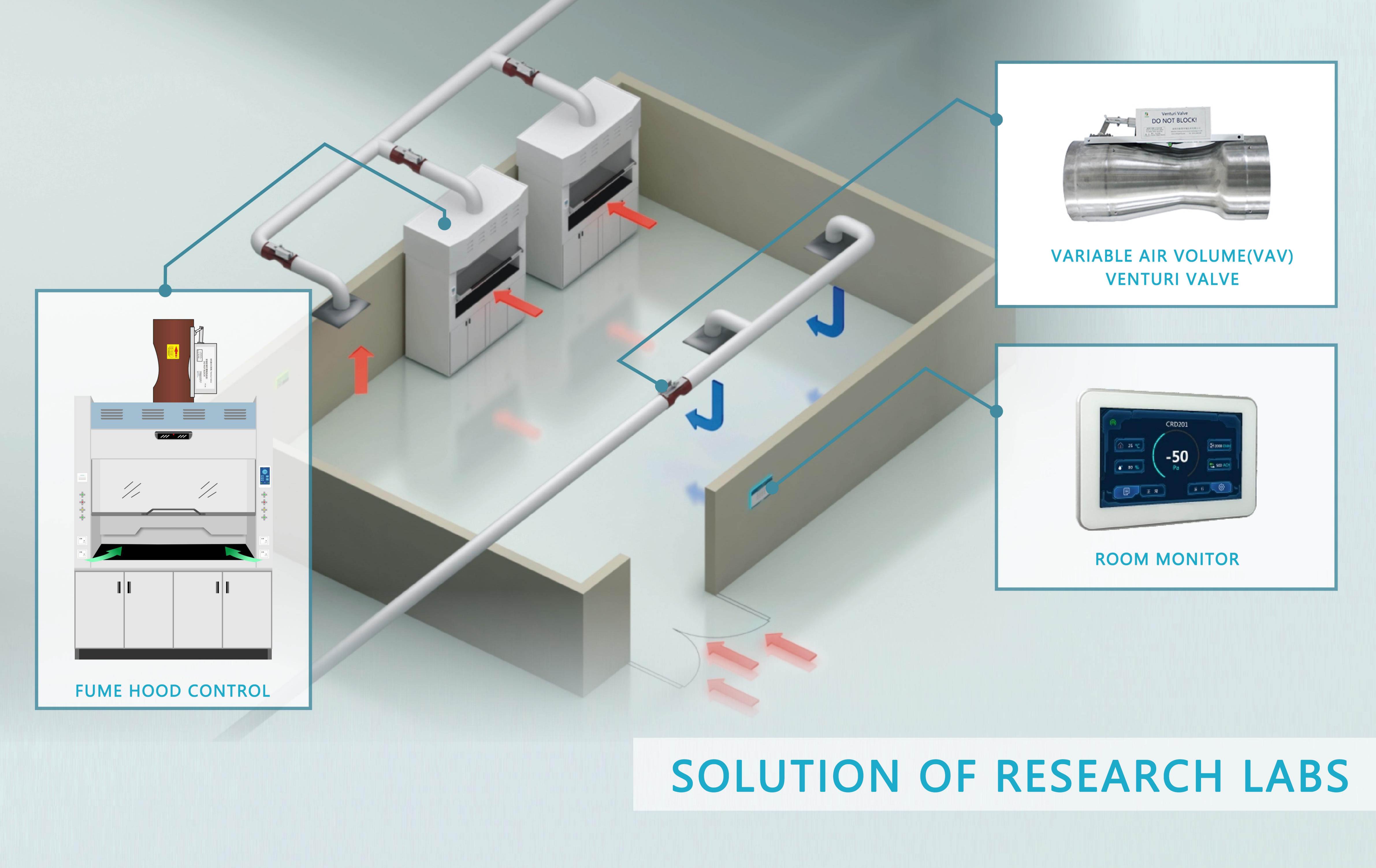
Optimizing filter selection and integration for a variable air volume fume hood requires balancing containment performance, energy use, and maintainability. This article explains particulate and sorbent media options, how VAV airflow behavior affects filter performance, monitoring and maintenance best practices, relevant standards, and how advanced air velocity control — such as the MAX LAB Venturi Valve Air Velocity Control System — can improve contaminant control and HVAC efficiency in critical environments.
Product introduction:
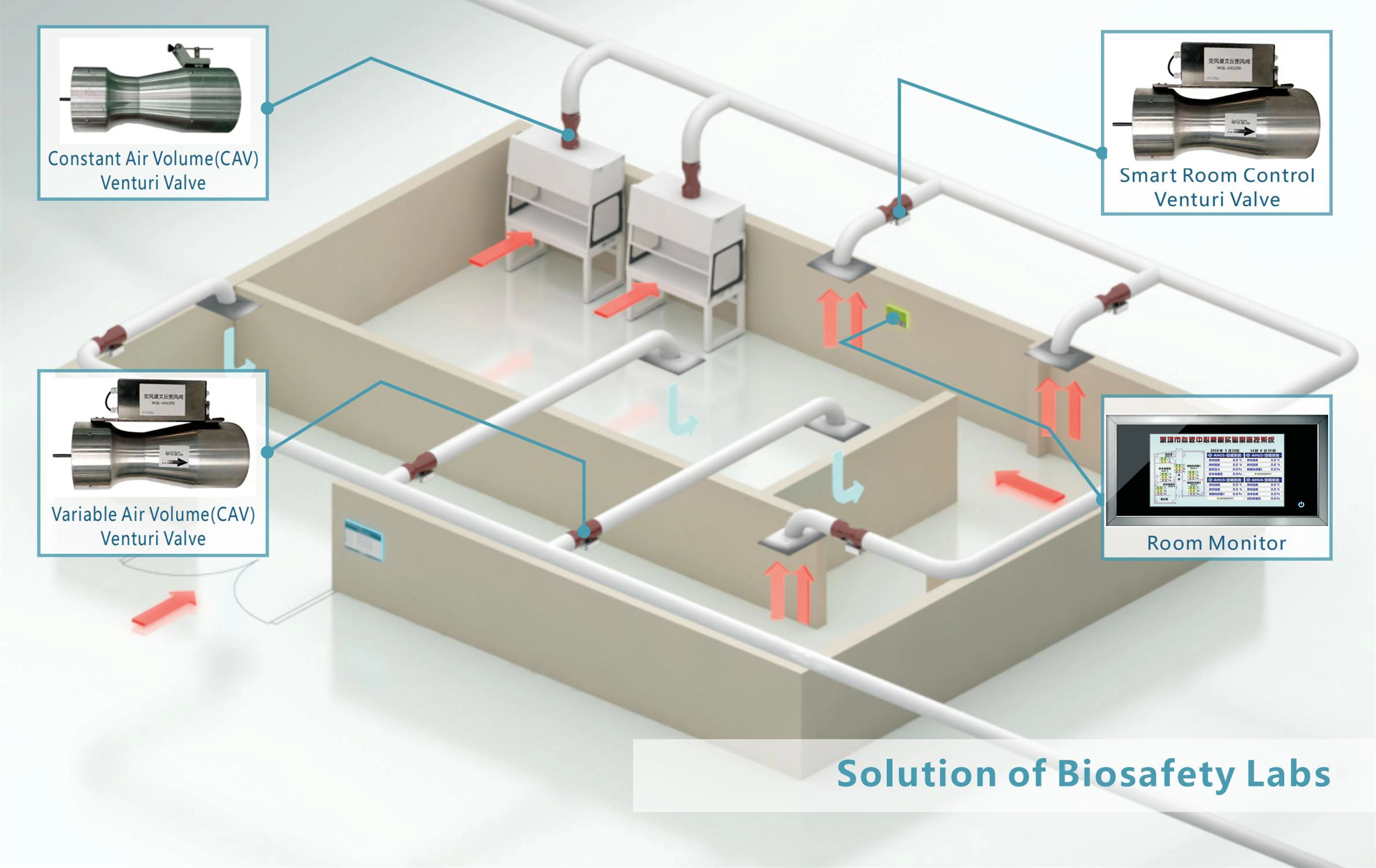
Optimize airflow regulation and ensure precise laboratory ventilation with MAX LAB Venturi Valve Air Velocity Control System. Designed for high-performance air pressure control, this system automatically adjusts to changes in duct static pressure, maintaining stable and energy-efficient air velocity management. Ideal for laboratories, cleanrooms, and healthcare facilities, it provides fast response times, low maintenance, and superior contaminant control. Our Venturi valve system enhances HVAC efficiency, improves air quality, and ensures compliance with critical environment safety standards.
Choosing the right filter media for VAV fume hoods
HEPA and ULPA: particulate capture for infectious and fine-particle hazards
HEPA and ULPA filters are the standard choice when the principal risk is particulate aerosols, powders, or infectious materials. HEPA filters typically capture 99.97% of particles ≥0.3 µm; ULPA provides even higher efficiency (≥99.999% at 0.12 µm for many grades). For a variable air volume fume hood, the key considerations are: initial pressure drop, expected face velocity range, and whether the VAV control maintains a minimum face velocity at low sash positions. If a VAV fume hood reduces airflow significantly, ensure filter face velocity remains within manufacturer-recommended ranges to maintain filtration efficiency and avoid re-entrainment.
Activated carbon and sorbent media: gas-phase hazards and odor control
For volatile organics, acid gases, ammonia, or other chemical vapors, activated carbon or specialty sorbents (e.g., potassium permanganate-impregnated media for formaldehyde) are required. These media remove gases by adsorption or chemisorption, and are rated by capacity and breakthrough time rather than particle efficiency. In a VAV fume hood, adsorption capacity is influenced by airflow rate and temperature — at lower flows (when the VAV reduces exhaust), contact time increases and adsorption improves; however, dynamic changes in flow can make breakthrough prediction more complex. For predictable protection, choose sorbents sized for worst-case airflow and provide monitoring or scheduled replacement based on measured exposures or conservative service life calculations.
How VAV control affects filter performance and selection
Face velocity, face area, and containment across sash positions
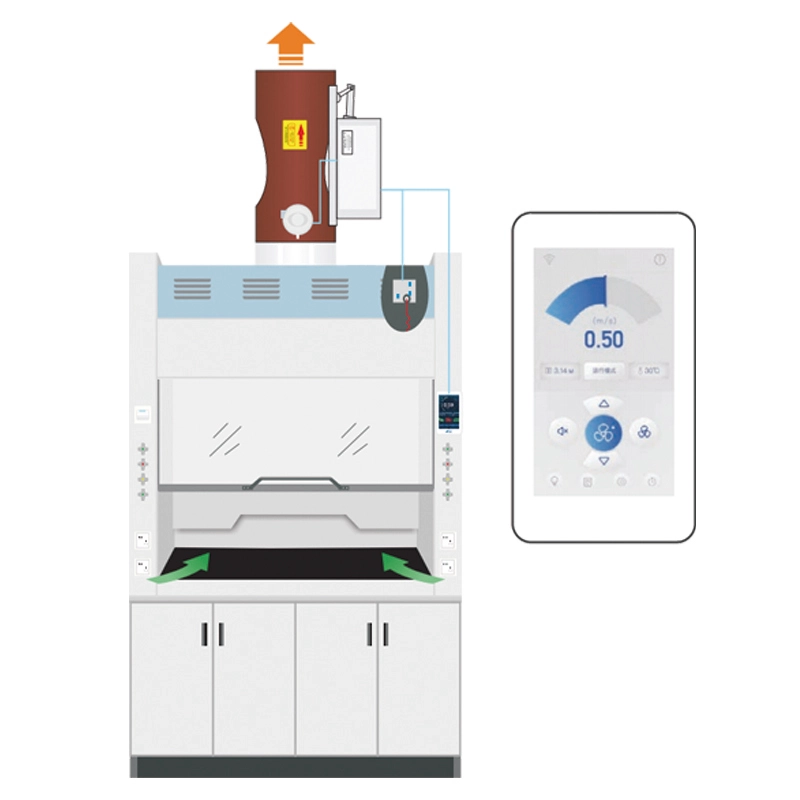
Variable air volume fume hoods adjust exhaust to sash position and laboratory conditions. That dynamic control improves energy use but changes the face velocity and the velocity profile across the sash opening. Filters downstream see varying flow and differential pressures. Designers must ensure that at low-volume settings the face velocity still meets containment requirements (commonly 80–120 ft/min for many hood applications) and that filters are rated to operate efficiently across that range. Sash sensors, VAV algorithms, and fail-safe minimum flows are critical to avoid under-ventilation.
Benefits of the Venturi Valve Air Velocity Control System in filter integration
The MAX LAB Venturi Valve Air Velocity Control System provides stable air velocity by automatically compensating for duct static pressure changes. For filters this means a more consistent face velocity (improving containment consistency), reduced flow spikes that can shorten filter life, and better predictability of filter service intervals. The Venturi valve’s rapid response and low maintenance characteristics help maintain design containment while enabling energy savings from VAV operation.
Maintenance, monitoring, and compliance
Monitoring filter condition and differential pressure
Regular monitoring is essential to ensure filters perform as intended. Differential pressure sensors across prefilters and final filters provide actionable indicators for replacement. For particulate filters, track initial and final pressure drops to estimate remaining life. For sorbents, use a combination of scheduled replacement based on conservative capacity calculations and grab-sample monitoring of exhaust for early detection of breakthrough. Integrating filter monitoring into the building management system (BMS) or laboratory management software helps coordinate VAV control logic with filter state and maintenance alerts.
Standards, testing, and certification to support compliance
Designers must follow established standards and test protocols for fume hoods and laboratory ventilation. ASHRAE and containment testing protocols such as ASHRAE 110 (test method for fume hoods) describe performance measurement procedures; refer to ASHRAE for technical resources and guidance (https://www.ashrae.org/). For general information about fume hoods and their safe use see the Wikipedia summary on fume hoods (https://en.wikipedia.org/wiki/Fume_hood) and federal guidance such as OSHA laboratory safety pages (https://www.osha.gov/laboratory-safety) and NIOSH publications on ventilation (https://www.cdc.gov/niosh/topics/ventilation/). These sources help demonstrate compliance and best practices in design and operation.
Energy, cost, and safety trade-offs
Lifecycle cost and energy impacts
Choosing a filtration strategy for a VAV fume hood involves upfront filter costs, energy consumption of fan systems, and maintenance labor. VAV systems reduce fan energy by lowering airflow when full capture is not required; however, frequent filter changes due to high particulate loads can negate some energy savings through increased maintenance costs and pressure drop. Using higher-efficiency filters with lower pressure drop at design face velocities, combined with the MAX LAB Venturi Valve Air Velocity Control System to stabilize velocity, can reduce the total lifecycle cost while maintaining safety.
Table: Comparative snapshot of common filter options for VAV fume hoods
| Filter Type | Typical Efficiency / Target | Relative Pressure Drop | Typical Applications | Suitability for VAV fume hood |
|---|---|---|---|---|
| HEPA | 99.97% @ 0.3 µm | Moderate | Bioaerosols, fine particulates | High — commonly used; ensure face velocity maintained |
| ULPA | ≥99.999% (0.12 µm) | Higher than HEPA | Critical cleanrooms, hazardous particulates | Suitable for high-risk; watch pressure drop in VAV operation |
| Activated carbon | Not particulate — adsorption capacity | Low to moderate | VOCs, organic vapors | Good for gas hazards; size for worst-case airflow |
| Chemisorption (impregnated) | Selective breakthrough control | Moderate | Acid gases, formaldehyde, ammonia | Preferred when specific gases are present |
| Combination (filter+catalyst) | Particles + gases | Higher | Mixed hazards, recirculation scenarios | Effective but increases maintenance and energy use |
Best practices for specification and installation
Specifying filters for new builds and retrofits
When specifying filters for VAV fume hoods, follow these steps: 1) define the contaminant types and worst-case release rates; 2) select media that target those contaminants (HEPA/ULPA for particulates, carbon/impregnated sorbents for gases); 3) size media to provide required service life at the expected maximum airflow and at reduced VAV flows; 4) confirm differential pressure at nominal and minimum flows to ensure compatible fan capacity; 5) require clear service access and safety provisions for filter changeouts. For retrofits, assess duct static pressure, fan capacity, and whether the Venturi Valve system can be integrated to stabilize face velocity and reduce the need for frequent filter changes.
Installation tips and safety considerations
Install filters in accordance with manufacturer instructions. For HEPA/ULPA use proper gasketed frames and certified leak testing after installation. For sorbents, ensure prefilters are installed to protect carbon beds from particulate loading. When handling contaminated filters, follow OSHA and local waste disposal regulations; consider using sealed filter change carts if hazardous contaminants are present. Where recirculation is used (rare in many lab scenarios), confirm that air quality after filtration meets regulatory requirements before returning air to the space.
FAQ
Q: What is the difference between a VAV fume hood and a constant volume fume hood when it comes to filters?
A: In a constant volume fume hood, airflow and face velocity are fixed, so filter sizing and life estimates are simpler. In a variable air volume fume hood, airflow changes with sash position or demand, so filters must be sized and specified to perform across a range of flows and face velocities. VAV systems can save energy but require careful coordination of minimum face velocity, monitoring of differential pressure, and, ideally, a stable control mechanism such as the Venturi Valve Air Velocity Control System to avoid under-ventilation or excessive pressure drop.
Q: Can I use activated carbon filters on a VAV fume hood that sometimes operates at very low exhaust rates?
A: Yes — lower exhaust rates increase contact time and can improve adsorption, but sizing must account for peak release scenarios. Also consider temperature and humidity effects on adsorption capacity. Always plan for conservative service life and consider monitoring exhaust concentrations for early detection of breakthrough.
Q: How often should I replace HEPA or carbon filters in a VAV system?
A: Replacement frequency depends on contaminant load, airflow patterns, and differential pressure trends. Use prefilters to protect final filters and monitor differential pressure to set replacement thresholds. For sorbents, use capacity calculations and conservative service life assumptions; where exposures are critical, perform periodic grab sampling or continuous monitoring. Integrating filter state alerts into a BMS or maintenance system simplifies scheduling.
Q: Does the Venturi Valve system require special filters?
A: No special filter media are required. The Venturi Valve Air Velocity Control System stabilizes duct static pressure and face velocity, which improves the consistency of filter performance and can extend filter life by avoiding frequent flow transients. It is compatible with HEPA, ULPA, activated carbon, and combination filter assemblies used in laboratory and cleanroom ventilation systems.
Q: What standards should I reference when testing containment and filter performance?
A: Refer to ASHRAE guidance and containment test protocols such as ASHRAE 110 for fume hood performance testing (https://www.ashrae.org/). For workplace safety and ventilation guidance, consult OSHA laboratory safety information (https://www.osha.gov/laboratory-safety) and NIOSH resources on ventilation (https://www.cdc.gov/niosh/topics/ventilation/). For background on the function and types of fume hoods, see the overview on Wikipedia (https://en.wikipedia.org/wiki/Fume_hood).
Contact us to discuss a customized filter strategy and how the MAX LAB Venturi Valve Air Velocity Control System can be integrated into your VAV fume hood or laboratory HVAC design. Visit our product page or contact our sales team to request a quote, datasheet, or on-site assessment.
Lifecycle Cost Analysis for Lab Countertops in Institutional Labs
Specification Guide for a Variable Air Volume Fume Hood
Variable Air Volume Fume Hood Warranty and Service Terms
Safety Standards to Check for Variable Air Volume Fume Hoods
For Customization
Do you offer custom colors for lab furniture?
Yes, we offer a range of color options for laboratory furniture to match your lab’s aesthetic requirements or branding.
For Products
What materials do you use for your furniture?
We use a variety of durable materials such as stainless steel, steel wood, PP and wood composites. Our countertop materials are phenolic resin, epoxy resin, ceramic, trespa and granite, depending on your lab’s needs.
For Logistics
How can I track my shipment?
Once your order has been shipped, we will provide tracking information so you can monitor the status of your delivery.
About Solution
How about your after sale service?
We will reply to you within 24 hours by email or phone.
If we have a local agent, we will arrange for him to be at your site within 24 hours to assist you in shooting the problem.
For After-Sales Support
Why choose your company?
We have been engaged in the manufacturing of various packing machines professionally over 15 years, and we can provide better after-sales service.
Variable Air Volume Fume Hood
Optimize airflow regulation and ensure precise laboratory ventilation with MAX LAB Venturi Valve Air Velocity Control System. Designed for high-performance air pressure control, this system automatically adjusts to changes in duct static pressure, maintaining stable and energy-efficient air velocity management. Ideal for laboratories, cleanrooms, and healthcare facilities, it provides fast response times, low maintenance, and superior contaminant control. Our Venturi valve system enhances HVAC efficiency, improves air quality, and ensures compliance with critical environment safety standards.

Floor Mounted Lab Bench
Our Floor Mounted Lab Bench is an essential, high-efficiency workspace for laboratories, made from high-quality steel-wood or corrosion-resistant stainless steel materials to ensure exceptional durability and stability. The unique floor-mounted design effectively reduces vibration, optimizes space usage, and provides a safe and tidy laboratory environment.
Customizable storage solutions help organize lab equipment efficiently, while the easy-to-clean surface maintains laboratory hygiene. It is widely suitable for research institutions, educational laboratories, and the chemical and pharmaceutical industries.
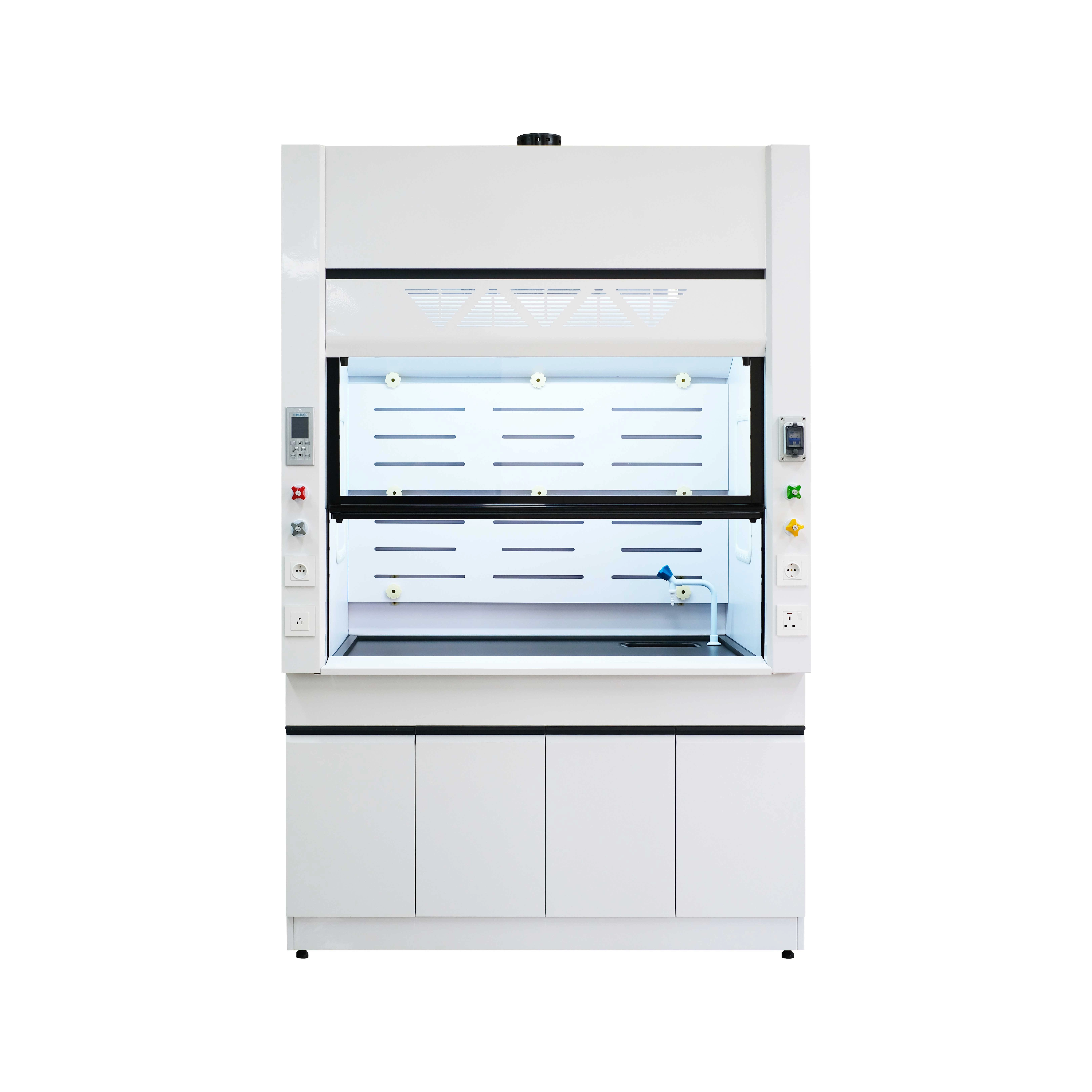
Fume Hood
The fume hood provides safe ventilation to protect against exposure to hazardous or toxic fumes, vapors, or airborne particulate. It is primarily used in laboratory and manufacturing applications to protect the user or environment outside the hood, but can also be used to protect the materials or experiment under the hood.
APPLICATION
Chemistry Lab, physics Lab, biological analysis, pharmaceutical medicine analysis, biological pharmaceutical, plant culture, environmental testing and electronic instrumentation scientific research and so on.
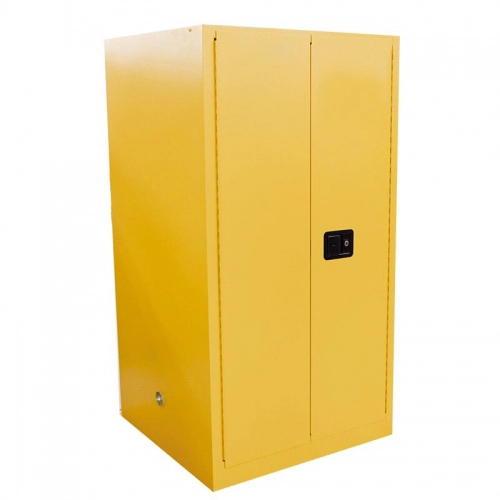
Flammable Storage Cabinet
Safety Cabinets store flammable liquids, corrosives, pesticides and other hazardous materials. All fire-resistant safety cabinets by meet fire codes and regulations for safety storage.
To help protect your people and facility from a potential fire, safety cabinets are engineered to safely contain flammable fuels, solvents, and chemicals. Safety cabinets can not only help everyone store chemicals reasonably, save chemical supplies, but also save human resources, and avoid fires caused by chemicals with the greatest strength.

 Scan QR Code
MaxLabFurniture
MaxLab Furniture
daihongada
Max Laboratory