
Variable Air Volume Fume Hood Controls Training for Staff

- Why VAV Control Systems Matter in Laboratory Safety
- What is a variable air volume fume hood and how it differs from CAV
- Key safety and performance drivers
- Standards and guidance that inform training
- Core Training Curriculum: Controls, Operation, and Safety Procedures
- Fundamentals of airflow regulation and control logic
- Practical operating procedures for laboratory personnel
- Hands-on exercises and competency checks
- Commissioning, Testing, and Maintenance for Reliable VAV Performance
- Commissioning steps and acceptance testing
- Routine maintenance and calibration
- Troubleshooting common issues
- Integrating MAX LAB Venturi Valve Air Velocity Control System into Training and Operations
- Product overview and operational benefits
- Pilot exercises for staff using Venturi valve systems
- Energy and compliance impacts
- Assessment, Records, and Continuous Improvement
- Performance monitoring and data logging
- Documentation and regulatory compliance
- Continuous improvement and refresher training
- Comparing CAV and VAV Fume Hoods: Operational and Energy Considerations
- References and Authoritative Resources
- Frequently Asked Questions (FAQ)
- Q: Do VAV fume hoods compromise safety compared to CAV hoods?
- Q: How often should VAV fume hood controls be calibrated?
- Q: What should staff do if a face velocity alarm sounds?
- Q: Can existing CAV hoods be retrofitted to VAV with a Venturi valve?
- Q: What documentation should be kept after training and commissioning?

Providing staff with thorough training on variable air volume fume hood controls is essential for maintaining laboratory safety, ensuring consistent contaminant capture, and optimizing energy use. This article explains how VAV fume hood systems work, outlines hands-on training modules, covers commissioning and testing best practices, and shows how products such as the MAX LAB Venturi Valve Air Velocity Control System can be integrated into an effective operational and maintenance program. References to recognized standards and authoritative guidance are included to support evidence-based practices.
Why VAV Control Systems Matter in Laboratory Safety
What is a variable air volume fume hood and how it differs from CAV
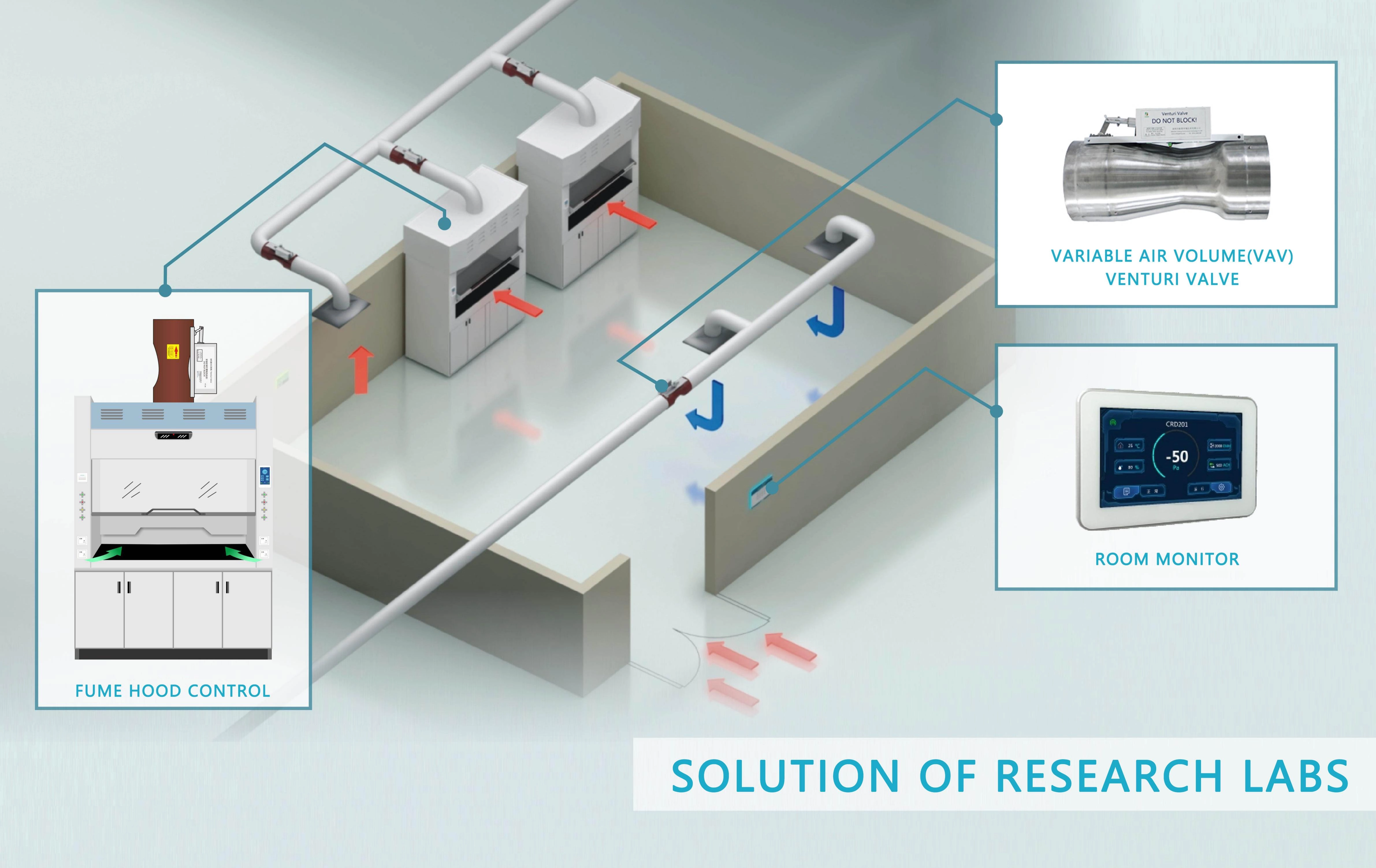
A variable air volume fume hood (commonly called a VAV fume hood) dynamically adjusts the exhaust airflow in response to sash position, duct static pressure, or contaminant loads to maintain a target face velocity and containment performance. This contrasts with a constant air volume (CAV) fume hood, which exhausts a fixed airflow regardless of sash position. VAV systems can deliver equivalent or better safety while reducing conditioned air waste and lowering HVAC energy consumption.
Key safety and performance drivers
Training should emphasize the safety drivers for VAV adoption: consistent face velocity control to ensure capture of hazardous vapors, reduced turbulence from stable airflow profiles, and automated responses to changing lab conditions. Effective VAV controls also help meet inspection criteria and regulatory expectations, such as fume hood containment guidelines and laboratory ventilation standards.
Standards and guidance that inform training
Training programs should reference authoritative sources: ASHRAE testing methods (e.g., ASHRAE Standard 110 for fume hood performance), the ISO 14644 series for clean environment considerations, and laboratory safety and chemical hygiene regulations such as OSHA's Laboratory Standard (29 CFR 1910.1450). These references support technical decisions and justify training content to stakeholders.
Core Training Curriculum: Controls, Operation, and Safety Procedures
Fundamentals of airflow regulation and control logic
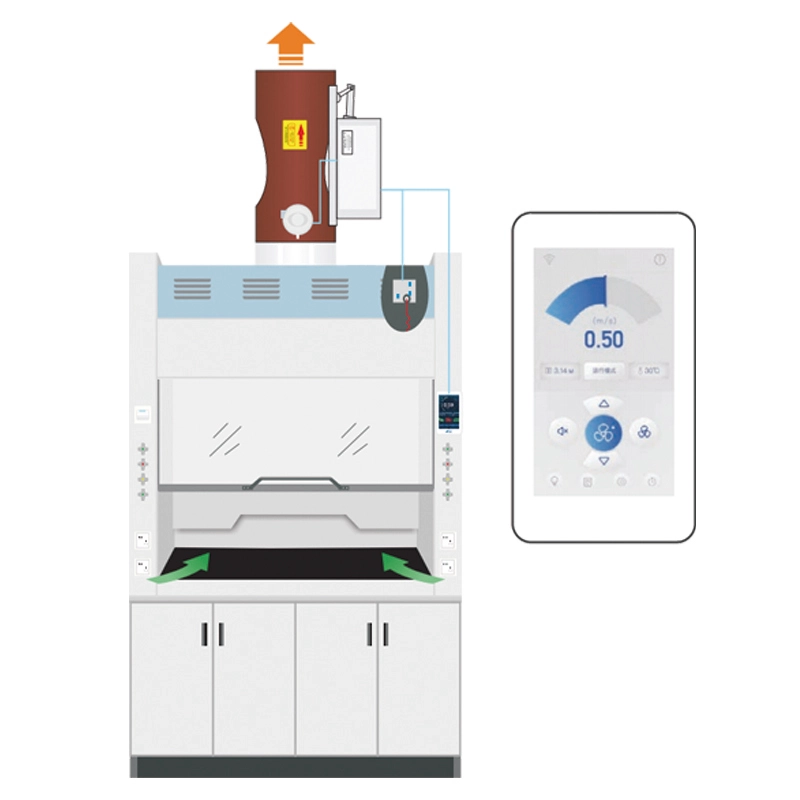
Staff must learn the fundamentals: how the VAV control loop maintains target face velocity, the role of sensors (air velocity sensors, pressure transducers), and actuator types (including Venturi valves). Explain duct static pressure compensation: when the building system changes, a quality VAV controller will adjust output to hold the setpoint. Understanding proportional/integral (PI) control basics helps technicians interpret behavior during transient events and tune the system if necessary.
Practical operating procedures for laboratory personnel
Train end-users on safe sash operation, recognizing alarm indications, and simple checks they can perform before starting experiments (visual airflow indicator, ensure hood baffle position, close sash when not in use). Emphasize that sash position significantly affects required exhaust flow; with VAV control, the system reduces flow when a sash is closed, but operators must still follow safe work practices to maintain containment.
Hands-on exercises and competency checks
Effective training is competency-based: include hands-on modules where staff measure face velocity with a calibrated vane or thermal anemometer, verify the relationship between sash height and airflow, and practice responding to simulated faults (e.g., low face velocity alarm). Use checklists and quizzes to document competence. Routine re-certification intervals (annually or per institutional policy) should be established.
Commissioning, Testing, and Maintenance for Reliable VAV Performance
Commissioning steps and acceptance testing
Commissioning ensures the VAV fume hood performs as designed. Key steps include baseline airflow mapping, sensor calibration, control loop tuning, and verification against a target face velocity profile across typical sash positions. ASHRAE Standard 110-style tests or local lab-specific protocols should be used for acceptance testing. Commissioning records should be retained as part of the facility's technical files.
Routine maintenance and calibration
Routine maintenance tasks that should be included in staff training and maintenance schedules: clean and inspect the Venturi valve and actuator, check and calibrate velocity and pressure sensors, inspect ductwork and exhaust fans, and verify alarm setpoints. A preventative maintenance plan reduces unexpected downtimes and maintains consistent containment and energy performance.
Troubleshooting common issues
Train facilities personnel on common faults: sensor drift (incorrect face velocity readings), control oscillation (requires tuning), blocked dampers/ducts (reduced range), and mechanical failures (actuator or valve sticking). Provide flowcharts or decision trees for troubleshooting, and ensure complex issues are escalated to certified HVAC/controls technicians.
Integrating MAX LAB Venturi Valve Air Velocity Control System into Training and Operations
Product overview and operational benefits
Optimize airflow regulation and ensure precise laboratory ventilation with MAX LAB Venturi Valve Air Velocity Control System. Designed for high-performance air pressure control, this system automatically adjusts to changes in duct static pressure, maintaining stable and energy-efficient air velocity management. Ideal for laboratories, cleanrooms, and healthcare facilities, it provides fast response times, low maintenance, and superior contaminant control. Our Venturi valve system enhances HVAC efficiency, improves air quality, and ensures compliance with critical environment safety standards.
Pilot exercises for staff using Venturi valve systems
Include product-specific exercises: explain how the Venturi valve modulates airflow using a constriction and bleed principle, how the system responds to sash changes, and how to interpret controller diagnostics. Practical labs should show the difference in response time and stability between a Venturi valve-controlled VAV hood and older damper-based systems.
Energy and compliance impacts
Well-commissioned VAV fume hoods with efficient valves like Venturi-based systems can reduce building HVAC loads substantially. Training should cover how to document energy savings and compliance: link airflow records and alarm logs to periodic safety audits, and include energy performance metrics in post-implementation reviews to demonstrate return on investment.
Assessment, Records, and Continuous Improvement
Performance monitoring and data logging
Continuous or periodic monitoring of sash position, face velocity, duct static pressure, and alarm events is essential. Train staff to retrieve and interpret logged data, set up alerts for threshold breaches, and perform trend analysis to detect gradual performance degradation. Modern controllers and building management systems (BMS) can integrate VAV fume hood telemetry for centralized oversight.
Documentation and regulatory compliance
Maintain records of commissioning reports, calibration certificates, maintenance tasks, and staff competency checks. These documents support compliance with institutional policies and external audits. Include references to regulatory expectations such as OSHA documentation and ISO cleanroom requirements where applicable.
Continuous improvement and refresher training
Adopt a continuous improvement approach: review incident reports, monitor trends, and update training materials when process changes or new technologies (e.g., improved sensors or valves) are adopted. Schedule annual refresher sessions and after any significant system changes.
Comparing CAV and VAV Fume Hoods: Operational and Energy Considerations
| Feature | Constant Air Volume (CAV) | Variable Air Volume (VAV) |
|---|---|---|
| Airflow control | Fixed exhaust flow regardless of sash | Adjusts flow to maintain target face velocity |
| Energy use | Higher baseline energy due to constant exhaust | Lower energy when sash closed or idle; demand-based |
| Complexity | Simple controls, fewer components | More complex controls and sensors; requires commissioning |
| Containment performance | Stable if sized correctly; can be conservative | High if properly commissioned and maintained; responsive |
| Maintenance | Lower controls maintenance, higher HVAC load maintenance | Requires periodic calibration and control tuning |
References and Authoritative Resources
For further reading and standards you can cite in training materials:
- Variable air volume (Wikipedia) — summary of VAV concepts and applications.
- Fume hood (Wikipedia) — overview of types and safety principles for laboratory fume hoods.
- ISO 14644 — standards for cleanrooms and controlled environments.
- OSHA Laboratory Standard (29 CFR 1910.1450) — regulatory considerations for laboratory practices.
Frequently Asked Questions (FAQ)
Q: Do VAV fume hoods compromise safety compared to CAV hoods?
A: No — when properly designed, commissioned, and maintained, VAV fume hoods provide equivalent or better containment than CAV hoods. The key is ensuring that control setpoints, sensor calibration, and alarm thresholds are established and verified during commissioning and periodically rechecked thereafter. Refer to ASHRAE testing methods and institutional protocols for acceptance testing.
Q: How often should VAV fume hood controls be calibrated?
A: Sensor calibration intervals depend on sensor type and usage, but a common practice is annual calibration for velocity and pressure sensors, with more frequent checks (quarterly or semi-annually) for high-use hoods. Calibrate earlier if trend data indicates drift or after any maintenance impacting airflow.
Q: What should staff do if a face velocity alarm sounds?
A: Immediately stop any hazardous operations inside the hood, close the sash to the safe position if possible, and notify facilities or the designated safety officer. Follow the laboratory's emergency and incident procedures. Trained facilities staff should diagnose the cause—sensor fault, fan problem, duct blockage, or controller error—and restore safe ventilation before resuming work.
Q: Can existing CAV hoods be retrofitted to VAV with a Venturi valve?
A: Many CAV hoods can be retrofitted with VAV controls and efficient valves such as Venturi valves, but feasibility depends on ductwork, exhaust fan capacity, and the laboratory's HVAC design. A site assessment and commissioning plan are essential to ensure safe and effective retrofit.
Q: What documentation should be kept after training and commissioning?
A: Maintain commissioning reports, calibration certificates, maintenance records, staff competency certificates, and continuous monitoring logs. These documents support regulatory compliance and help with trend analysis and troubleshooting.
If you would like to evaluate or purchase the Variable Air Volume Fume Hood controls or the MAX LAB Venturi Valve Air Velocity Control System, contact our team for a product demo, commissioning support, and tailored staff training: View product & request demo or email sales@maxlab.com.
Retrofit Strategies for Installing Variable Air Volume Fume Hoods
2026 Master Guide: Perfecting Your Station Eye Wash Compliance Strategy
Ergonomic Principles in Lab Furniture Design
Fume Hood Selection for Lab Safety and Regulatory Compliance
For Company
Do you offer our design service from scratch?
Yes, we provide full design support tailored to your lab’s specific needs, including layout planning and furniture customization.
For Customization
Can you create furniture for labs with special requirements?
Yes, we specialize in designing and manufacturing lab furniture for specialized environments, including clean rooms, bio labs, and industrial labs.
Can I make changes to my order once it has been placed?
We offer limited flexibility to make changes to your order after it has been placed. Contact our sales team as soon as possible if you need to make modifications.
Customization
How do I start a customized service?
Please contact our sales or technical support team for an initial enquiry. We will provide detailed customized recommendations and quotes according to your needs.
Can equipment be customized to specific experimental safety standards?
Yes. We offer customized equipment to specific safety standards, such as ANSI/ASHRAE standards, UL certification and ISO safety standards.
Variable Air Volume Fume Hood
Optimize airflow regulation and ensure precise laboratory ventilation with MAX LAB Venturi Valve Air Velocity Control System. Designed for high-performance air pressure control, this system automatically adjusts to changes in duct static pressure, maintaining stable and energy-efficient air velocity management. Ideal for laboratories, cleanrooms, and healthcare facilities, it provides fast response times, low maintenance, and superior contaminant control. Our Venturi valve system enhances HVAC efficiency, improves air quality, and ensures compliance with critical environment safety standards.

Floor Mounted Lab Bench
Our Floor Mounted Lab Bench is an essential, high-efficiency workspace for laboratories, made from high-quality steel-wood or corrosion-resistant stainless steel materials to ensure exceptional durability and stability. The unique floor-mounted design effectively reduces vibration, optimizes space usage, and provides a safe and tidy laboratory environment.
Customizable storage solutions help organize lab equipment efficiently, while the easy-to-clean surface maintains laboratory hygiene. It is widely suitable for research institutions, educational laboratories, and the chemical and pharmaceutical industries.
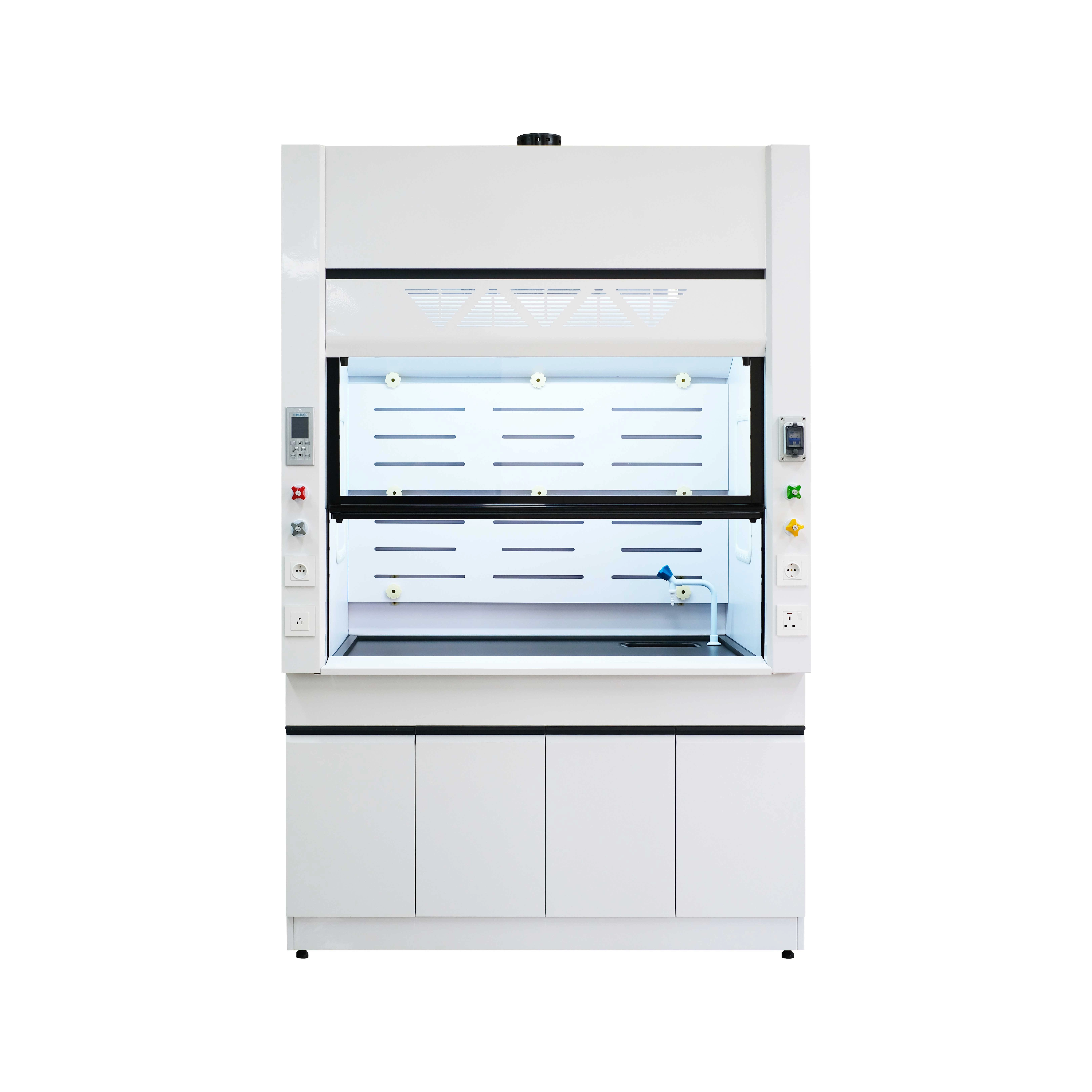
Fume Hood
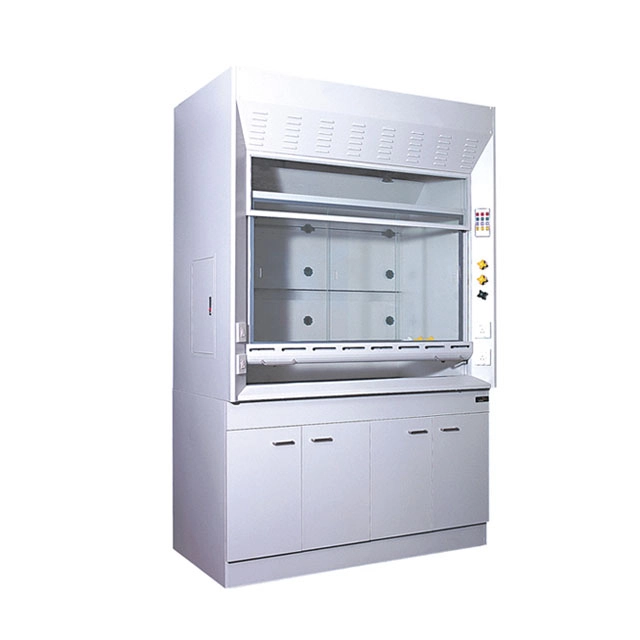
The fume hood provides safe ventilation to protect against exposure to hazardous or toxic fumes, vapors, or airborne particulate. It is primarily used in laboratory and manufacturing applications to protect the user or environment outside the hood, but can also be used to protect the materials or experiment under the hood.
APPLICATION
Chemistry Lab, physics Lab, biological analysis, pharmaceutical medicine analysis, biological pharmaceutical, plant culture, environmental testing and electronic instrumentation scientific research and so on.
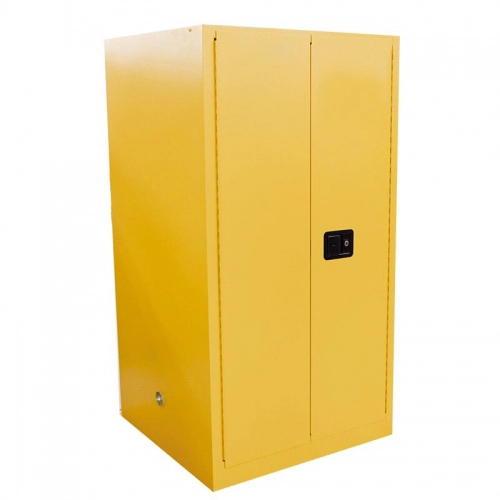
Flammable Storage Cabinet
Safety Cabinets store flammable liquids, corrosives, pesticides and other hazardous materials. All fire-resistant safety cabinets by meet fire codes and regulations for safety storage.
To help protect your people and facility from a potential fire, safety cabinets are engineered to safely contain flammable fuels, solvents, and chemicals. Safety cabinets can not only help everyone store chemicals reasonably, save chemical supplies, but also save human resources, and avoid fires caused by chemicals with the greatest strength.

 Scan QR Code
MaxLabFurniture
MaxLab Furniture
daihongada
Max Laboratory