
Request for Proposal Tips for Variable Air Volume Fume Hoods

- Why Specify a Variable Air Volume Fume Hood?
- Safety and Containment Fundamentals
- Energy Efficiency and HVAC Interaction
- Why the Venturi Valve Matters
- Technical Requirements to Include in the RFP
- Performance Metrics and Control Setpoints
- Controls, Sensors, and Integration
- Materials, Construction and Ergonomics
- Testing, Commissioning, and Acceptance Criteria
- Standards-Based Performance Testing
- Commissioning and Acceptance Tests
- Third-Party Commissioning and Documentation
- Procurement, Lifecycle and Contract Clauses
- Warranty, Spare Parts, and Maintenance
- Energy and Life-Cycle Cost Analysis
- Liability, Safety and Compliance Clauses
- Comparative Table: VAV vs CAV Fume Hoods
- RFP Checklist and Sample Specification Language
- Key Items to Put in the RFP
- Sample Specification Snippet
- Frequently Asked Questions (FAQ)
- Q: What is the main advantage of a variable air volume fume hood over a constant air volume hood?
- Q: How should I specify face velocity and containment testing in the RFP?
- Q: Are Venturi valves better than butterfly dampers for VAV control?
- Q: What commissioning documentation should I expect?
- Contact and Next Steps

When drafting a Request for Proposal (RFP) for a variable air volume fume hood, clarity on performance metrics, control strategies, acceptance testing, and ongoing maintenance expectations is essential. This guide helps owners, facility managers, lab planners, and procurement teams define requirements that balance safety, energy efficiency, and compliance. It includes practical specification language, test references, procurement checklist items, and examples of contractual acceptance criteria to help you obtain competitive, comparable proposals for VAV fume hood systems.
Why Specify a Variable Air Volume Fume Hood?
Safety and Containment Fundamentals
Variable air volume fume hood systems are designed to maintain consistent face velocity and containment while modulating exhaust volume based on sash position and duct conditions. Specifying a VAV fume hood reduces operator exposure to volatile chemicals by maintaining appropriate capture velocity at the face while allowing reduced airflow when full capture is not required. Include explicit containment performance goals such as target face velocity (commonly 80–120 fpm depending on application) and allowable fluctuation bands in the RFP.
Energy Efficiency and HVAC Interaction
VAV fume hoods can deliver major energy savings compared to constant air volume (CAV) systems by reducing conditioned makeup air and exhaust volumes when hoods are in setback or closed. When you describe energy goals in the RFP, quantify expectations (e.g., percentage reduction vs. existing CAV baseline, or target annual energy use). Require bidders to provide estimated energy modeling results and life-cycle cost comparisons that include both HVAC energy and fan power.
Why the Venturi Valve Matters
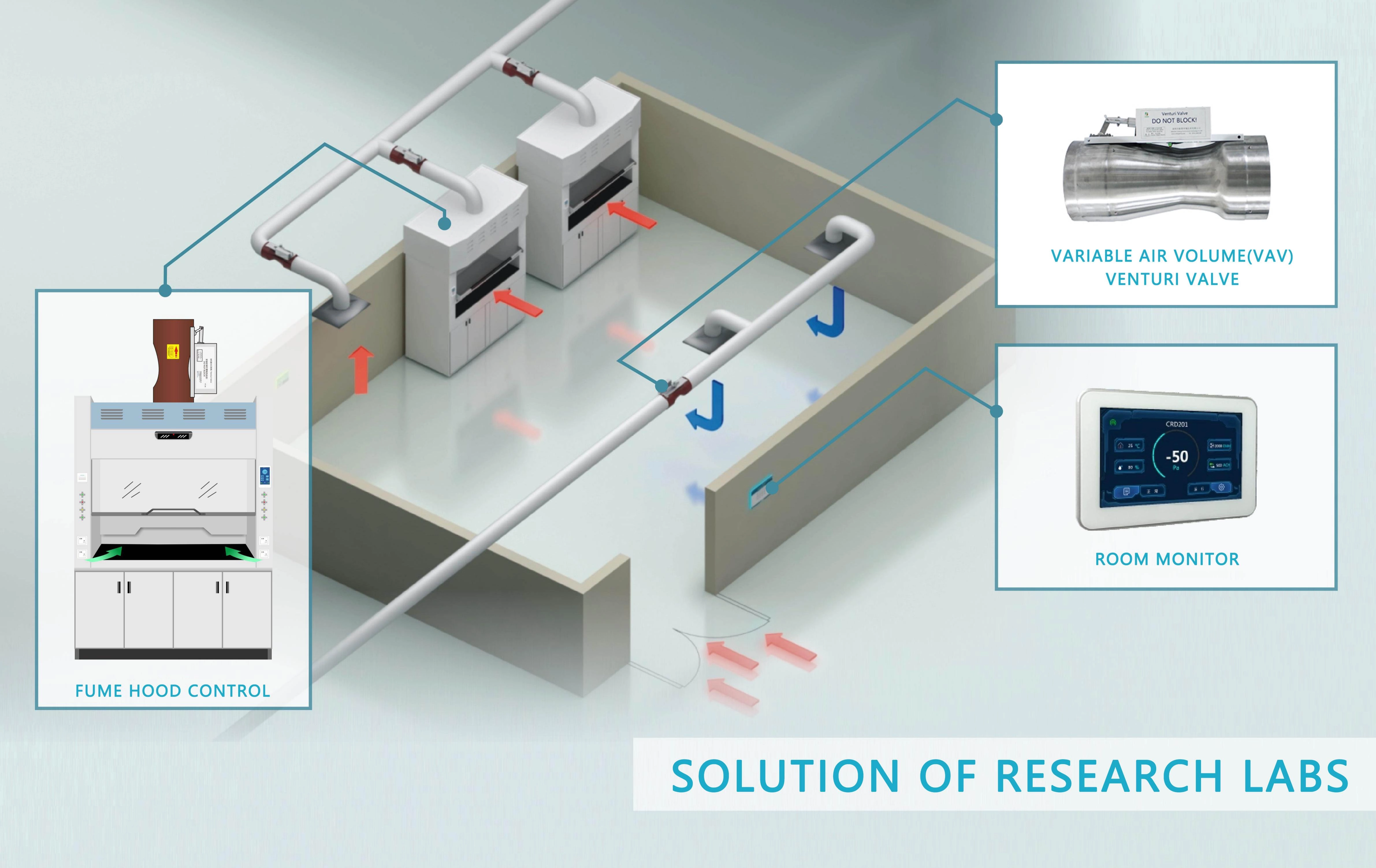
Airflow control hardware is central to VAV performance. Require bidders to describe their airflow control technology and how it maintains stability in changing duct static pressure environments. Consider specifying fast-response, low-maintenance devices such as a Venturi valve air velocity control system to stabilize hood face velocity automatically. The MAX LAB Venturi Valve Air Velocity Control System, for example, optimizes airflow regulation and maintains stable, energy-efficient air velocity management under varying duct static pressure conditions, improving HVAC efficiency and contaminant control in laboratories and cleanrooms.
Product Introduction:
Optimize airflow regulation and ensure precise laboratory ventilation with MAX LAB Venturi Valve Air Velocity Control System. Designed for high-performance air pressure control, this system automatically adjusts to changes in duct static pressure, maintaining stable and energy-efficient air velocity management. Ideal for laboratories, cleanrooms, and healthcare facilities, it provides fast response times, low maintenance, and superior contaminant control. Our Venturi valve system enhances HVAC efficiency, improves air quality, and ensures compliance with critical environment safety standards.
Technical Requirements to Include in the RFP
Performance Metrics and Control Setpoints
Explicitly state required control modes and setpoints: desired face velocity range (for example, baseline 100 fpm ±10 fpm at nominal sash height), minimum and maximum exhaust volumes, and acceptable transient response time for sash changes. Ask vendors to provide control algorithms for sash-open, sash-closed, and setback modes and to describe how the system maintains face velocity during duct static pressure fluctuations and multiple hood operation.
Controls, Sensors, and Integration
Require sash position sensors, face velocity sensors or virtual velocity estimation, duct static pressure sensors, and an interface to the building management system (BMS) using BACnet/IP or other agreed protocol. Ask for details about alarm thresholds (low face velocity, exhaust failure), data logging frequency, and secure remote access for trending and fault diagnostics. Specify that control logic must support prioritized airflow allocation when multiple VAV fume hoods are connected to a common exhaust system.
Materials, Construction and Ergonomics
Define construction expectations: chemical-resistant liners, sash types and weights, static and dynamic sealing effectiveness, and ergonomic sash operation. Request vendor submittals showing sectional drawings, materials data sheets, and sample maintenance plans. Include exhaust plenum and connection geometry requirements to ensure predictable airflow and to simplify commissioning.
Testing, Commissioning, and Acceptance Criteria
Standards-Based Performance Testing
Reference accepted test methods in the RFP so proposals are comparable. Require demonstration of containment and face velocity performance per ASHRAE Standard 110 (Method of Testing Performance of Laboratory Fume Hoods) or equivalent laboratory hood test protocols. Provide a clause requiring the vendor to perform baseline smoke or tracer gas tests and to submit test reports certified by a third-party commissioning agent. (See ASHRAE Standard 110: https://www.ashrae.org/.../standard-110-2016.)
Commissioning and Acceptance Tests
Define required commissioning steps and acceptance criteria. Typical acceptance items include:
- Face velocity at multiple sash heights meets the specified setpoint ± tolerance
- Containment testing per ASHRAE 110 with pass/fail criteria documented
- Alarm / fault response verification (e.g., BMS notifications, local audible/visual alarms)
- Functional tests of Venturi valve response to duct static pressure changes and multiple-hood scenarios
Require vendors to provide training for operators and maintenance staff and to deliver as-built drawings and control sequences as part of final acceptance.
Third-Party Commissioning and Documentation
Specify that commissioning be performed or verified by a qualified third-party laboratory commissioning agent. Obtain final reports that include measured face velocities, tracer gas/containment test results, data logs, and a list of corrective actions completed. This aligns with lab safety best practices and guidance such as the WHO laboratory biosafety manual for containment and operational controls (WHO Laboratory Biosafety Manual).
Procurement, Lifecycle and Contract Clauses
Warranty, Spare Parts, and Maintenance
Include minimum warranty terms for mechanical components, controls, and valves (for example, one year parts/labor with option to extend). Require a proposed spare parts list with lead times and a recommended preventive maintenance schedule. For venturi-based control systems, ask bidders to provide expected maintenance intervals, calibration procedures for sensors, and recommended cleaning practices to prevent drift in face velocity control.
Energy and Life-Cycle Cost Analysis
Ask bidders to provide a comparative analysis showing estimated yearly energy use, simple payback period, and 10-year life-cycle cost comparison between VAV and CAV configurations. Require modeling assumptions to be included (e.g., hours of operation, makeup air heating/cooling costs, fan efficiencies). This ensures proposals are comparable and focused on total cost of ownership rather than initial purchase price.
Liability, Safety and Compliance Clauses
Include clauses requiring compliance with local codes, OSHA laboratory safety guidance and applicable standards, and a requirement for documentation of compliance testing. Reference authoritative guidance to support safety requirements; for example, OSHA and CDC resources for laboratory safety and ventilation can be used to justify containment and procedural requirements. CDC lab resources: https://www.cdc.gov/labs/.
Comparative Table: VAV vs CAV Fume Hoods
| Criteria | Variable Air Volume (VAV) Fume Hood | Constant Air Volume (CAV) Fume Hood |
|---|---|---|
| Energy Use | Lower annual energy consumption when using setback; requires control hardware | Higher energy use due to constant exhaust and makeup air |
| Containment Stability | Requires precise control to maintain face velocity; good with proper sensors and Venturi valve systems | Simple to maintain consistent face velocity but less flexible for varying occupancy |
| Initial Cost | Higher due to controls and sensors | Lower initial hardware cost |
| Operational Complexity | Higher (controls, integration, commissioning required) | Lower (simpler operation) |
| Maintenance | Requires sensor calibration and valve maintenance | Lower maintenance for controls but higher energy-related HVAC maintenance |
RFP Checklist and Sample Specification Language
Key Items to Put in the RFP
- Performance targets: face velocity setpoint and tolerance, containment metrics, response time
- Control requirements: sensors, BMS integration (BACnet/IP), alarm behavior, data logging
- Testing: ASHRAE 110 containment tests, commissioning by third party, acceptance criteria
- Materials and construction: chemical resistance, sash types, finishes
- Ventilation hardware: specify Venturi valve or equivalent with documented static-pressure-stable control
- Documentation: O&M manuals, training, as-built drawings, spare parts list
- Warranty and support: minimum warranty period, response times, optional extended service agreements
Sample Specification Snippet
Fume hoods shall be variable air volume (VAV) type designed to maintain a face velocity of 100 fpm ±10 fpm at specified sash heights. The hood exhaust shall be regulated by a Venturi valve air velocity control system capable of maintaining setpoint under varying duct static pressures and multiple hood operation. Vendor shall provide ASHRAE 110 containment test results at time of commissioning and a 12-month warranty on controls and mechanical components. Control interfaces must include BACnet/IP connectivity and data logging with a minimum 1-minute interval for face velocity, sash position and duct static pressure.
Frequently Asked Questions (FAQ)
Q: What is the main advantage of a variable air volume fume hood over a constant air volume hood?
A: The primary advantage is energy efficiency. VAV fume hoods reduce exhaust and conditioned makeup air when the hood is partially closed or in setback, lowering HVAC loads. They also allow more flexible control strategies to maintain containment while minimizing wasted airflow.
Q: How should I specify face velocity and containment testing in the RFP?
A: Specify a target face velocity (e.g., 80–120 fpm depending on the lab program) with an allowable tolerance and require containment testing per ASHRAE 110. Include clauses for third-party commissioning and required remediation if acceptance criteria are not met. Reference: ASHRAE Standard 110 (https://www.ashrae.org/.../standard-110-2016).
Q: Are Venturi valves better than butterfly dampers for VAV control?
A: Venturi valves are often preferred for precise face velocity control because they can maintain stable airflow despite duct static pressure variation and provide fast response times with lower maintenance. The right choice depends on the project’s performance targets; specify required response characteristics and ask vendors to justify their control hardware selection.
Q: What commissioning documentation should I expect?
A: Expect as-built drawings, control sequences, calibration certificates for sensors, detailed commissioning reports showing measured face velocities, containment test results (e.g., ASHRAE 110), and a list of corrective actions completed. Operator and maintenance training records should also be provided.
Contact and Next Steps
If you are preparing an RFP and would like help tailoring specification language, energy modeling assumptions, or acceptance test templates for variable air volume fume hoods, contact our technical sales team. Learn more about the MAX LAB Venturi Valve Air Velocity Control System or request a product datasheet and project-specific performance modeling.
Choosing a laboratory table for precision balances: BT-03 insights
Vendor Selection Guide for Variable Air Volume Fume Hoods
Fume Hood Selection for Lab Safety and Regulatory Compliance
Best Materials for Lab Sink Cabinets: Chemical Resistance
For Company
What types of companies do you work with?
We have worked with a wide range of companies, from small startups to large, multinational corporations. Our expertise in the laboratory furniture industry enables us to meet the needs of various sectors, including healthcare, research, education, pharmaceuticals, and industrial labs.
About Solution
What is the corrosion resistance of the laboratory furniture?
Our products are made of high quality corrosion-resistant materials, such as epoxy resin, PP board and stainless steel, which can resist the erosion of various chemicals and prolong the service life of the products.
For Logistics
How are shipping costs calculated?
Shipping costs are calculated based on the size, weight, and destination of your order. We provide a detailed shipping quote during the ordering process.
FAQS
Do you offer custom design services?
Yes, we provide full design support tailored to your lab’s specific needs, including layout planning and furniture customization.
Customization
How to calculate the cost of customized services?
Customization services incur additional costs depending on the complexity of the design, material selection and production requirements. We will clearly list all costs at the quote stage to ensure that the client understands all costs.
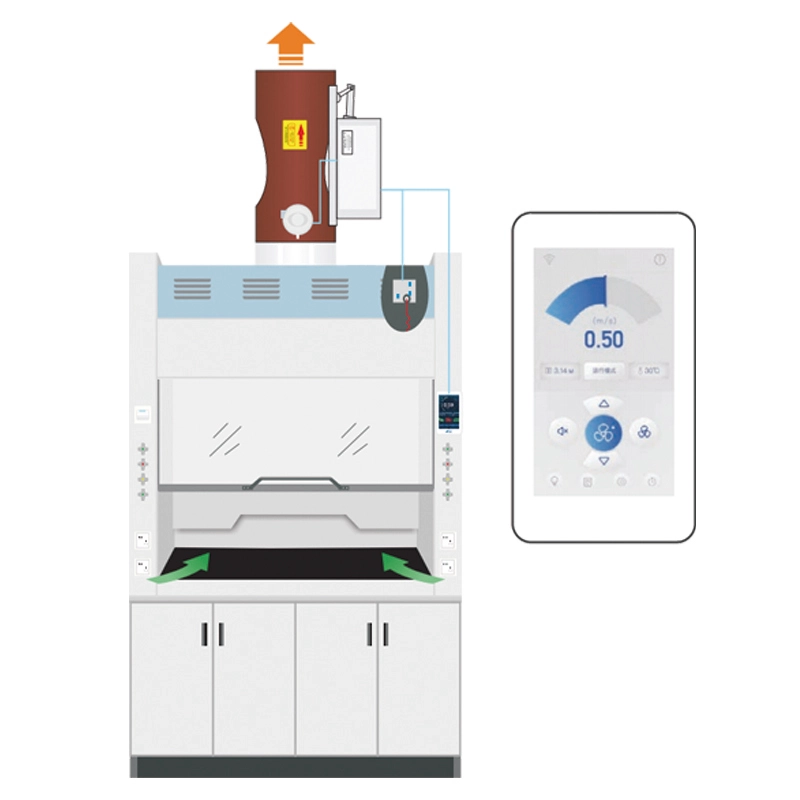
Variable Air Volume Fume Hood
Optimize airflow regulation and ensure precise laboratory ventilation with MAX LAB Venturi Valve Air Velocity Control System. Designed for high-performance air pressure control, this system automatically adjusts to changes in duct static pressure, maintaining stable and energy-efficient air velocity management. Ideal for laboratories, cleanrooms, and healthcare facilities, it provides fast response times, low maintenance, and superior contaminant control. Our Venturi valve system enhances HVAC efficiency, improves air quality, and ensures compliance with critical environment safety standards.

Floor Mounted Lab Bench
Our Floor Mounted Lab Bench is an essential, high-efficiency workspace for laboratories, made from high-quality steel-wood or corrosion-resistant stainless steel materials to ensure exceptional durability and stability. The unique floor-mounted design effectively reduces vibration, optimizes space usage, and provides a safe and tidy laboratory environment.
Customizable storage solutions help organize lab equipment efficiently, while the easy-to-clean surface maintains laboratory hygiene. It is widely suitable for research institutions, educational laboratories, and the chemical and pharmaceutical industries.
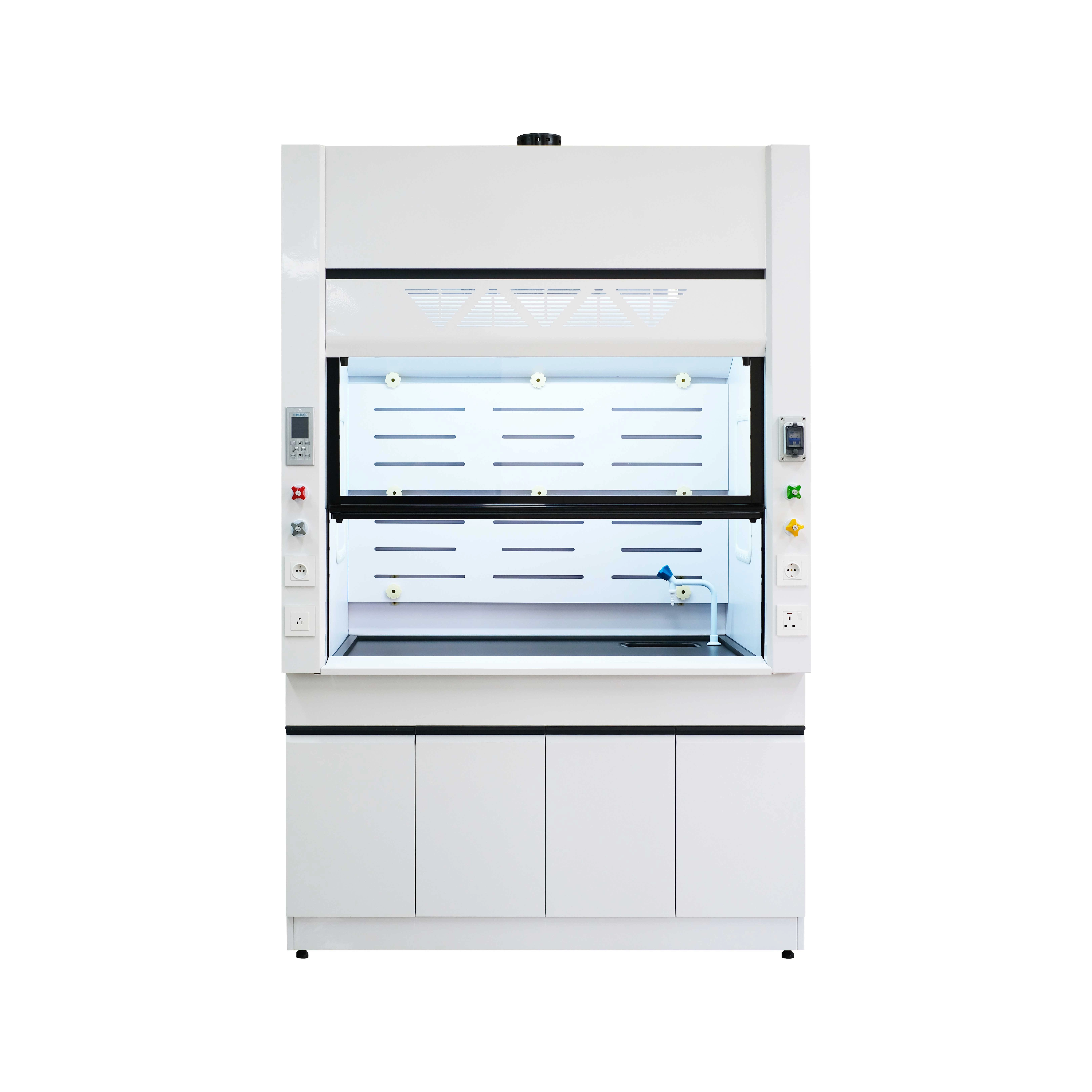
Fume Hood
The fume hood provides safe ventilation to protect against exposure to hazardous or toxic fumes, vapors, or airborne particulate. It is primarily used in laboratory and manufacturing applications to protect the user or environment outside the hood, but can also be used to protect the materials or experiment under the hood.
APPLICATION
Chemistry Lab, physics Lab, biological analysis, pharmaceutical medicine analysis, biological pharmaceutical, plant culture, environmental testing and electronic instrumentation scientific research and so on.
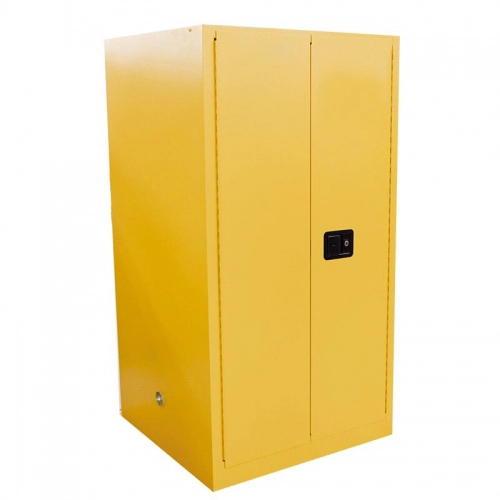
Flammable Storage Cabinet
Safety Cabinets store flammable liquids, corrosives, pesticides and other hazardous materials. All fire-resistant safety cabinets by meet fire codes and regulations for safety storage.
To help protect your people and facility from a potential fire, safety cabinets are engineered to safely contain flammable fuels, solvents, and chemicals. Safety cabinets can not only help everyone store chemicals reasonably, save chemical supplies, but also save human resources, and avoid fires caused by chemicals with the greatest strength.

 Scan QR Code
MaxLabFurniture
MaxLab Furniture
daihongada
Max Laboratory