
Choosing a laboratory table for precision balances: BT-03 insights
- Choosing a Laboratory Table for Precision Balances: BT-03 Insights
- Why vibration matters for precision balances
- How vibrations affect measurement results
- Common sources of lab vibration
- What to expect from Anti-vibration Tables & Balance Tables BT-03
- Key specifications and selection criteria for a laboratory table
- How to match table specs to balance class
- Comparing BT-03 to a standard lab bench
- Installation best practices for optimal balance performance
- Maintenance and long-term care of anti-vibration tables
- Cost vs benefit: ROI of investing in a proper laboratory table
- Why choose MAXLAB Anti-vibration Tables & Balance Tables BT-03
- Frequently Asked Questions (FAQ)
- Q1: Do I always need an anti-vibration table for an analytical balance?
- Q2: Can a simple isolation pad achieve the same effect as BT-03?
- Q3: How should I place a balance on the BT-03 top to minimize disturbances?
- Q4: Will the BT-03 eliminate the need to calibrate balances?
- Q5: Is BT-03 suitable for cleanroom or corrosive environments?
- Contact us / View product
- References
Choosing a Laboratory Table for Precision Balances: BT-03 Insights
Selecting the right laboratory table is a critical decision when your workflows depend on precision balances. Vibrations, drafts, and unstable surfaces can compromise results, increase uncertainty, and slow down operations. This guide explains why a purpose-built laboratory table matters for balance accuracy, how to assess requirements, and how MAXLAB's Anti-vibration Tables & Balance Tables BT-03 can help laboratories and quality-controlled environments achieve repeatable measurements for micro-manipulation and high-precision weighing. By selecting the right laboratory table, you ensure the accuracy of your measurements. Discover how Anti-vibration Tables & Balance Tables BT-03 improve accuracy in your lab setup, providing a stable and consistent environment for sensitive experiments.
Why vibration matters for precision balances
Precision balances are sensitive instruments that convert mechanical displacement into an electrical signal. Even small environmental perturbations—floor vibration, nearby footsteps, building HVAC cycles—can be interpreted by a balance as changes in mass. In practice, that means higher standard deviation in repeated weighings, longer settling times, and potential bias in low-mass measurements. Understanding the physics behind vibration and its coupling into the balance is the first step toward mitigation.
How vibrations affect measurement results
Vibration creates micro-accelerations and relative motion between the balance pan and the instrument base. For balances with resolutions at the milligram or sub-milligram level, disturbances in the 1–100 Hz range are particularly damaging. These disturbances increase measurement noise and may prevent the balance from stabilizing, forcing operators to repeat weighings or use software filtering that can introduce additional uncertainty. A dedicated laboratory table with suitable vibration damping significantly reduces these effects and improves throughput and data quality.
Common sources of lab vibration
Typical vibration sources include:
- Foot traffic and nearby workstations
- HVAC systems, compressors, and pumps
- Adjacent instruments with moving parts (centrifuges, shakers)
- External low-frequency building sway or nearby road/rail traffic
- Acoustic noise coupling to benches and covers
Identifying the dominant sources in your lab will help you select an appropriate isolation strategy instead of relying on ad-hoc fixes that may not address the true problem.
What to expect from Anti-vibration Tables & Balance Tables BT-03
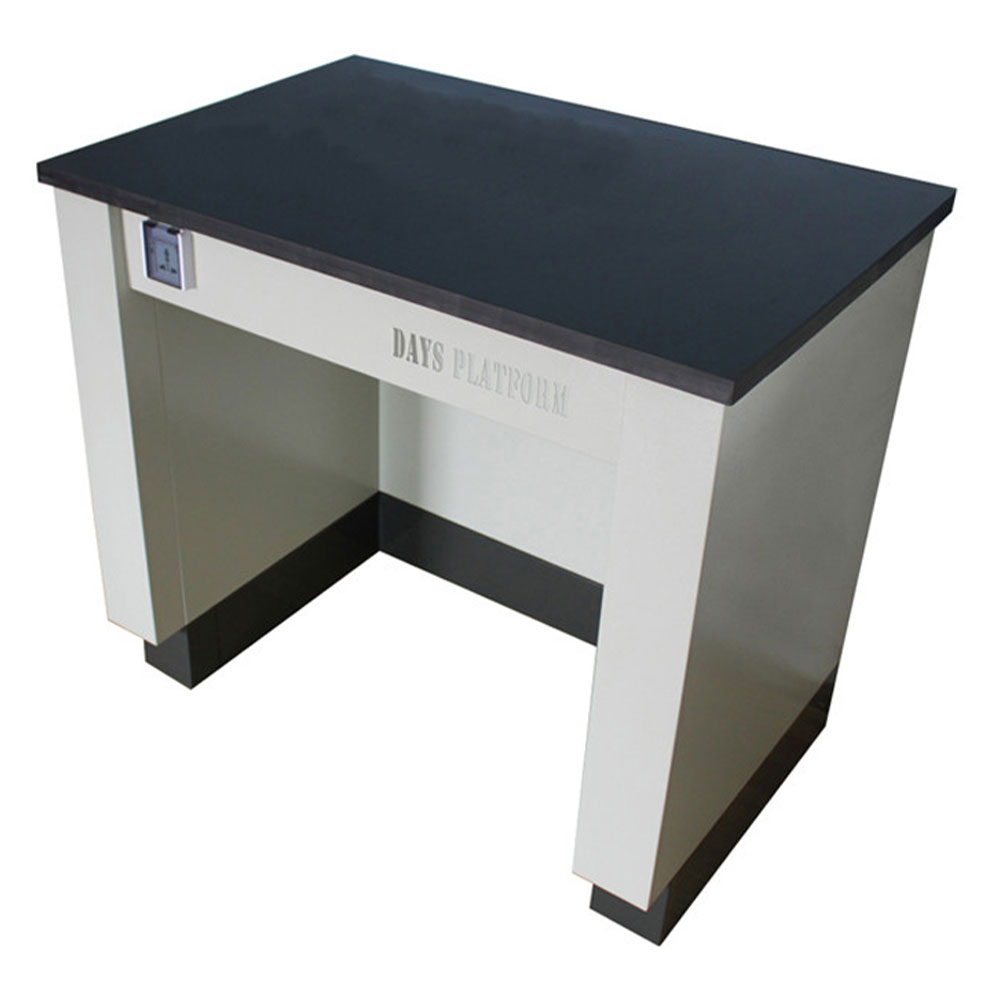
Anti-vibration Tables & Balance Tables BT-03 are designed specifically to meet the needs of high-precision laboratory weighing and micro-manipulation workflows. They offer passive vibration damping, a stable top surface, and ergonomics suitable for repetitive fine work.
Product introduction:
MAXLAB anti-vibration table is specially designed supporting equipment with vibration damping function which based on laboratory high-precision and anti-interference requests. The anti-vibration table is specially designed for micro-manipulation procedures.
When evaluating BT-03 for a lab, expect the following practical benefits:
- Reduced short-term noise and faster balance stabilization
- Improved repeatability for low-mass measurements
- Ergonomic work surface for micro-manipulation and sample handling
- Durable construction and user-adjustable leveling to match on-site conditions
Key specifications and selection criteria for a laboratory table
Choosing the right laboratory table means matching the table's capabilities to your balance class and lab environment. Focus on these parameters:
- Isolation performance (frequency response): Passive isolators are effective above their natural resonance frequency. Understand the dominant vibration frequencies in your lab and choose isolators that attenuate those bands.
- Load capacity and stiffness: The table must support the balance, accessories, and operator activity without sagging; stiffness reduces added resonances.
- Top surface and footprint: A stable, low-thermal-expansion top with adequate workspace improves usability and reduces drafts reaching the balance pan.
- Leveling and adjustability: Fine leveling feet help maintain balance calibration and repeatability.
- Environmental compatibility: Chemical-resistant surfaces, corrosion resistance, and cleanroom-compatible finishes where required.
- Mobility and anchoring: Wheels with vibration-lock or anchoring points may be necessary for specific layouts.
How to match table specs to balance class
Not every balance requires the same level of isolation. Below is a practical mapping table showing typical balance classes and recommended table features. This guideline helps allocate budget where it has the greatest effect.
| Balance Class | Resolution / Typical Use | Recommended Table Features |
|---|---|---|
| Microbalance | <1 µg – 100 µg (ultra-trace weighing) | High-performance active or advanced passive isolation, temperature control, dedicated vibration room |
| Analytical balance | 0.1 mg – 1 mg | Passive anti-vibration table (like BT-03), draft shields, stable environment |
| Precision balance | 1 mg – 0.01 g | Standard anti-vibration bench or heavy-duty lab bench with isolation pads |
| Top-loading balance | 0.01 g – 1 g | Bench with good stiffness; isolation helpful but lower priority |
Sources for these recommendations include balance manufacturers' environmental guidelines and vibration isolation literature (see References).
Comparing BT-03 to a standard lab bench
To make the difference concrete, the table below compares practical attributes of a purpose-built anti-vibration table (BT-03) against a typical lab workbench.
| Attribute | Anti-vibration Table (BT-03) | Typical Lab Bench |
|---|---|---|
| Vibration isolation | Engineered passive damping for common lab frequencies | Little to no engineered isolation; transmits floor vibration |
| Balance performance | Improved repeatability and shorter stabilization times | Higher noise; may require more repeats or relocation |
| Surface stability | Rigid, leveled top optimized for micro work | May flex under load or due to shelf supports |
| Ergonomics | Designed for operator comfort and fine manipulation | General-purpose, often not optimized for precision work |
| Cost (relative) | Higher upfront cost; targeted ROI for precision needs | Lower cost, but hidden operational costs due to poorer data quality |
The comparison shows that investing in a BT-03-style anti-vibration table reduces measurement uncertainty and operator time—two outcomes that justify the upfront cost in labs relying on precise weighing.
Installation best practices for optimal balance performance
Proper installation amplifies the benefits of any anti-vibration table. Follow these practical steps:
- Place the table away from heavy foot traffic, doors, and HVAC outlets.
- Position heavy vibration sources (centrifuges, compressors) on separate supports or isolated pads.
- Level the table precisely using the built-in leveling feet; re-check after adding the balance and accessories.
- Allow the table and balance to thermally equilibrate to the room before precision measurements—thermal gradients affect buoyancy and air currents.
- Use anti-static mats and minimize cable-induced forces by routing cables securely.
Maintenance and long-term care of anti-vibration tables
Regular checks maintain isolation performance over time. Recommended maintenance includes:
- Periodic visual inspection of isolation elements for wear or contamination.
- Re-leveling after any relocation or heavy use.
- Cleaning top surfaces with appropriate solvents to avoid degrading surface materials.
- Scheduled calibration checks of balances—table performance does not replace the need for instrument calibration.
Cost vs benefit: ROI of investing in a proper laboratory table
Investing in a dedicated anti-vibration table is frequently justified by reduced measurement uncertainty, fewer repeat tests, and improved workflow efficiency. For labs where balance throughput or traceability is essential (e.g., pharmaceuticals, calibration labs), the table's cost amortizes quickly through time savings and reduced rework.
Example (illustrative): a lab that reduces repeat measurements by 20% due to faster balance stabilization can free operator time and accelerate batch throughput. Combine that with fewer measurement-related deviations in QC logs, and the operational ROI becomes clear. For regulated labs, consistent measurement environments also simplify audits and support conformance to ISO/IEC 17025 requirements.
Why choose MAXLAB Anti-vibration Tables & Balance Tables BT-03
When comparing brands, consider the following strengths of MAXLAB's BT-03 series:
- Purpose-built design: Engineered specifically for micro-manipulation and precision weighing rather than being a generic bench retrofit.
- Passive isolation tuned for labs: Damping elements selected to target the most common lab vibration bands.
- User ergonomics: Work surface dimensions and height optimized for repetitive fine tasks.
- Durability and service: Robust construction with post-sale support and spare parts availability.
- Compliance-friendly: Helps labs meet environmental and procedural requirements for traceable weighing.
These combined attributes make BT-03 a practical choice for labs that need predictable weighing performance without the complexity and cost of active isolation systems.
Frequently Asked Questions (FAQ)
Q1: Do I always need an anti-vibration table for an analytical balance?
A1: Not always. If your lab environment is already controlled—low traffic, centralized HVAC, and stable benching—you may get acceptable results on a stiff bench. However, if you see long settling times, drifting results, or inconsistent repeatability at the milligram level, an anti-vibration table like BT-03 is a highly effective way to improve performance.
Q2: Can a simple isolation pad achieve the same effect as BT-03?
A2: Small isolation pads can reduce some high-frequency noise, but they rarely protect against the full spectrum of lab vibration. Purpose-built tables are engineered for both stiffness and damping and typically provide broader band isolation and better ergonomics than ad-hoc pads.
Q3: How should I place a balance on the BT-03 top to minimize disturbances?
A3: Center the balance on the table top if possible, ensure that cables do not introduce lateral forces, and place auxiliary equipment (weights, tools) away from the balance to avoid local surface coupling. Keep the balance pan clean and allow thermal equilibration.
Q4: Will the BT-03 eliminate the need to calibrate balances?
A4: No. While the BT-03 improves measurement conditions and repeatability, balances still require regular calibration and verification according to your quality system and applicable standards.
Q5: Is BT-03 suitable for cleanroom or corrosive environments?
A5: MAXLAB offers finishes and material options suitable for different environments. Contact the manufacturer or supplier to confirm cleanroom-compatible or chemical-resistant configurations.
Contact us / View product
If you want to evaluate Anti-vibration Tables & Balance Tables BT-03 for your lab, contact our sales and technical team for a site assessment, quotation, or on-site demo. Reach out to our customer service to discuss configuration, lead times, and installation guidance. Click to view the BT-03 product page or request a consultation.
References
- Mettler-Toledo, Weighing Environmental Effects: Vibration and Drafts — application notes and user guidance on environmental requirements for balances. https://www.mt.com
- Thorlabs, Basics of Vibration Isolation — practical explanation of passive isolation and resonance behavior. https://www.thorlabs.com/newgrouppage9.cfm?objectgroup_id=902
- International Organization for Standardization, ISO/IEC 17025 — General requirements for the competence of testing and calibration laboratories (environmental considerations). https://www.iso.org/standard/66912.
- Good laboratory practice guides and manufacturer application notes on weighing best practices (various manufacturers and national measurement institutes provide environmental guidelines).
For tailored recommendations, please provide the specific balance models, room layout, and typical sources of disturbance in your lab—our technical team will help determine whether BT-03 or another configuration is the best fit.
Fume Hood Installation Checklist for Procurement Teams
Comparing Lab Sink Materials: Ceramic, Epoxy, and Steel

How to Choose the Right Lab Benches for Your Laboratory
Lab Sink Cabinet Size and Layout Tips for Efficient Workflows
For Products
Are your products customizable?
Absolutely! We offer customized solutions for laboratory benches, lab tables, and furniture systems to meet the specific requirements of your workspace.
For Company
Do you offer services internationally?
Yes, we serve clients around the world, including Europe, North America, and Asia. Our international experience enables us to provide solutions that meet local regulations and standards.
For Logistics
What is the lead time?
We usually will start to work after receiving 50% deposit, and as for the exact lead time, it depends on quantity and detailed requirement. We can promise it will be shipped on time as we negotiated.
About Solution
What is the corrosion resistance of the laboratory furniture?
Our products are made of high quality corrosion-resistant materials, such as epoxy resin, PP board and stainless steel, which can resist the erosion of various chemicals and prolong the service life of the products.
Does your laboratory furniture support customization?
Yes, we provide fully customized services including size, material, color and functional design to meet customers' specific needs.
Floor Mounted Lab Bench
Our Floor Mounted Lab Bench is an essential, high-efficiency workspace for laboratories, made from high-quality steel-wood or corrosion-resistant stainless steel materials to ensure exceptional durability and stability. The unique floor-mounted design effectively reduces vibration, optimizes space usage, and provides a safe and tidy laboratory environment.
Customizable storage solutions help organize lab equipment efficiently, while the easy-to-clean surface maintains laboratory hygiene. It is widely suitable for research institutions, educational laboratories, and the chemical and pharmaceutical industries.
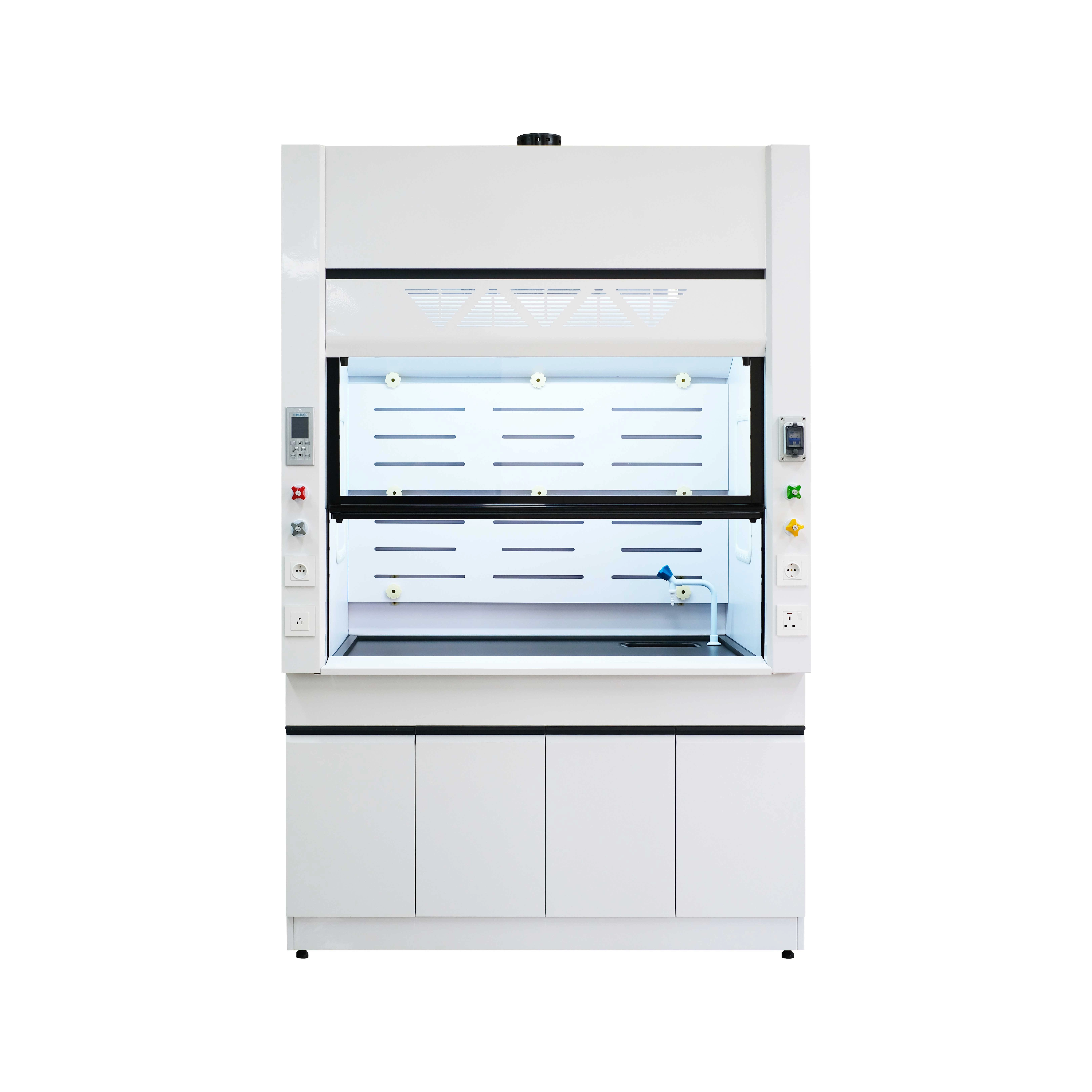
Fume Hood
The fume hood provides safe ventilation to protect against exposure to hazardous or toxic fumes, vapors, or airborne particulate. It is primarily used in laboratory and manufacturing applications to protect the user or environment outside the hood, but can also be used to protect the materials or experiment under the hood.
APPLICATION
Chemistry Lab, physics Lab, biological analysis, pharmaceutical medicine analysis, biological pharmaceutical, plant culture, environmental testing and electronic instrumentation scientific research and so on.
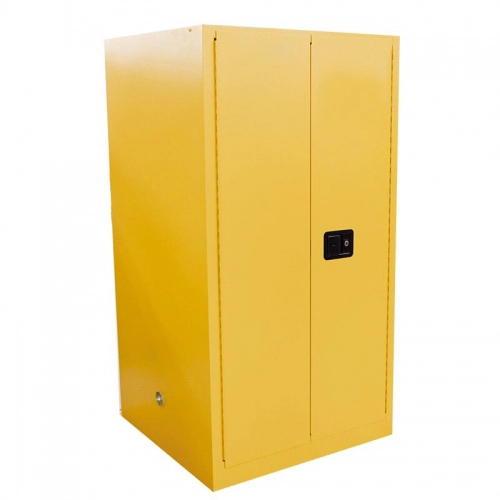
Flammable Storage Cabinet
Safety Cabinets store flammable liquids, corrosives, pesticides and other hazardous materials. All fire-resistant safety cabinets by meet fire codes and regulations for safety storage.
To help protect your people and facility from a potential fire, safety cabinets are engineered to safely contain flammable fuels, solvents, and chemicals. Safety cabinets can not only help everyone store chemicals reasonably, save chemical supplies, but also save human resources, and avoid fires caused by chemicals with the greatest strength.
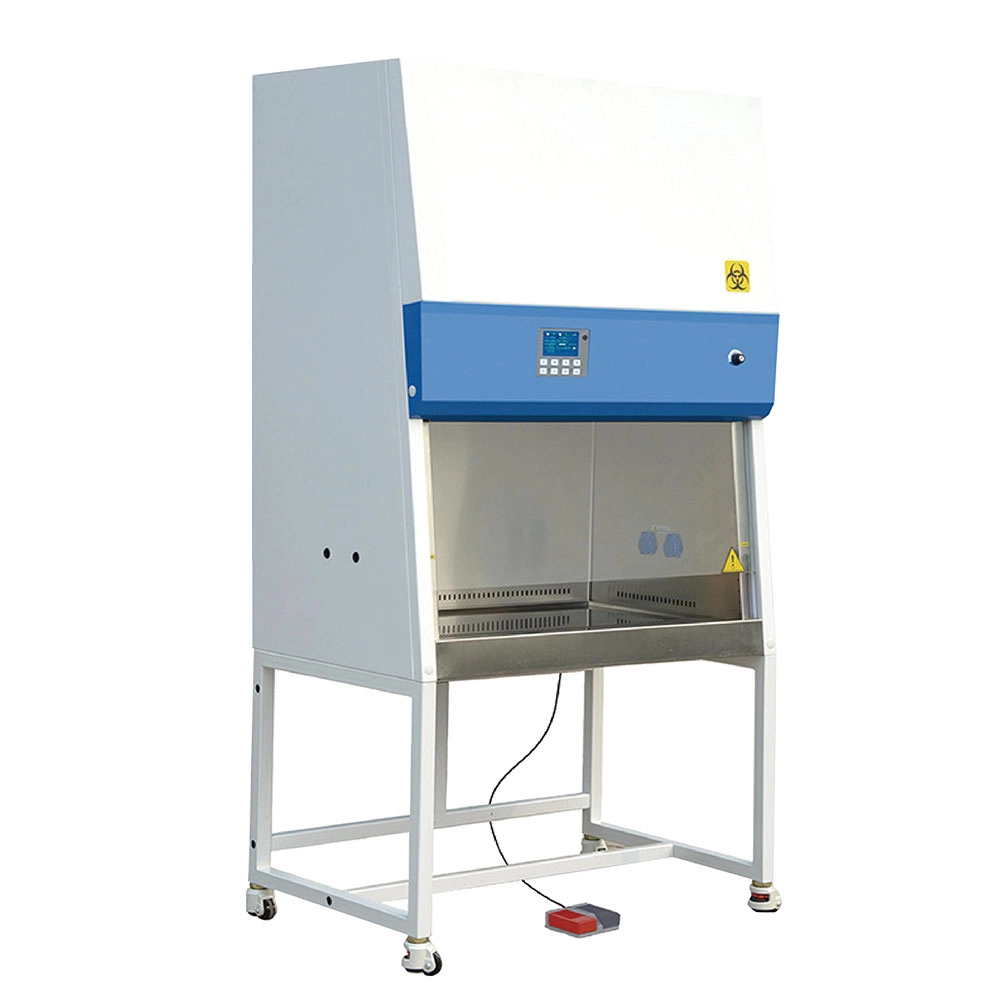
Class II Type A2 Biological Safety Cabinet for Laboratory
The Class II A2 Biological Safety Cabinet is designed to provide superior biosafety and contamination control for laboratories, research facilities, and clinical settings. With 70% air recirculation and 30% air exhaust, this cabinet ensures a safe and efficient work environment while protecting both the user and the samples.
Equipped with advanced features like a HEPA filtration system, motorized front window, and ergonomic design, this cabinet is a must-have for safe and reliable biological research.

 Scan QR Code
MaxLabFurniture
MaxLab Furniture
daihongada
Max Laboratory