
Compliance and Standards to Consider for Lab Sink Installations

- Regulatory framework and building codes that affect lab sink installs
- Relevant federal and international agencies
- Plumbing and building codes
- Local permitting and inspection requirements
- Material, design and performance standards for lab sinks and fixtures
- Choosing chemically resistant sinks
- Lab faucet and fixture standards
- Designs for integrated bench systems
- Plumbing, waste handling and environmental controls
- Drain routing, neutralization and prohibited discharges
- Backflow prevention and cross-connection control
- Ventilation and fume controls near sinks
- Installation best practices, testing and ongoing maintenance
- Pre-installation site assessment
- Commissioning tests and documentation
- Maintenance schedules and replacement criteria
- Material comparison and selection guidance
- Integrating the Lab Sink Cabinet into compliant lab design
- Why an integrated cabinet matters for compliance
- Space planning and services coordination
- Documentation and warranty alignment
- Practical scenarios and compliance checklists
- Teaching laboratories
- Chemistry and analytical labs
- Biopharmaceutical and testing facilities
- Brand advantages and why Lab Sink Cabinet is a compliant choice
- FAQ — Common questions about lab sink installations
- Q: Do I need a permit to install a lab sink?
- Q: Can I pour solvents down a lab sink?
- Q: Which sink material is best for a teaching lab?
- Q: How often should a lab sink and its fixtures be inspected?
- Q: What documentation should I keep for compliance?

Installing a lab sink requires more than plumbing skills: facility managers, lab planners and safety officers must meet local plumbing and building codes, chemical-compatibility standards, biosafety and hazardous-waste requirements, and ergonomic and accessibility rules. Proper selection of sink materials, faucets and supporting cabinets — and correct integration into bench systems such as the Lab Sink Cabinet — reduces long-term risk, ensures compliance with regulators like OSHA and EPA, and supports safe operations for cleaning, rinsing, drainage and temporary storage. With compliance confirmed, buyers often revisit material decisions by comparing lab sink materials: ceramic, epoxy, and steel to ensure the best fit for their application.
Regulatory framework and building codes that affect lab sink installs
Relevant federal and international agencies
Laboratory sink installations intersect with regulations from multiple authorities. OSHA provides laboratory safety guidance and rules that affect chemical handling and engineering controls (OSHA - Laboratory Safety). The U.S. Environmental Protection Agency (EPA) sets standards for hazardous waste handling and discharge (EPA). For biosafety labs, follow CDC guidance, including the Biosafety in Microbiological and Biomedical Laboratories (BMBL) where applicable (CDC BMBL).
Plumbing and building codes
Local building departments enforce plumbing codes derived from model codes like the International Plumbing Code (IPC) or the Uniform Plumbing Code (UPC). These codes cover backflow prevention, drainage sizing, trap seals, venting and materials acceptable for laboratory drain connections. Consult your authority having jurisdiction and review the model code summaries such as the IPC overview (International Plumbing Code – overview).
Local permitting and inspection requirements
Even when federal guidance exists, permits and inspections are governed locally. Before installing a lab sink, submit shop drawings that show the sink basin, faucet, drain connections, trap, waste neutralization (if required), and the supporting Lab Sink Cabinet or bench. Inspections typically verify correct trap configuration, venting, backflow preventers, and that no prohibited discharges enter storm or sanitary sewers.
Material, design and performance standards for lab sinks and fixtures
Choosing chemically resistant sinks
Material selection is critical where corrosive reagents or solvents are used. Common lab sink materials include epoxy resin, stainless steel (typically 304 or 316L), and polypropylene. Each material has different strengths for acid/base resistance, solvent tolerance, scratch resistance and heat resistance. For example, epoxy resin offers good general chemical resistance and impact resistance; 316L stainless steel fares better with oxidizers and high temperatures; polypropylene stands out for resistance to strong alkalis and many organic solvents.
Lab faucet and fixture standards
Fixtures intended for laboratory use should be corrosion-resistant and designed to minimize splash and cross-contamination. Look for faucets with durable valve cartridges and smooth, easily decontaminable finishes. For emergency eyewash or safety shower integration, ensure fixture arrangement aligns with ANSI/ISEA Z358.1 requirements for flow and accessibility (Emergency eyewash reference).
Designs for integrated bench systems
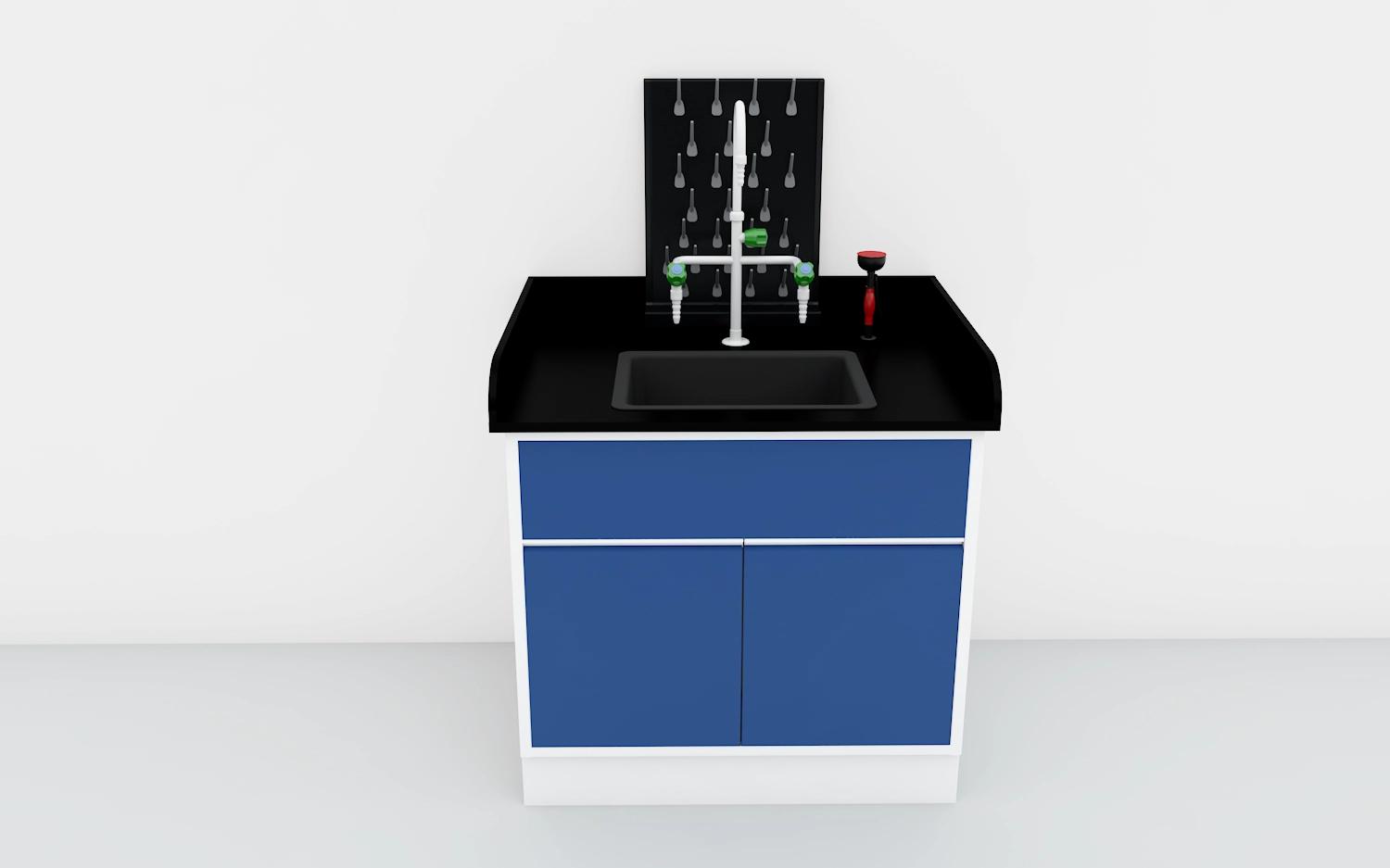
Integrated systems such as the Lab Sink Cabinet provide configurable options (C-type, floor-mounted and H-type structures) to match benchtop layouts and service corridors. Confirm that cabinet materials resist laboratory chemicals and that the cabinet design allows for secure plumbing runs, waste containment, and easy access for maintenance.
Plumbing, waste handling and environmental controls
Drain routing, neutralization and prohibited discharges
Many labs generate acidic, basic or solvent-bearing wastewater that must be treated before entering the sanitary sewer. Some jurisdictions prohibit direct discharge of certain chemicals to sewer systems. Options include local neutralization, use of on-site treatment systems, or collection for hazardous waste disposal. Coordinate with your environmental health & safety (EHS) group and reference EPA hazardous waste guidance when planning sink drains (EPA - Hazardous Waste).
Backflow prevention and cross-connection control
Sink installations must prevent backflow that could contaminate potable water. Many labs require air gaps, reduced pressure zone (RPZ) assemblies, or other backflow devices per local code. The plumbing design should include appropriate cross-connection control to protect building water supplies.
Ventilation and fume controls near sinks
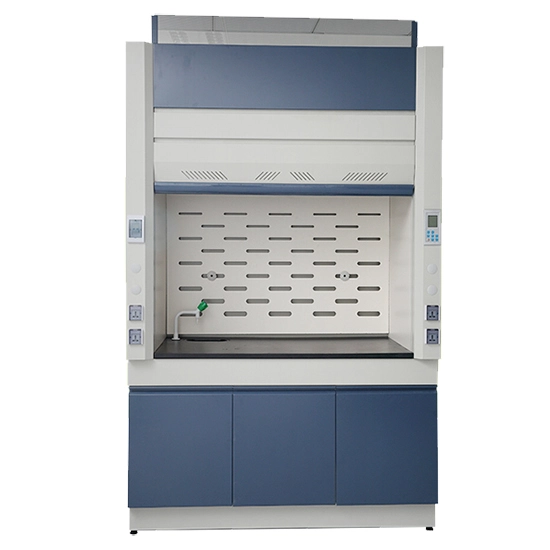
Some procedures combine liquid handling and volatile chemicals; sinks should not be located where venting or local exhaust will spread vapors into occupied areas. Consider local exhaust hoods, fume hood catch basins, and sink placement relative to biological safety cabinets to avoid airflow conflicts.
Installation best practices, testing and ongoing maintenance
Pre-installation site assessment
Before installing a lab sink and the Lab Sink Cabinet, perform a risk assessment that catalogs expected chemicals, peak flow rates, required drainage capacities, and maintenance access. That allows proper selection of sink basin depth, faucet type, trap primer needs, and whether secondary containment or spill trays are required.
Commissioning tests and documentation
After installation, conduct hydrostatic tests, trap seal tests, and verify backflow devices. Document installation with as-built drawings, material data sheets for the lab sink and fittings, and manufacturer instructions. These records support inspections and future audits by safety or facilities teams.
Maintenance schedules and replacement criteria
Create a maintenance plan: routine cleaning with compatible cleaners, inspection of seals and traps, verification of faucet operation and leak checks, and periodic assessment of chemical attack (pitting, discoloration). Keep a replacement lifecycle for consumables such as aerators, valve cartridges and trap seals.
Material comparison and selection guidance
The table below summarizes common lab sink materials and typical performance considerations to help you match a laboratory sink to your chemistry, teaching lab, biopharma or testing environment.
| Material | Chemical resistance | Heat resistance | Durability / Maintenance | Typical use |
|---|---|---|---|---|
| Epoxy resin | Good to excellent vs acids, many organic chemicals; vulnerable to strong oxidizers | Moderate; avoid high-temperature contact | Scratches can be repaired; regular cleaning; moderate lifespan | Chemistry & teaching labs where moderate chemical exposure is expected |
| Stainless steel (304 / 316L) | Excellent vs many chemicals, 316L better for chlorides/oxidizers | Excellent; withstands high-temperature use | Very durable; can dent; easy to clean; may corrode with strong halogens unless 316L | Biopharma, high-temp applications, solvent handling with appropriate grades |
| Polypropylene (PP) | Excellent vs strong alkalis and many organics; limited mechanical strength | Limited; softens at elevated temps | Chemical resistant but can scratch; lightweight | Acid/alkali labs, waste collection, specialty applications |
Integrating the Lab Sink Cabinet into compliant lab design
Why an integrated cabinet matters for compliance
The Lab Sink Cabinet is designed for chemistry labs, teaching labs, biopharmaceutical facilities and testing departments, and can be seamlessly integrated into complete laboratory bench systems. The product offers C-type, floor-mounted and H-type structures, combined with a chemical-resistant lab sink and lab faucet to meet cleaning, rinsing, drainage and temporary storage needs.
Space planning and services coordination
Integrated sink cabinets simplify routing of water, waste and service lines while providing containment and organized storage for plumbing components. Confirm cabinet interior clearance for traps and neutralization, and ensure panels allow access for inspection and maintenance. Standardizing on an integrated Lab Sink Cabinet helps maintain consistent compliance across rooms.
Documentation and warranty alignment
Choose products that provide full material data sheets (chemical resistance charts), installation manuals, and warranty coverage. These documents are essential during inspections and for lifecycle planning. A compliant supplier should support as-built documentation and provide guidance on permitted discharges and compatible cleaning agents.
Practical scenarios and compliance checklists
Teaching laboratories
In academic labs, sinks often serve many users and accommodate a wide range of chemicals. Use robust materials (epoxy or 316L stainless), ensure emergency eyewash/shower proximity, and institute strict waste segregation. Provide clear signage and staff training to discourage inappropriate disposal down lab sinks.
Chemistry and analytical labs
Chemistry labs may need sink materials resistant to strong acids, bases and solvents. Consider solvent traps, secondary containment, and sample/solvent sinks isolated from general-purpose sinks. Confirm compatibility with local sewer discharge rules and plan for neutralization or hazardous waste collection where required.
Biopharmaceutical and testing facilities
Biopharma sites must avoid cross-contamination and often require stainless steel surfaces for sterilization. Where biological agents are present, follow BMBL and institutional biosafety procedures for sink placement near biological safety cabinets and waste handling routines.
Brand advantages and why Lab Sink Cabinet is a compliant choice
Choosing a Lab Sink Cabinet from a reputable manufacturer brings the following advantages relevant to compliance and standards:
- Pre-engineered fit with bench systems reduces on-site modification that can create code violations.
- Available in multiple structural types (C-type, floor-mounted and H-type) to match lab layouts and service routing needs.
- Chemical-resistant sink basins and compatible faucets reduce degradation and long-term leak or contamination risk.
- Supplier documentation typically includes chemical-resistance charts, installation instructions and maintenance guidance that support EHS and inspector reviews.
- Designs that allow easy access to traps, piping and backflow devices help satisfy inspection and maintenance requirements.
When evaluating a supplier, request references, material data sheets and examples of installed projects to verify real-world performance and compliance history.
FAQ — Common questions about lab sink installations
Q: Do I need a permit to install a lab sink?
A: In most jurisdictions yes — a plumbing permit is required for new or modified water or drain connections. Check with your local building department and provide as-built drawings, specifications for sink and faucet, and details on any waste treatment systems.
Q: Can I pour solvents down a lab sink?
A: Generally no. Many solvents are classified as hazardous waste and cannot be discharged to sanitary sewers. Always consult your EHS program and local regulations; if permitted, use approved waste capture and treatment systems.
Q: Which sink material is best for a teaching lab?
A: Epoxy resin sinks are common in teaching labs due to good overall chemical resistance and cost-effectiveness. However, select based on the strongest reagents used; for higher severity exposures, 316L stainless or polypropylene may be preferable.
Q: How often should a lab sink and its fixtures be inspected?
A: Perform visual inspections monthly for leaks and corrosion, and a more thorough inspection annually that includes testing of traps, backflow devices and documentation updates. More frequent checks are recommended in high-use or highly corrosive environments.
Q: What documentation should I keep for compliance?
A: Maintain installation drawings, manufacturer datasheets for sink and faucet materials, permits, inspection and test results, neutralization or waste treatment records, and maintenance logs.
If you have further questions about selecting or installing a compliant lab sink, or want technical specs for the Lab Sink Cabinet, please contact our team or view the Lab Sink Cabinet product page. Our experts can provide site-specific guidance, installation checklists and material data sheets to support permitting and EHS review.
Safety Features to Look for in Lab Sink Cabinets
Fume Hood Integration with HVAC and Laboratory Design
Lab Sink Cabinet Buying Guide: Materials, Sizes, and Features
Top Lab Furniture Design Trends for Modern Laboratories
For Logistics
Do you handle customs clearance for international shipments?
Of course, if you need it, we will handle the customs clearance of international shipments for our customers to ensure that your laboratory furniture arrives on time.
FAQS
How can I request a quote?
Simply contact us or fill out our online form with your project details. Our team will respond promptly with a free quote.
For Company
Are you a factory or trade company?
Direct factory. We also have our sales and design team to offer better service to our valued customers.
For Products
Do you offer ergonomic solutions for lab furniture?
Yes, our laboratory furniture includes ergonomic designs such as height-adjustable lab benches and chairs that reduce strain during long hours of work.
Can your furniture withstand heavy-duty use?
Yes, all of our laboratory furniture focuses on durability, with a load-bearing capacity of up to 500KG/m², and is made of high-quality materials that can meet the requirements for large-scale precision instruments and equipment and exposure to chemicals in the laboratory.
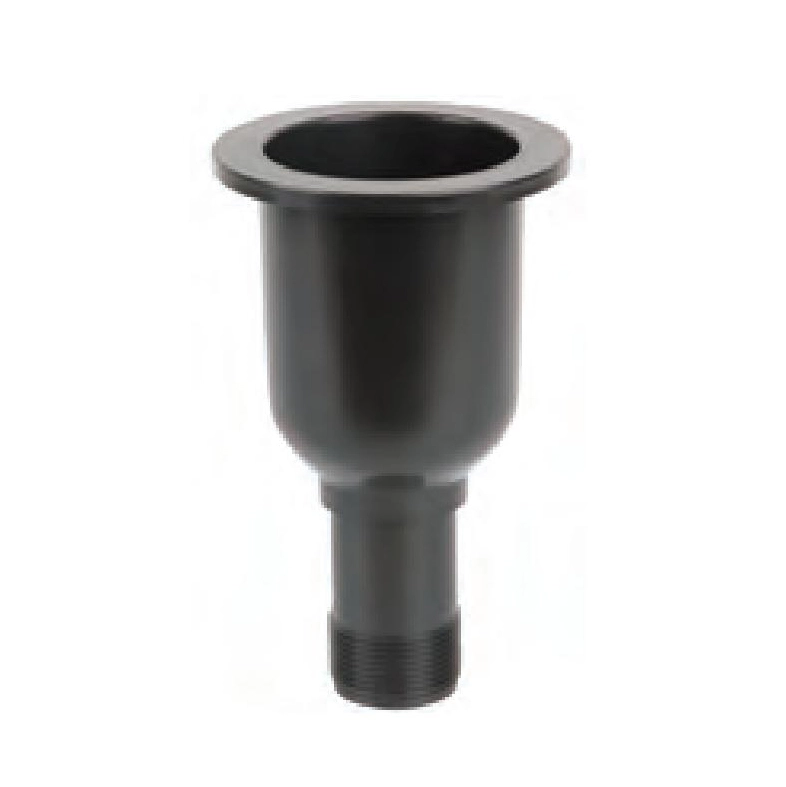
Lab Sink LS-08
The LS-08 Round Cup / Funnel Sink is a small-diameter, deep cup sink designed as a funnel-type drain point on laboratory worktops. Constructed from chemical-resistant black PP, it features an extended threaded outlet that connects directly to drain piping.
This design is perfect for apparatus drain lines, RO reject water, condensate and other continuous or intermittent discharges where an open, funnel-like inlet is required.

Floor Mounted Lab Bench
Our Floor Mounted Lab Bench is an essential, high-efficiency workspace for laboratories, made from high-quality steel-wood or corrosion-resistant stainless steel materials to ensure exceptional durability and stability. The unique floor-mounted design effectively reduces vibration, optimizes space usage, and provides a safe and tidy laboratory environment.
Customizable storage solutions help organize lab equipment efficiently, while the easy-to-clean surface maintains laboratory hygiene. It is widely suitable for research institutions, educational laboratories, and the chemical and pharmaceutical industries.
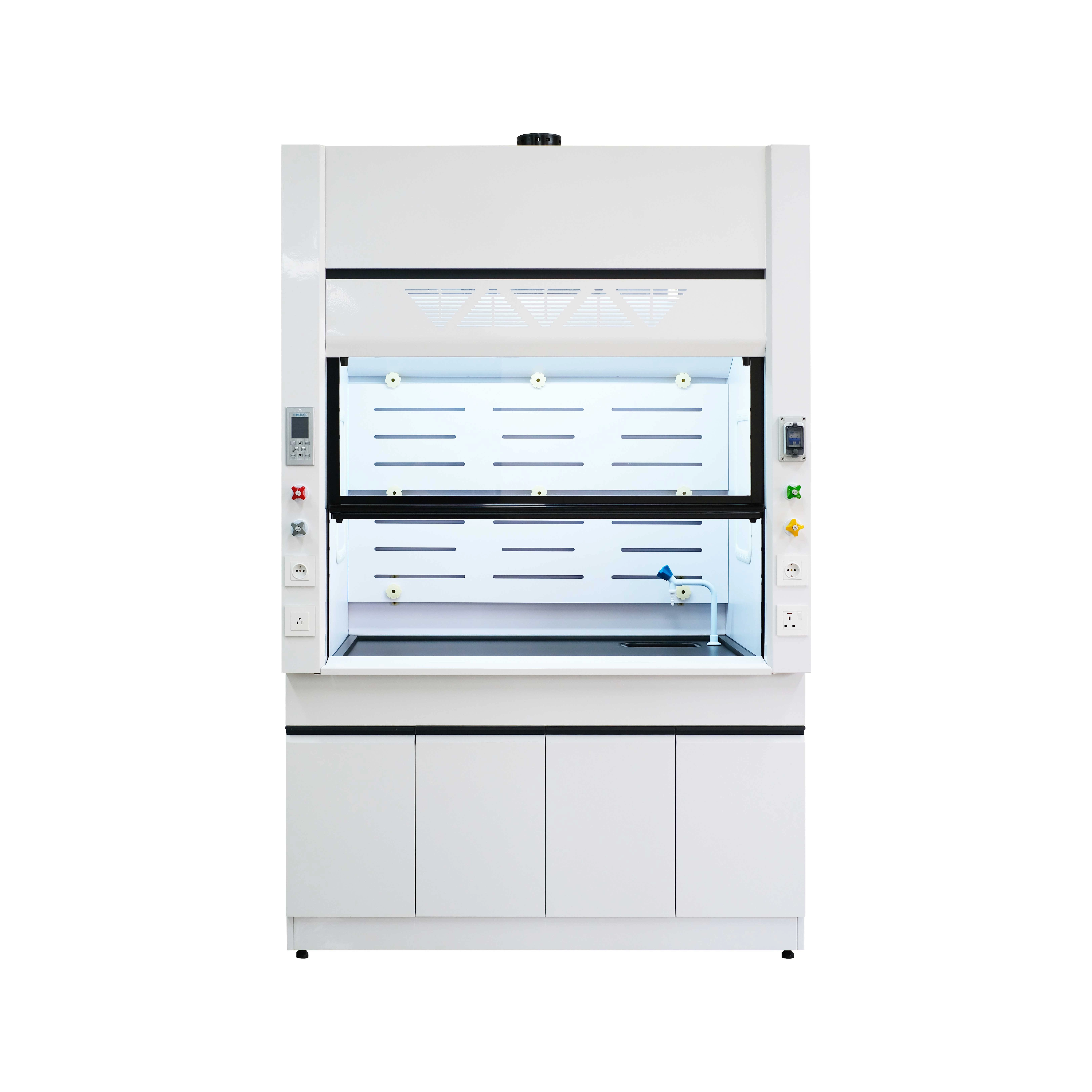
Fume Hood
The fume hood provides safe ventilation to protect against exposure to hazardous or toxic fumes, vapors, or airborne particulate. It is primarily used in laboratory and manufacturing applications to protect the user or environment outside the hood, but can also be used to protect the materials or experiment under the hood.
APPLICATION
Chemistry Lab, physics Lab, biological analysis, pharmaceutical medicine analysis, biological pharmaceutical, plant culture, environmental testing and electronic instrumentation scientific research and so on.
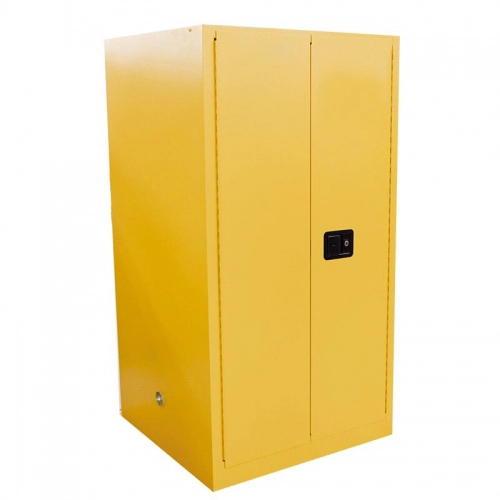
Flammable Storage Cabinet
Safety Cabinets store flammable liquids, corrosives, pesticides and other hazardous materials. All fire-resistant safety cabinets by meet fire codes and regulations for safety storage.
To help protect your people and facility from a potential fire, safety cabinets are engineered to safely contain flammable fuels, solvents, and chemicals. Safety cabinets can not only help everyone store chemicals reasonably, save chemical supplies, but also save human resources, and avoid fires caused by chemicals with the greatest strength.

 Scan QR Code
MaxLabFurniture
MaxLab Furniture
daihongada
Max Laboratory